


In December 2024, the Cybersecurity and Infrastructure Security Agency (CISA), National Security Agency (NSA), Federal Bureau of Investigation (FBI) and International Partners published a guide for “protecting communications infrastructure” in response to the discovery that a stealthy Chinese government threat actor, Salt Typhoon, had infiltrated a number of US telecommunications firms.
These incidents are only the most recent to reinforce how rapidly the threat landscape evolves, and the urgent need for organizations to reassess their proactive risk management strategies – especially remediating their most business critical exposures. Several recent innovations and technologies highlight what represents a significant departure from traditional exposure management methods by emphasizing collaboration, automation, and precision at every stage of the security lifecycle.
Organizations that adopt or expand their use of the following five key innovations in 2025 will position themselves to be far more resilient in protecting their digital ecosystems from bad actors of all forms.
1. Continuous Threat Exposure Management (CTEM) Framework
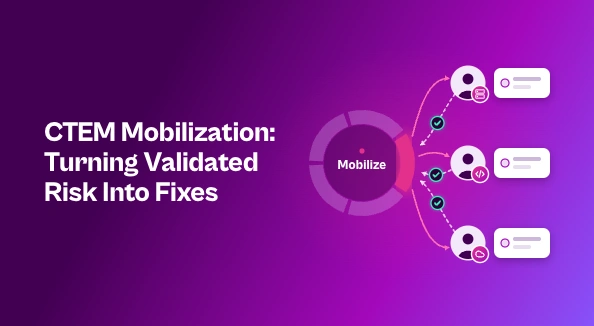
CTEM shifts organizations away from periodic vulnerability assessments toward continuous, proactive exposure management. By integrating scoping, discovery, prioritization, validation, and mobilization, organizations can maintain real-time insight into their security posture. This comprehensive approach ensures that security teams can identify, assess, and prioritize vulnerabilities as they arise, enabling faster and more effective responses. Additionally, the CTEM framework helps align security efforts with business objectives by providing a clearer understanding of risk exposure and focusing remediation efforts on what matters most. As CTEM becomes the standard, businesses will achieve greater resilience, reducing downtime and mitigating risks faster and more effectively than ever before.
2. AI-Enhanced Exposure Management
AI is simultaneously empowering attackers and defenders. In 2025, attackers are sure to leverage AI to craft sophisticated malware, execute coordinated multi-agent attacks, and develop highly realistic social engineering schemes. This means that organizations must deploy AI-enhanced defenses to counter those advances, as well as other increasingly automated and adaptive threats.
In 2025, organizations must use AI to move beyond supporting remediation to proactively analyzing large data sets from vulnerability scans, threat intelligence feeds, and asset contexts to identify and prioritize exposures earlier in the workflow. This will help ensure remediation focuses on truly exploitable and critical threats.
3. Automated Security Control Assessment (ASCA)
ASCA will help enhance exposure validation – a key element of CTEM – by analyzing organizations’ existing security controls to determine whether they provide effective protection against known exposures. This not only ensures that remediation of unprotected vulnerabilities is prioritized but also helps organizations optimize and strengthen their security configurations to address evolving threats. By integrating ASCA into their CTEM workflows, organizations can achieve a more precise and dynamic approach to modern exposure management, improving both efficiency and effectiveness.
4. Collaboration Across Teams with Centralized Workflow Management
Development, Security and Operations teams must collaborate with ballet-like precision to defend their organizations, and centralized workflow management systems that combine exposure data, remediation priorities, and progress tracking accelerate that collaboration. These systems provide real-time visibility into remediation efforts, ensuring alignment across teams and eliminating bottlenecks. By fostering seamless communication and integrating automated workflows, centralized workflow management will not only reduce silos but also accelerate decision-making and improve the efficiency of the entire remediation lifecycle.
5. ASPM with Runtime Validation
While shift-left methodologies have focused primarily on fixing application security issues in development, in 2025, Application Security Posture Management (ASPM) approaches will extend into runtime validation, enabling organizations to identify and prioritize exposures more effectively throughout the Software Development Lifecycle (SDLC). This will ensure that security measures applied during development are validated in production, providing continuous assurance that new code is securely deployed and remains protected. By integrating seamlessly across the SDLC and unifying with broader Attack Surface Management (ASM) tools, ASPM will deliver continuous security assurance from code to cloud, enabling proactive risk mitigation and end-to-end visibility across dynamic application environments.
Conclusion
In 2025, attackers will continue to rapidly evolve their tactics, move with greater stealth, and attack ever higher value targets. For their part, defenders must embrace continuous, collaborative, and context-driven approaches to proactively manage and remediate exposures. The convergence of robust cross-team workflows with exposure and posture management technologies offers organizations a path to scale their proactive initiatives. By focusing on integration, automation, and continuous vigilance, the five technologies and frameworks discussed above will redefine how security teams get ahead of risks and empower their organizations to thrive.

Stay updated on Seemplicity blog
Subscribe today to stay informed and get regular updates from Seemplicity.