




/prioritize high impact risks
Cut through the noise with context-aware prioritization
Focus on high-impact exposures using automated risk and business context.
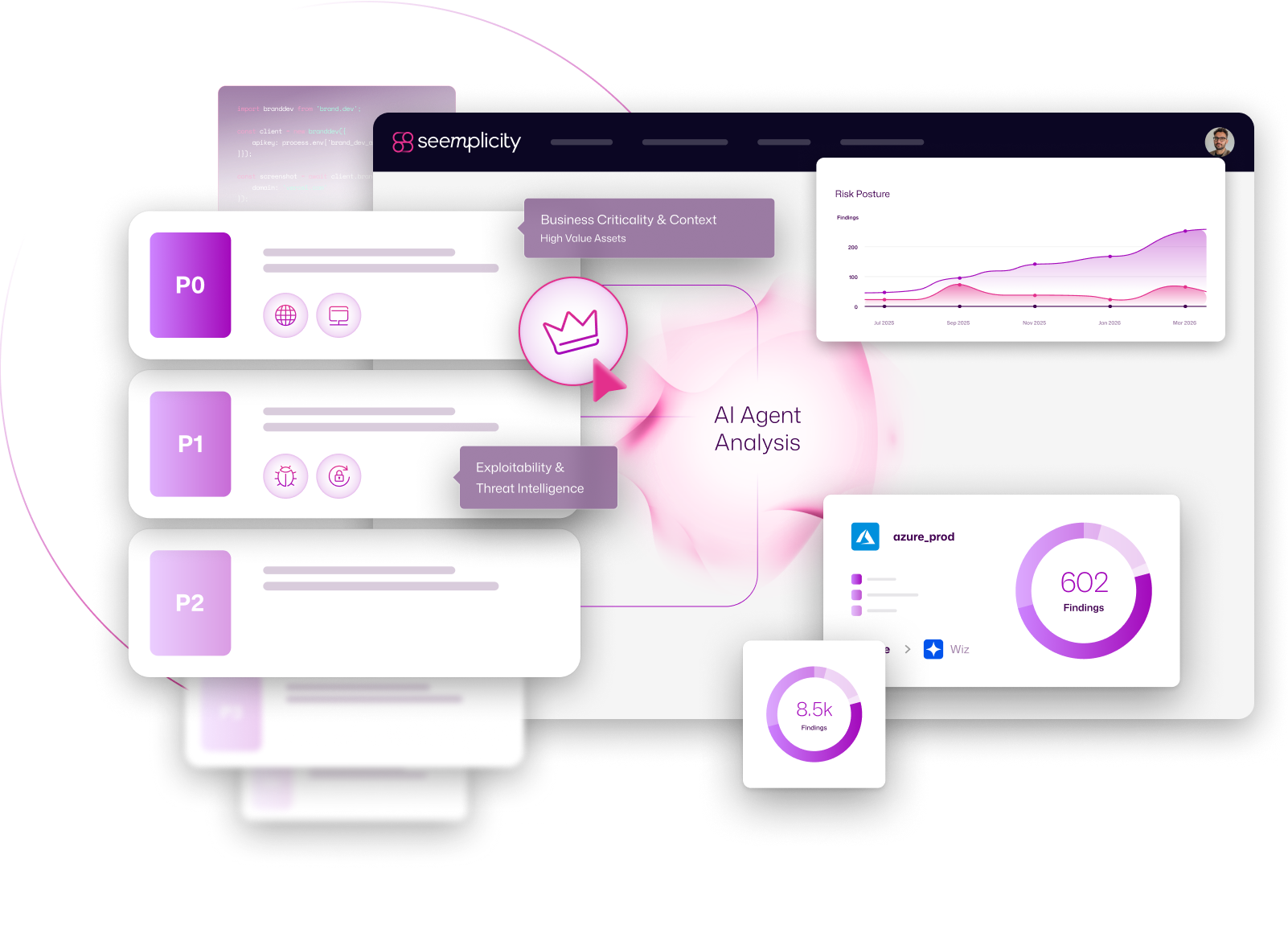
Don’t leave critical exposures buried in the noise
Traditional scoring fails to account for your unique business environment and the real-world threat landscape.

Overwhelming Findings Volume: The scale of inbound vulnerabilities makes it difficult for teams to determine which issues pose the greatest risk.

Ambiguous Prioritization Logic: Traditional tools often assign risk scores without a clear rationale, making it difficult to explain why a task deserves priority.

Lacking Business Context: Standardized scores ignore an organization’s unique environment, such as asset criticality, mission-critical business units, or regulated systems.

Ignoring Exploitability: Security teams often waste limited resources on theoretically “severe” findings that have no known exploits or real-world probability of being targeted.
Transform Opaque Risk Into Informed Action
Replace ambiguous severity scores with a transparent prioritization framework that aligns your security efforts with real-world business impact.
Focus on the Vital Risks
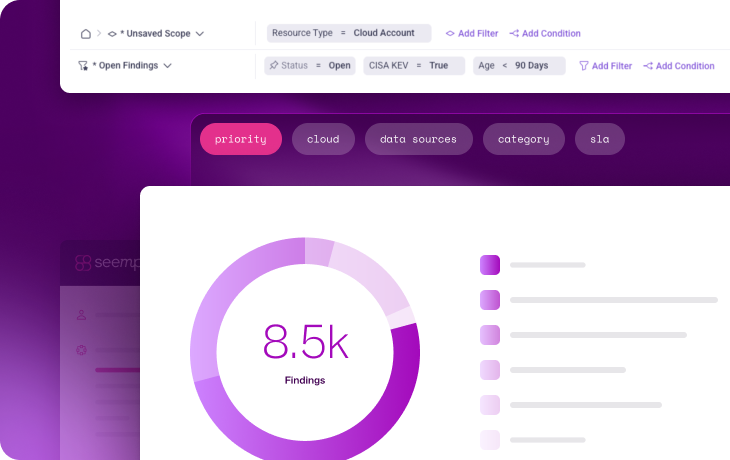
Cut through the overwhelming volume of findings by focusing only on the high-impact vulnerabilities that pose the greatest risk to your specific environment.
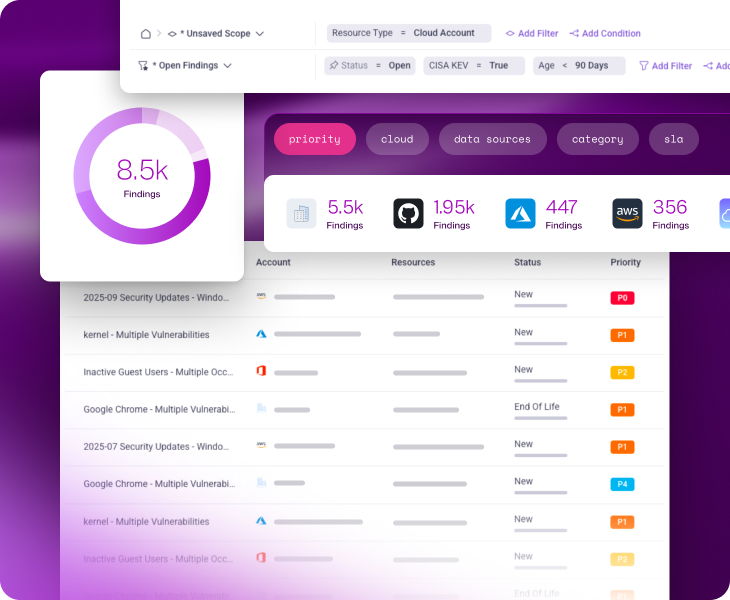
Establish a Transparent Prioritization Framework
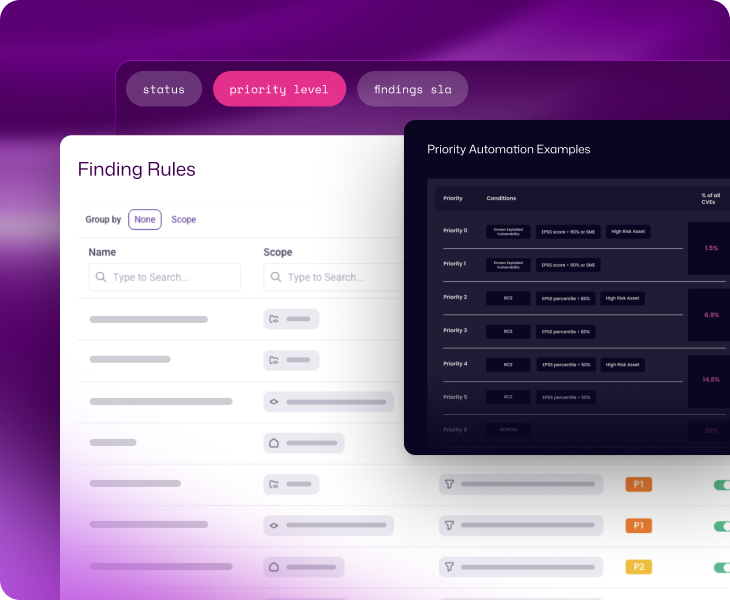
Align Remediation with Business Impact
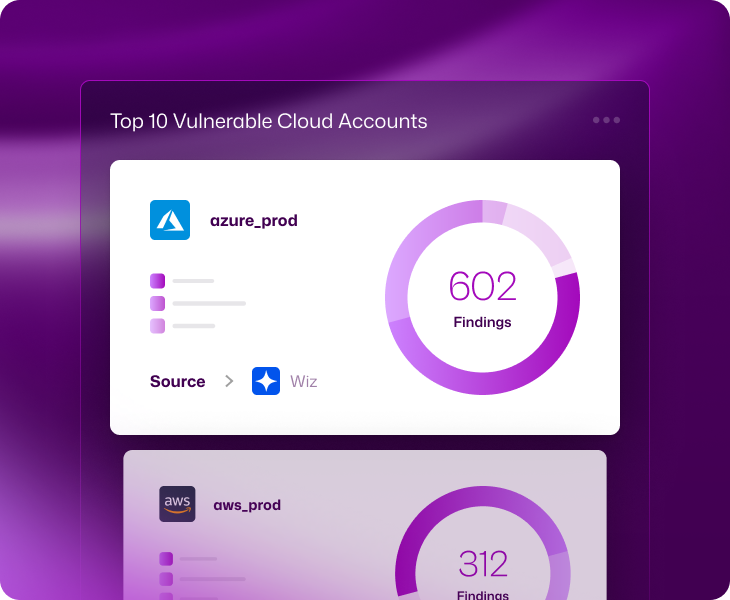
Prioritize Based on Exploitability
Features Built to Cut Through the Noise
Custom Scoring Rules
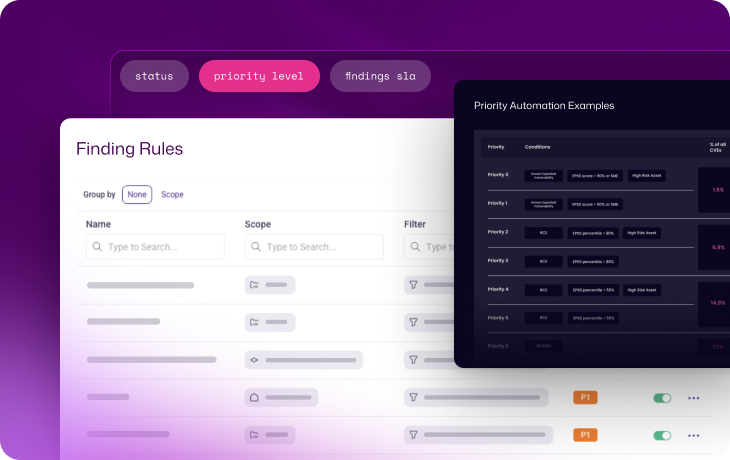
Adjust scoring rules or assign fixed values to ensure prioritization aligns perfectly with your organization’s unique risk profile.
Automated Data Consolidation

Merge findings from multiple sources, remove duplicates, and normalize scores to achieve a consistent view of risk across all tools.
External Intelligence Integration
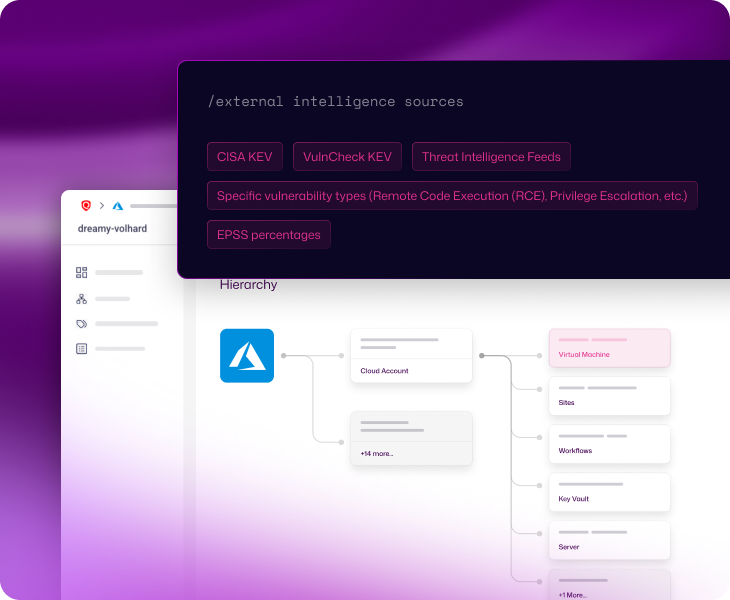
Enrich findings with live threat feeds like CISA KEV, VulnCheck KEV, and EPSS to prioritize vulnerabilities based on real-world exploitability.
Internal Business Context
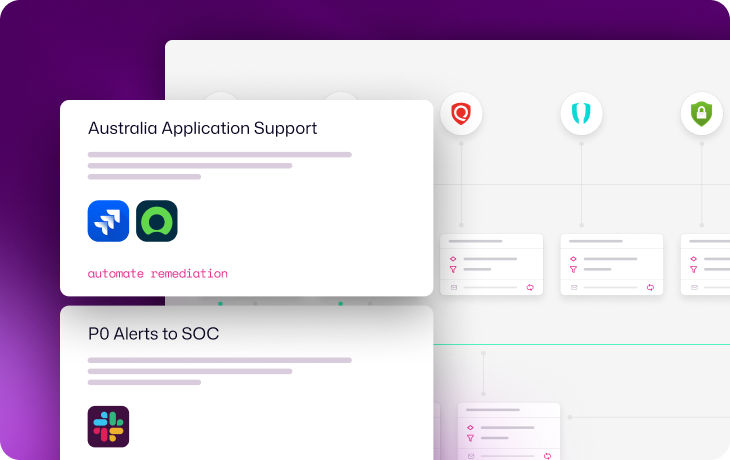
Tailor remediation plans by incorporating mission-critical business units, geographic regions, and regulated systems into the prioritization logic.
Asset Criticality Mapping
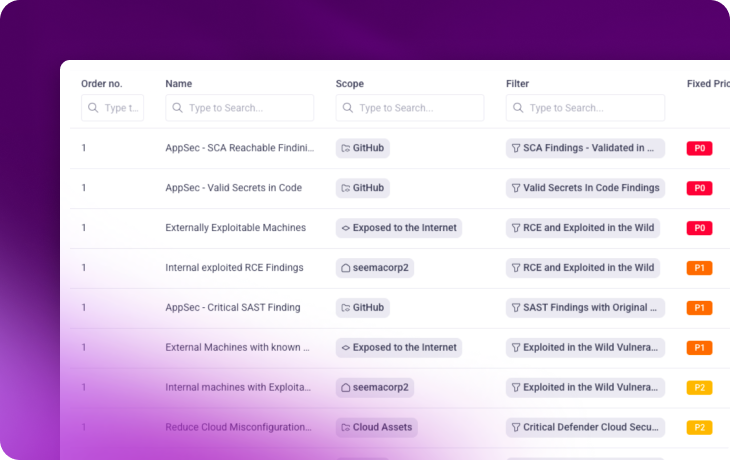
Automatically elevate the priority of vulnerabilities found on systems that support core functions, such as production environments or customer-facing platforms.
Drive measurable risk reduction at scale
Optimize your existing security stack by using AI-driven prioritization to ensure every remediation hour is spent on your most impactful exposures.


/research Report
2026 Exposure Action Report
Real exposure management insights based on 2025 customer data. Learn how teams scale remediation, reduce backlogs, and drive measurable risk reduction.
Frequently asked questions
Most security programs generate far more findings than teams have capacity to remediate, and traditional CVSS-based scoring systems do not account for the factors that determine real-world impact. A critical vulnerability on an isolated, non-production system is categorically different from a medium-severity finding on a customer-facing platform with a known exploit in active use, yet static severity scores treat them as directly comparable. Without a mechanism to weigh asset criticality, exploitability, and business context simultaneously, teams default to addressing the loudest or most recent findings rather than the most consequential ones.
The result is a prioritization gap: security effort is distributed across a long tail of lower-impact findings while genuinely high-risk exposures linger unaddressed. Closing this gap requires a framework that incorporates threat intelligence, internal business context, and environmental factors into a dynamic, transparent scoring model rather than relying on generic severity designations alone.
Severity describes the inherent characteristics of a vulnerability in isolation, typically expressed through metrics like CVSS that capture factors such as attack complexity, required privileges, and potential impact. Risk, by contrast, is contextual: it reflects the likelihood and consequence of exploitation given a specific organization’s environment. A high-severity vulnerability on a non-internet-facing system with strong compensating controls may represent negligible risk, while a moderate-severity flaw on a mission-critical, externally exposed asset could represent an immediate, material threat.
Effective risk prioritization requires bridging this distinction by enriching severity data with asset criticality mapping, real-world exploitability indicators such as CISA Known Exploited Vulnerabilities (KEV) and EPSS scores, and organizational factors such as regulatory exposure and business unit sensitivity. Organizations that conflate severity with risk consistently misallocate remediation resources and accumulate unnecessary exposure in the areas that matter most.
Asset criticality is one of the most significant contextual variables in any risk-based prioritization framework. A vulnerability’s remediation urgency should scale with the business importance of the affected system. Production environments, customer-facing platforms, data stores containing regulated information, and systems that underpin core revenue-generating functions all warrant a higher remediation priority than development or isolated internal assets carrying the same raw severity score.
Operationalizing asset criticality requires organizations to maintain an up-to-date asset inventory with classification metadata that can be fed directly into prioritization logic. When this context is integrated, security teams can automatically elevate findings on high-value targets and deprioritize those on lower-consequence systems, ensuring that remediation capacity is consistently directed toward the exposures with the greatest potential for business impact.
External threat intelligence transforms prioritization from a theoretical exercise into an operationally grounded one. Feeds such as the CISA Known Exploited Vulnerabilities catalog and the Exploit Prediction Scoring System (EPSS) provide real-world signal about which vulnerabilities threat actors are actively exploiting and which are likely to be weaponized in the near term. This allows security teams to deprioritize vulnerabilities that are theoretically severe but have no observed exploitation activity, and to escalate those already appearing in active attack campaigns.
AI-assisted threat actors are further compressing the window between vulnerability disclosure and exploitation, accelerating the reconnaissance, proof-of-concept development, and targeting phases of an attack. This makes timely integration of threat intelligence into prioritization workflows increasingly critical. Organizations that rely solely on periodic scoring cycles risk discovering that their remediation queue is outdated before they can action it.
A mature risk prioritization framework combines multiple layers of context into a coherent, transparent scoring model. At its foundation, it normalizes and deduplicates findings across all security tools to eliminate noise from redundant or conflicting data. It then enriches each finding with external threat intelligence, such as exploitability data, active exploit indicators, and threat actor targeting patterns, and overlays internal business context such as asset criticality, regulated system classification, and mission-critical function mapping.
Critically, the framework should produce prioritization rationale that is legible and defensible, not a black-box score. Security and remediation teams need to understand why a specific finding has been elevated so they can allocate effort with confidence and communicate urgency to stakeholders. Organizations that invest in this kind of structured, context-aware prioritization consistently demonstrate measurably lower mean time to remediate their highest-risk exposures and a reduction in the proportion of critical findings that age past acceptable SLAs.
When organizations treat all findings as roughly equivalent or rely on volume-based triage, the most significant consequence is misallocated remediation capacity. Engineering and IT resources spend cycles patching lower-risk findings while genuinely exploitable vulnerabilities on critical systems remain open. This creates a false sense of security whereby remediation velocity may appear high while actual risk reduction remains minimal. In practice, breaches frequently occur through exposures that were present in the environment, known to the security team, but buried in a backlog that prioritized the wrong items.
The downstream effects extend beyond security posture. Regulatory frameworks including NIST CSF, PCI DSS, and ISO 27001 increasingly expect organizations to demonstrate risk-based remediation decisions, not simply evidence of patching activity. Failure to show that remediation effort was directed at the highest-risk exposures can create compliance gaps, increase audit scrutiny, and expose the organization to liability in the event of a breach tied to a known, unaddressed vulnerability.
The primary indicators of prioritization effectiveness are the proportion of genuinely high-risk findings that are remediated within defined SLAs, and the reduction in the overall exposure of critical and high-value assets over time. If an organization’s remediation throughput is high but breaches or near-miss incidents still originate from vulnerabilities that were in the environment for extended periods, that is a clear signal that prioritization logic is not aligned with actual impact.
Secondary metrics include the ratio of critical-to-total findings (a high ratio suggests scoring calibration issues), mean time to detect and remediate for high-risk assets specifically, and the degree to which remediation effort correlates with asset criticality classifications. Organizations should also review the accuracy of their prioritization model periodically against threat intelligence data, specifically, whether the vulnerabilities they deprioritized remained unexploited and whether those they escalated reflected genuine threat actor activity.


Say Goodbye to
Backlog of vulnerabilities
Misconfigurations
Scattered findings across tools