



/security engineering & devsecops
Embed risk reduction into your development lifecycle
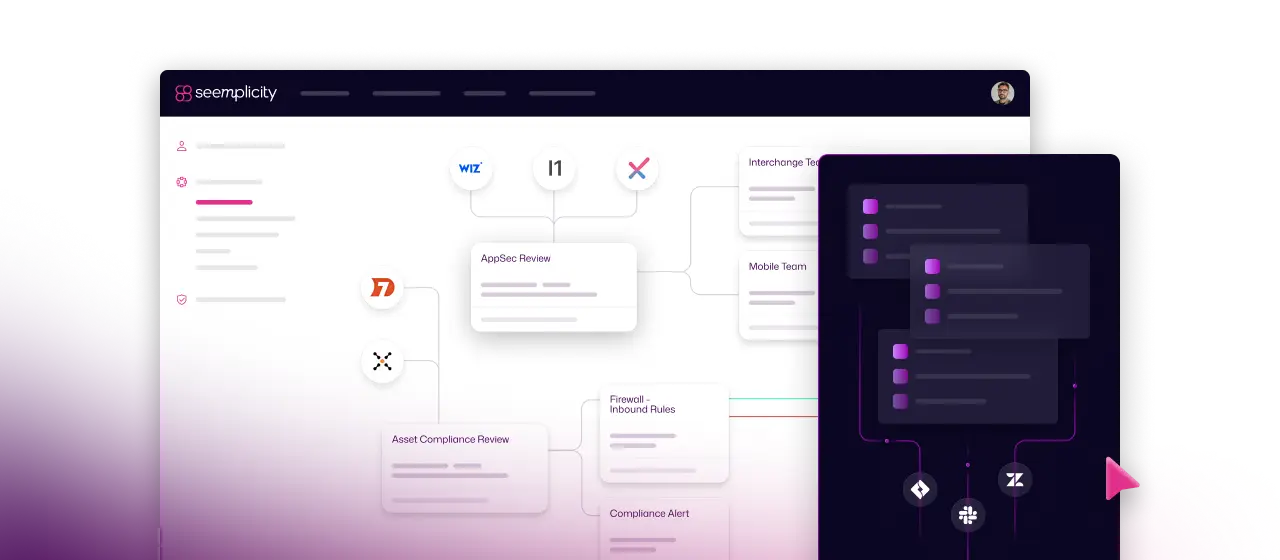
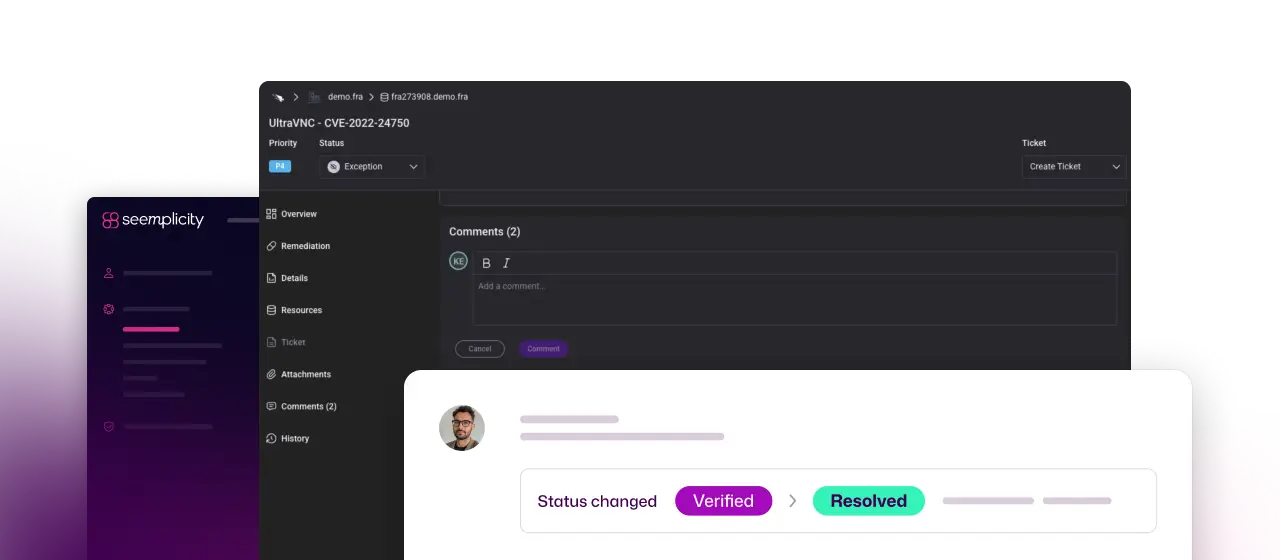
- Automate Ticketing and Routing
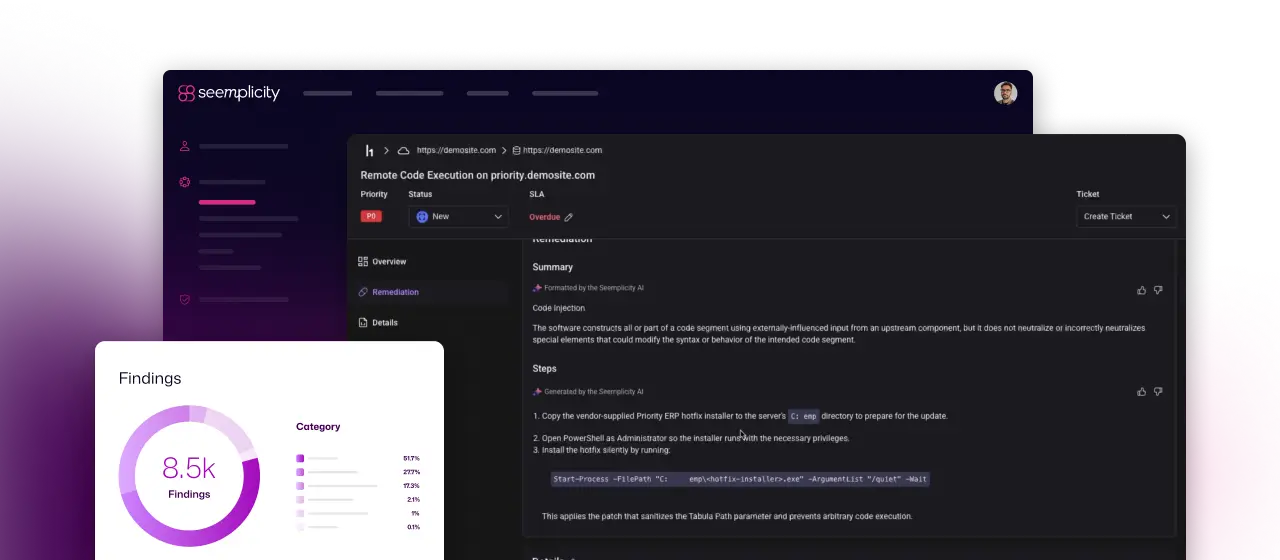
- Provide Software-Specific Guidance
- Sync Status and Comments
Seemplicity bridges the gap between findings and fixing by automating the handoff to engineering and ensuring security resolution is embedded directly into your existing development lifecycle.
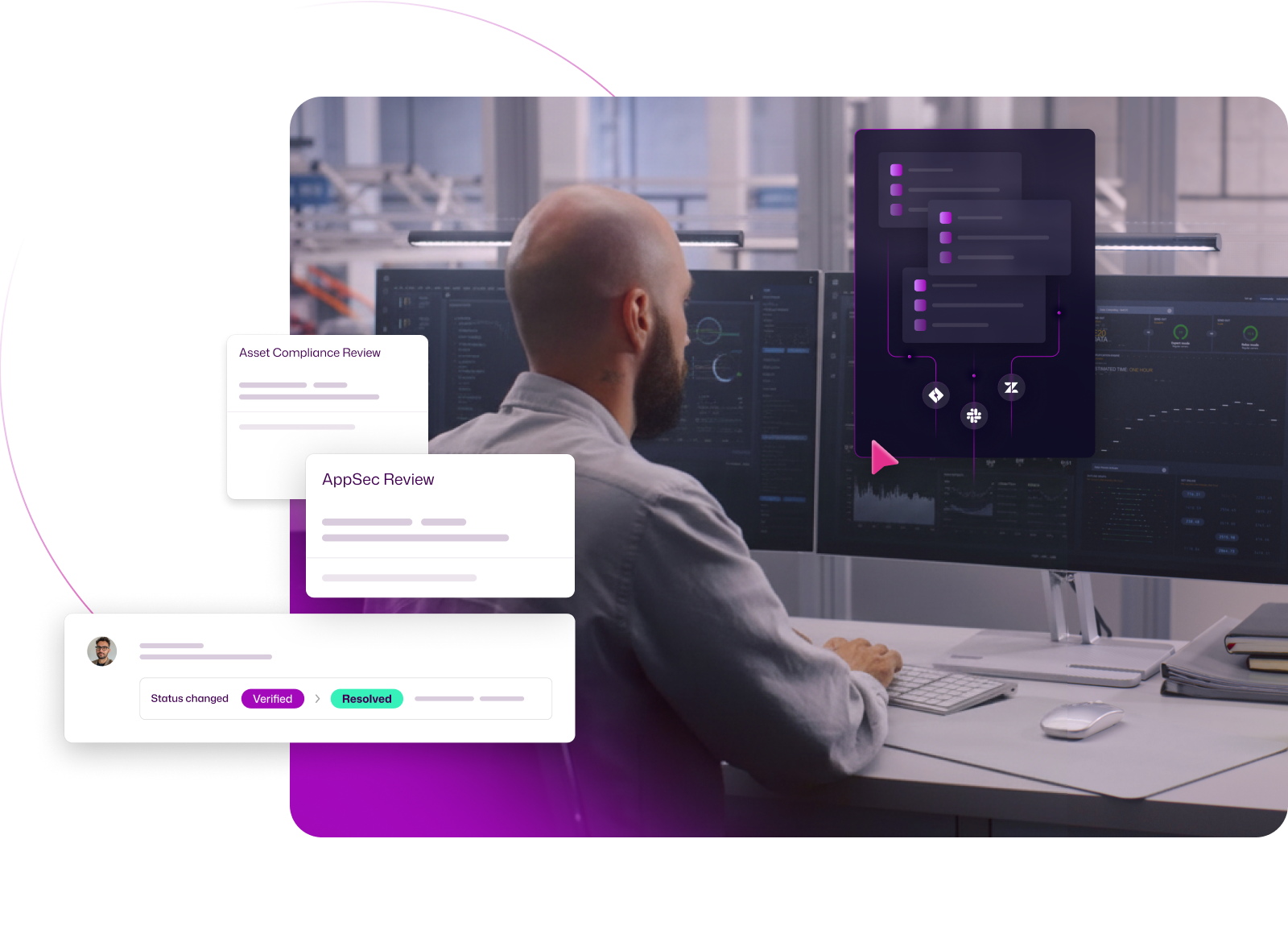
Stop Chasing Tickets and Start Closing Vulnerabilities
Most security stacks were not designed to respond to:

Scaling resolution alongside detection

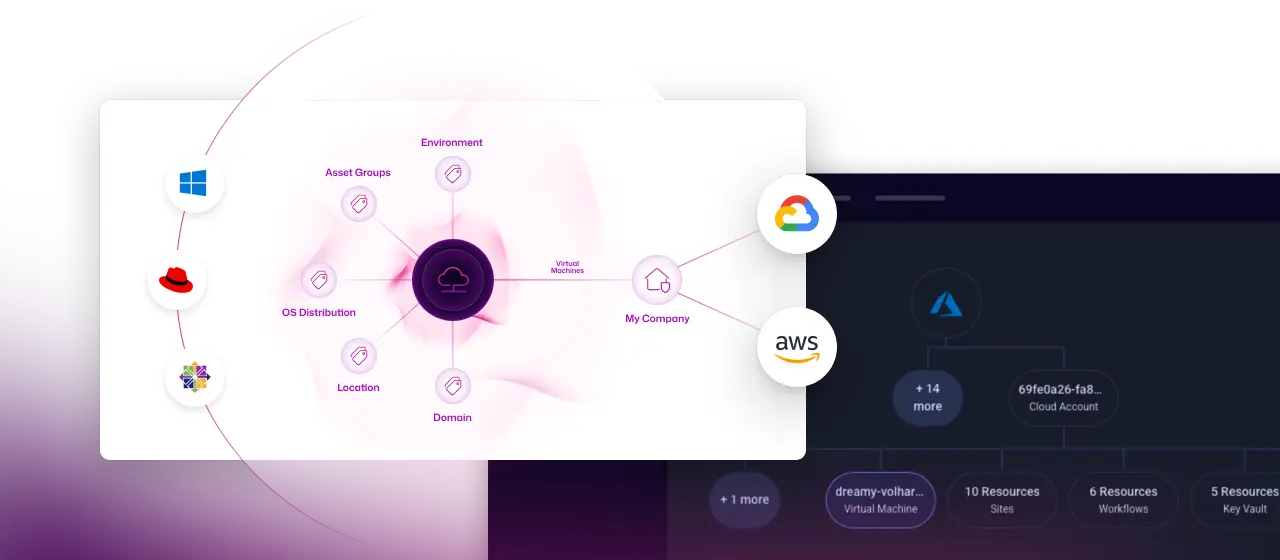
Automated prioritization with business context

Bidirectional status syncing

Actionable engineering handoffs

Environment-specific guidance





Not only have we seen a reduction in our vulnerabilities, we’ve also used Seemplicity for tool rationalization.
John Lodini
VP of Security Architecture and Engineering, Hertz

If you’re looking to gain full visibility with automation, then Seemplicity is definitely the right platform.
Venicia Solomons
Cloud Security Architect, Carlsberg Group

We went through a SOC 2 Type II audit and with Seemplicity the auditor had no more questions
Amanda Franklin
Director of Information Security, YipitData

Seemplicity reduces over 90% of the issues that we really need to deal with.
Yaron Blachman
Chief Information Security Officer, OpenWeb
Teams get aligned by design
Security, Engineering, IT, and GRC are aligned by design. Seemplicity meets each team where they work, while giving CISOs centralized visibility and control. No process disruption. No tool replacement.



Frequently asked questions
Security engineering sits at the operational core of exposure management, responsible for translating findings from scanners, SAST/DAST tools, and SCA into actionable remediation work that development teams can actually execute. Where vulnerability management leaders define program strategy and prioritization policy, security engineers own the technical implementation: configuring detection tooling, establishing remediation workflows, mapping findings to asset owners, and ensuring that high-severity exposures are addressed within defined SLAs.
In practice, this means security engineers must bridge a significant gap between security findings and engineering delivery. They are accountable for routing tickets to the right teams, providing technically precise remediation guidance, and maintaining visibility into fix status, all while keeping pace with the continuous volume of findings that modern scan coverage generates.
The most persistent challenge is the detection-to-fix latency that accumulates when security findings are poorly contextualized or manually routed. Developers receiving raw scanner output without environment-specific guidance, clear ownership assignment, or prioritization rationale are unlikely to remediate efficiently. This results in findings backlog growth and remediation drift. This friction is compounded in organizations where security and engineering operate on separate workflows and toolchains, requiring manual synchronization that rarely scales.
A secondary challenge is noise management. Modern CI/CD pipelines and multi-scanner environments generate large volumes of findings, many of which are duplicates, low-severity, or inapplicable to the specific deployment context. Security engineers must implement deduplication logic, CVSS- and EPSS-informed triage, and business context overlays to ensure that development teams are working on findings that represent genuine, exploitable risk rather than theoretical vulnerabilities with no real-world attack path.
Effective vulnerability prioritization in DevSecOps environments moves beyond raw CVSS scores to incorporate exploitability signals such as EPSS, active threat intelligence, asset criticality, and production exposure context. A high-severity finding in a non-internet-facing development environment carries materially different risk than the same CVE in a customer-facing production service, and prioritization frameworks must reflect this distinction to prevent engineering effort from being misallocated.
DevSecOps teams typically integrate prioritization directly into the CI/CD pipeline, triggering severity-based gates at build, deploy, or merge stages, while also maintaining a continuous remediation queue for findings identified post-deployment. Mature programs cross-reference CISA KEV data and active exploitation indicators to identify the subset of findings that represent urgent, actionable risk, ensuring that limited engineering capacity is directed toward high impact risks.
Ownership ambiguity is one of the leading causes of remediation failure in large engineering environments. When a finding cannot be automatically attributed to a responsible team due to gaps in CMDB data, inconsistent asset tagging, or shared infrastructure, it stalls in limbo, contributing to backlog growth without any accountable party. Security engineering teams must establish asset-to-owner mapping frameworks that account for the complexity of microservices architectures, cloud-native environments, and shared codebases where multiple teams may have partial ownership of a vulnerable component.
Effective accountability models combine automated routing logic – based on repository ownership, infrastructure tags, or service catalogs – with escalation paths for unresolved or disputed findings. Integrating vulnerability assignments directly into existing ticketing systems (such as issue trackers used natively by engineering teams) reduces friction, improves cross-team alignment, and ensures that remediation work is visible within developer workflows, rather than isolated in security tooling that engineers rarely access.
Shift-left security refers to the practice of integrating security testing and vulnerability detection earlier in the software development lifecycle – at the code commit, pull request, or build stage – rather than relying exclusively on post-deployment scanning. For DevSecOps teams, this approach directly reduces remediation cost and complexity: vulnerabilities identified during development are significantly cheaper and faster to fix than those discovered in production, where live system constraints, change management processes, and potential business impact create friction around rapid patching.
From an exposure management perspective, shift-left practices require security engineers to configure and tune SAST, SCA, and IaC scanning tooling within CI/CD pipelines, calibrate enforcement gates to block high-confidence, exploitable findings without generating developer friction, and ensure that findings surfaced at build time are actionable i.e. accompanied by clear remediation guidance and prioritized against the same risk framework applied to production findings. The goal is a continuous feedback loop that embeds security accountability into the development workflow itself, reducing the volume of vulnerabilities that reach production and require post-deployment remediation.
Organizations running multiple security scanning tools covering SAST, DAST, SCA, container image scanning, CSPM, and infrastructure-as-code analysis routinely encounter significant finding overlap, with the same underlying vulnerability surfaced by multiple scanners under different identifiers and severity ratings. Without a centralized aggregation and normalization layer, security engineers spend disproportionate time on manual deduplication rather than remediation, and developers receive redundant, conflicting tickets that erode trust in the security program.
Addressing this requires a unified findings management approach that ingests data from all active scanners, deduplicates findings against a canonical vulnerability record (typically keyed on CVE or CWE identifiers in combination with asset context), normalizes severity using a consistent risk scoring framework, and presents engineering teams with a single, prioritized remediation queue. Centralizing exposure data reduces alert fatigue, improves signal quality, and ensures that MTTR calculations and SLA tracking reflect actual vulnerability exposure rather than the artificial inflation caused by multi-tool duplication.


Say Goodbye to
Backlog of vulnerabilities
Misconfigurations
Scattered findings across tools