



/Exposure Management for CISO
Prove security progress
- Measurable Risk Reduction
- Executive-Ready Reporting
- Audit-Ready Compliance
Seemplicity’s AI agents help CISOs proactively analyze business risk and turn scattered data into measurable risk reduction.
The gap between visibility and resolution
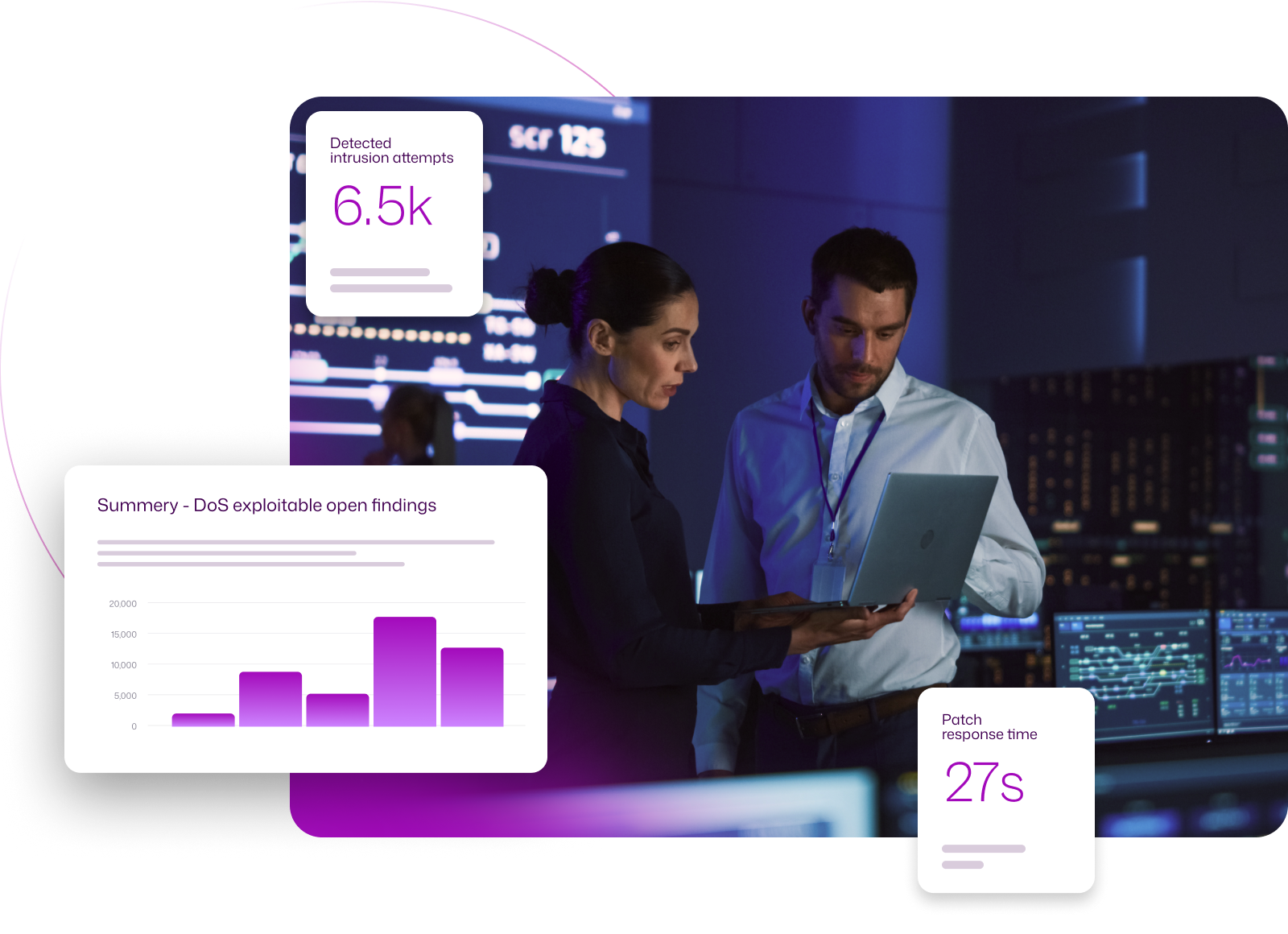
Most security stacks were not designed for:

Exploit windows shrinking faster than response times and resolution

Generic risk scoring ignoring unique business context

Communication gaps leading to missed deadlines

Fragmented ownership stalling remediation pipeline

Manual evidence collection during audit cycles





Not only have we seen a reduction in our vulnerabilities, we’ve also used Seemplicity for tool rationalization.
John Lodini
VP of Security Architecture and Engineering, Hertz

If you’re looking to gain full visibility with automation, then Seemplicity is definitely the right platform.
Venicia Solomons
Cloud Security Architect, Carlsberg Group

We went through a SOC 2 Type II audit and with Seemplicity the auditor had no more questions
Amanda Franklin
Director of Information Security, YipitData

Seemplicity reduces over 90% of the issues that we really need to deal with.
Yaron Blachman
Chief Information Security Officer, OpenWeb
Teams get aligned by design
Security, Engineering, IT, and GRC are aligned by design. Seemplicity meets each team where they work, while giving CISOs centralized visibility and control. No process disruption. No tool replacement.



Frequently asked questions
CISOs are contending with attack surfaces that expand faster than security teams can respond. The convergence of cloud-native infrastructure, distributed development pipelines, and third-party dependencies has produced findings volumes that manual triage processes cannot absorb. Meanwhile, AI-assisted reconnaissance is compressing exploit windows; the time between public CVE disclosure and active exploitation has shortened significantly, increasing the cost of slow remediation cycles.
Compounding the volume problem is a structural one: remediation accountability is fragmented across security, IT, and engineering teams that operate in different tools and under different incentive structures. Without consistent SLA enforcement and cross-functional visibility, critical findings stall in handoff gaps, remediation drift accumulates, and MTTR climbs. CISOs must address both the signal-to-noise problem and the organizational design problem simultaneously.
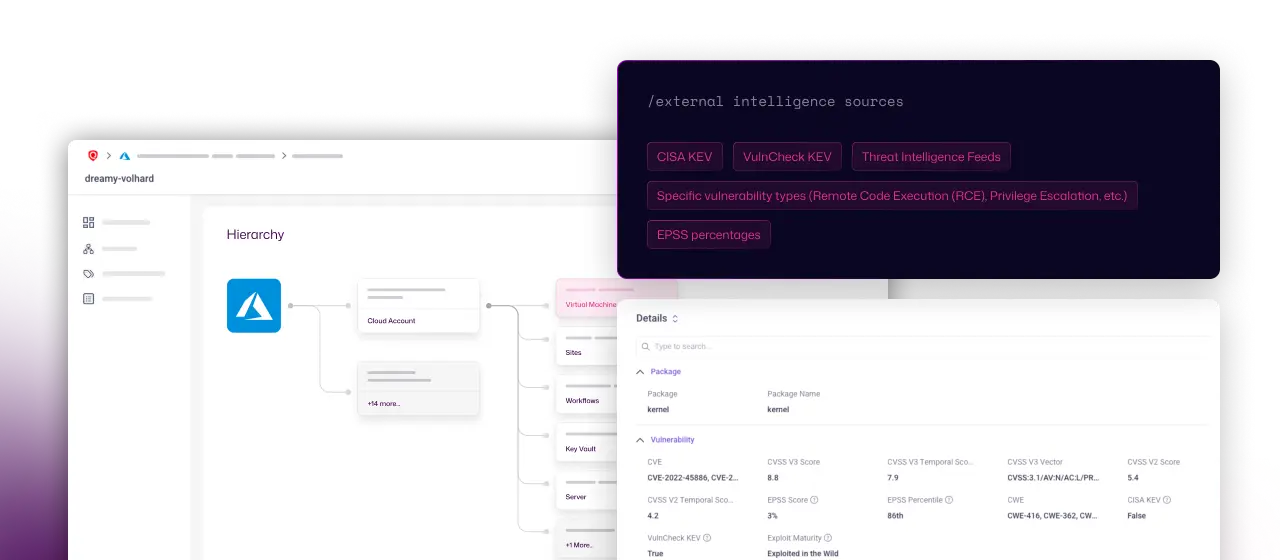
Effective CISO-level risk prioritization moves beyond CVSS scores, which measure technical severity in isolation but do not account for exploitability in context. Leading security organizations layer in signals from EPSS, CISA KEV designations, and threat intelligence feeds to assess active exploitation likelihood, then correlate those signals against asset criticality and business context, mapping exposures to revenue-generating systems, regulated data environments, or customer-facing infrastructure to determine actual business impact.
This approach produces a prioritized exposure view that reflects true organizational risk rather than raw finding count. CISOs can then align remediation sequencing to risk-reduction outcomes, addressing the subset of vulnerabilities that represent the greatest likelihood of breach or compliance consequence, rather than optimizing for closure velocity across a low-priority backlog.
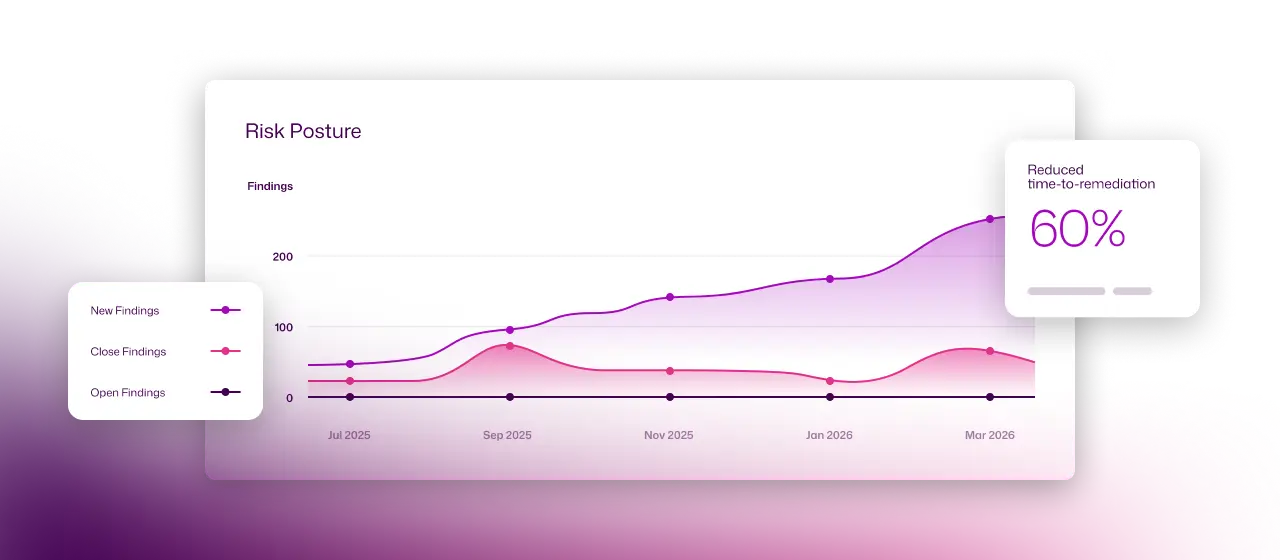
Board-level security reporting requires translating technical program metrics into business-relevant outcomes. CISOs increasingly anchor executive reporting on risk reduction rate, SLA compliance by asset tier, mean time to remediate (MTTR) across vulnerability classes, and exposure coverage trends over time. These metrics shift the narrative from security as a cost center to security as a risk governance function with measurable progress.
The challenge is that these metrics are difficult to produce when findings data is fragmented across disparate scanning tools, ticketing systems, and asset inventories. CISOs who invest in centralizing exposure data – creating a unified, normalized view across their security stack – are better positioned to generate consistent, defensible reporting that holds up under audit scrutiny and satisfies the board’s expectation of transparent risk accountability.
Remediation is fundamentally a cross-functional problem. Security teams identify and triage findings; engineering and IT teams own the systems where fixes must be applied. Without a structured accountability model – defined ownership per asset or finding class, clear SLAs, and escalation paths – remediation stalls at the security-to-engineering handoff. CISOs must operationalize this handoff through workflow integrations that meet engineering teams in their existing environments, whether that is a ticketing system, CI/CD pipeline, or infrastructure-as-code process.
Equally important is establishing shared context. Engineering teams prioritize their own backlogs against feature delivery commitments; without business risk framing, security requests compete poorly. CISOs who build remediation programs around contextual prioritization – communicating which findings carry material business exposure, not just high CVSS scores – generate better cross-functional response rates and improve cross-team alignment, reducing the friction that causes critical vulnerabilities to age out past acceptable SLA thresholds.
Continuous Threat Exposure Management (CTEM) is an iterative security program framework that shifts organizations from point-in-time assessments to ongoing exposure reduction cycles. The CISO’s role in a CTEM program is primarily one of governance and program design: defining the scoping and prioritization criteria that determine which attack surface segments receive active focus, establishing the risk thresholds that govern escalation, and ensuring that validation and mobilization workflows are operationalized across teams.
In practice, this means CISOs must ensure that CTEM cycles produce actionable outputs. Not just visibility into what is exposed, but tracked remediation activity with measurable closure rates. Reporting cadences tied to CTEM cycles give boards and executive stakeholders a structured view of how the organization’s exposure posture is evolving, which is increasingly expected as part of mature cyber risk governance programs.
To ensure audit readiness in an exposure management context requires demonstrating that the organization identifies, prioritizes, and remediates exposures in accordance with documented policies and within defined SLA windows. Regulators and auditors, including those evaluating against frameworks such as PCI DSS, ISO 27001, SOC 2, and NIS2, increasingly expect evidence of a systematic, risk-based approach to remediation, not just periodic scan outputs.
The operational challenge is that evidence collection is typically manual and labor-intensive, drawing security team time away from active risk reduction work. CISOs who maintain continuous, structured remediation records with documented ownership, SLA tracking, and remediation histories tied to specific findings, are able to produce audit-ready evidence on demand, reducing audit cycle disruption and demonstrating program maturity to regulators, customers, and cyber insurance underwriters alike.
Resource constraints make disciplined prioritization non-negotiable. CISOs operating with limited remediation capacity should concentrate efforts on vulnerabilities that combine exploitability signals – such as active exploitation status in the CISA KEV catalog, high EPSS probability scores, and available public exploits – with high asset criticality and minimal compensating controls. This risk-contextualized approach ensures that remediation capacity is deployed against exposures with the highest probability of causing material harm, rather than against the largest volume of findings. Establishing tiered SLA policies that align remediation urgency to risk severity also helps security and engineering teams sustain focus without overwhelming the remediation pipeline with undifferentiated demand.


Say Goodbye to
Backlog of vulnerabilities
Misconfigurations
Scattered findings across tools