



Operationalize CTEM across your entire exposure landscape
/Continuous threat exposure management
Bridge the gap between scoping and mobilization. Turn the five-phase CTEM strategy into a continuous system that actually reduces exposure.

CTEM isn’t something you buy.
It’s a process you operationalize.
The five-phase CTEM framework breaks down when it’s treated as a one-time solution instead of a continuous, evolving program.

Scoping breaks down with fragmented visibility. Shadow IT and point-in-time scans leave blind spots the moment a scan ends.

Prioritization collapses under false precision. Static CVSS scores flood teams with “critical” findings disconnected from actual business risk.

Mobilization is where momentum dies. Manual handoffs and fragmented ownership slow the path from finding to fix.

Compliance becomes theater. Programs optimize for passing audits, not reducing risk, leaving true security posture unknown.
CTEM execution, powered by AI
Unify scoping, discovery, prioritization, validation, and mobilization into one continuous system, turning fragmented signals into a clear path to action.
Continuous scoping across your entire attack surface
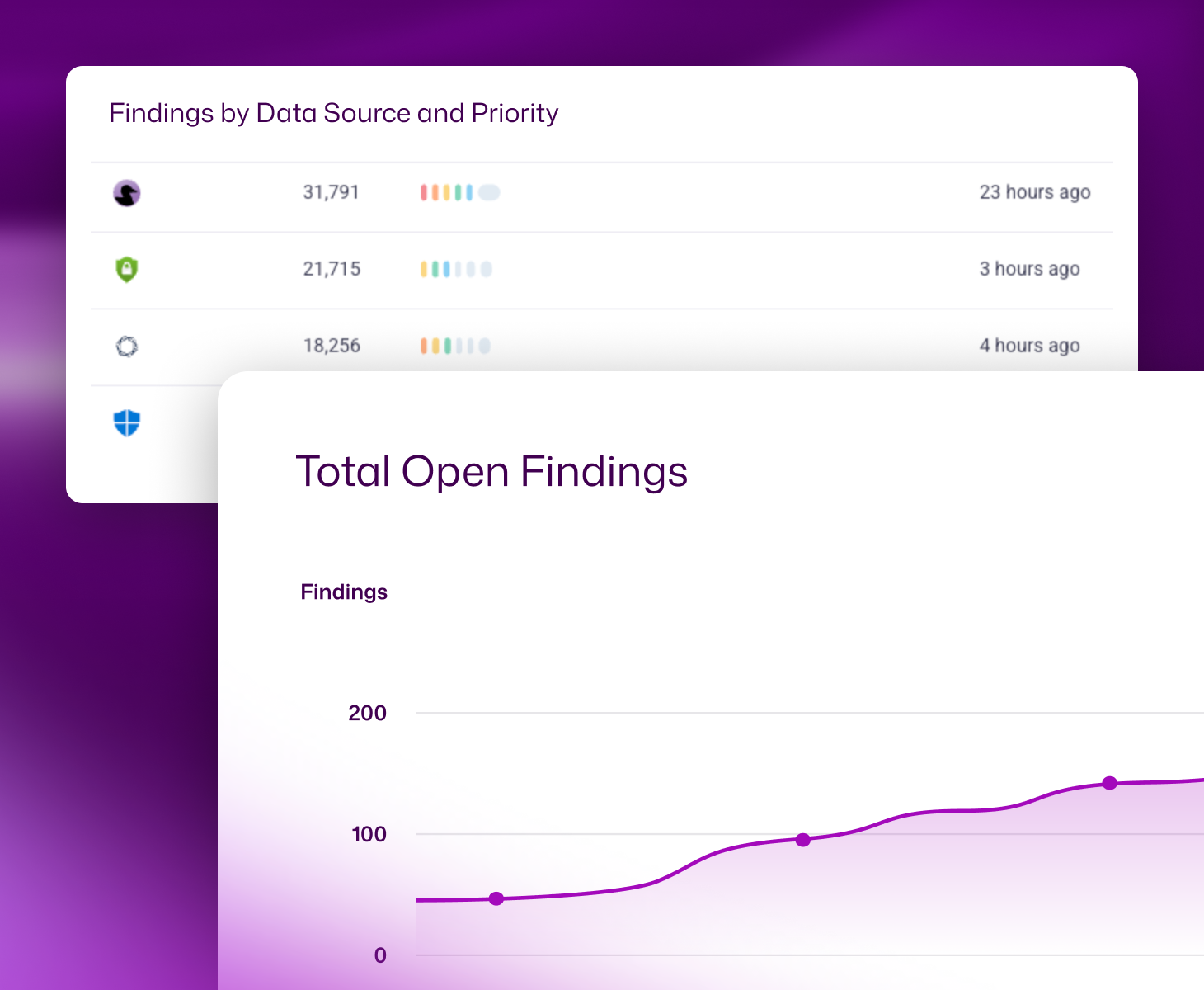
Maintain an always-current view of what matters. Normalize asset data across disparate tools and environments to define the true scope of your exposure landscape.
Comprehensive discovery without blind spots
Risk-based prioritization that reflects real-world exposure
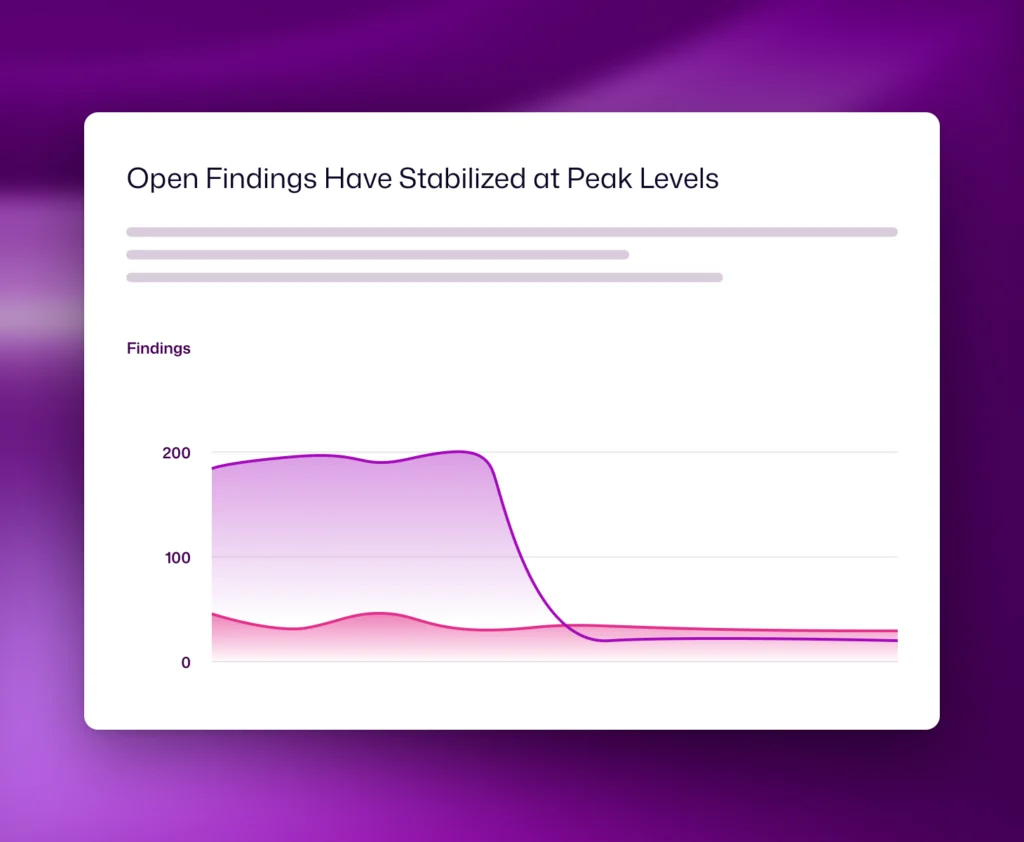
Reachability validation built for you
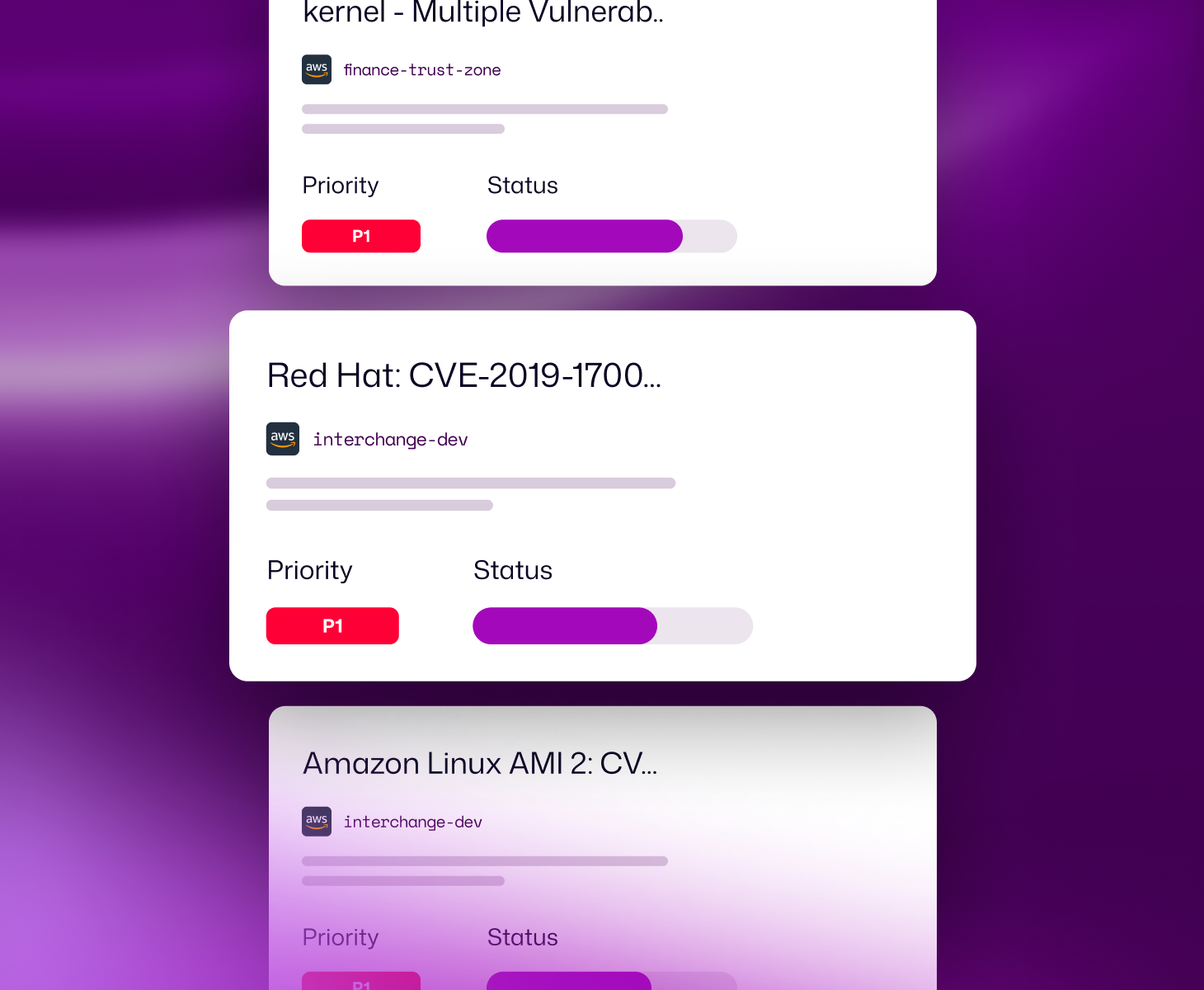
Mobilization that drives remediation at scale
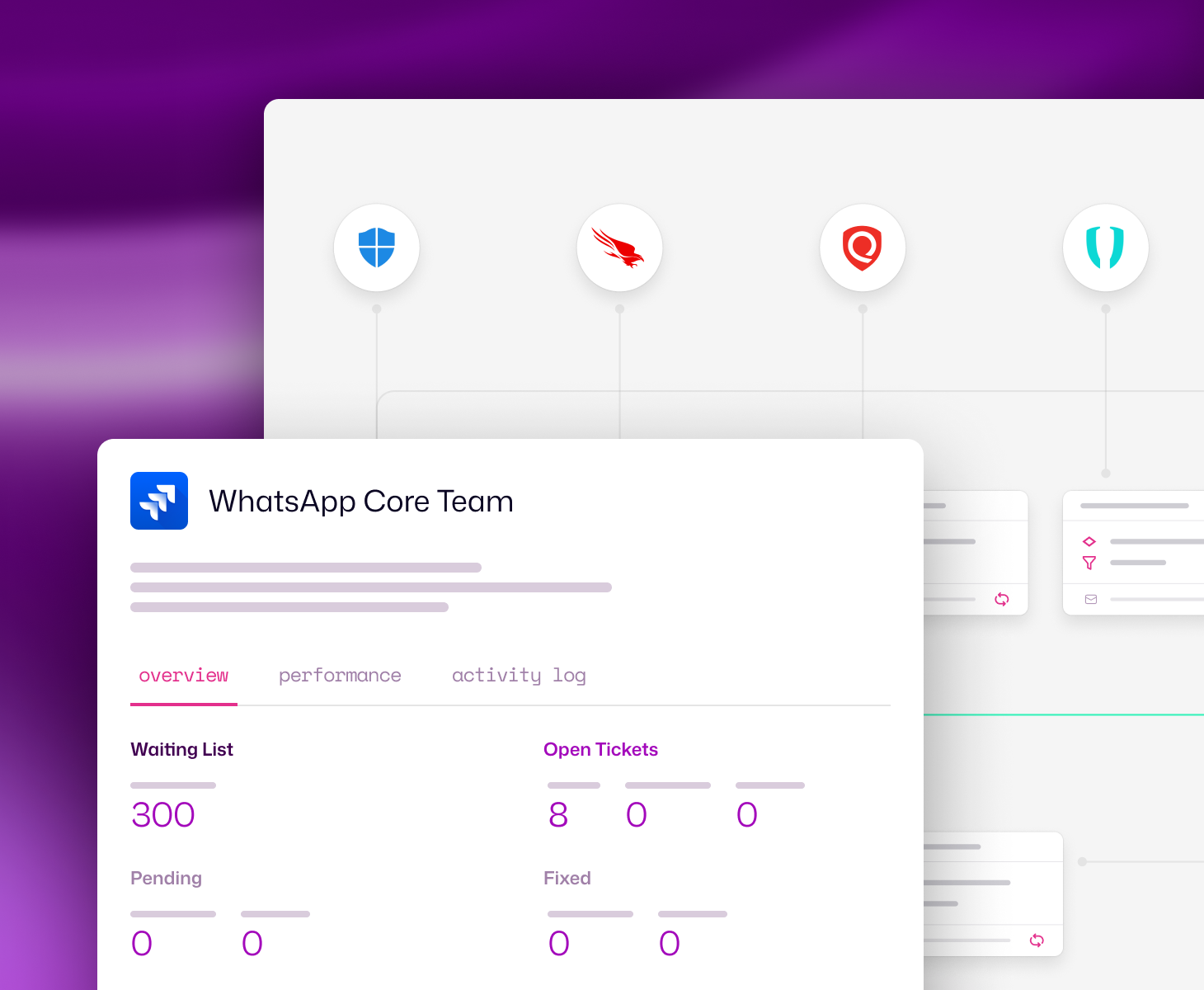
Real results for teams of every size.
Assets without owners
%
%
Critical findings resolved
%
%
Finding backlogs reduced
K
K
Remediation velocity
Weeks
Days
The platform purpose-built for CTEM operationalization
Unify and normalize your exposure data
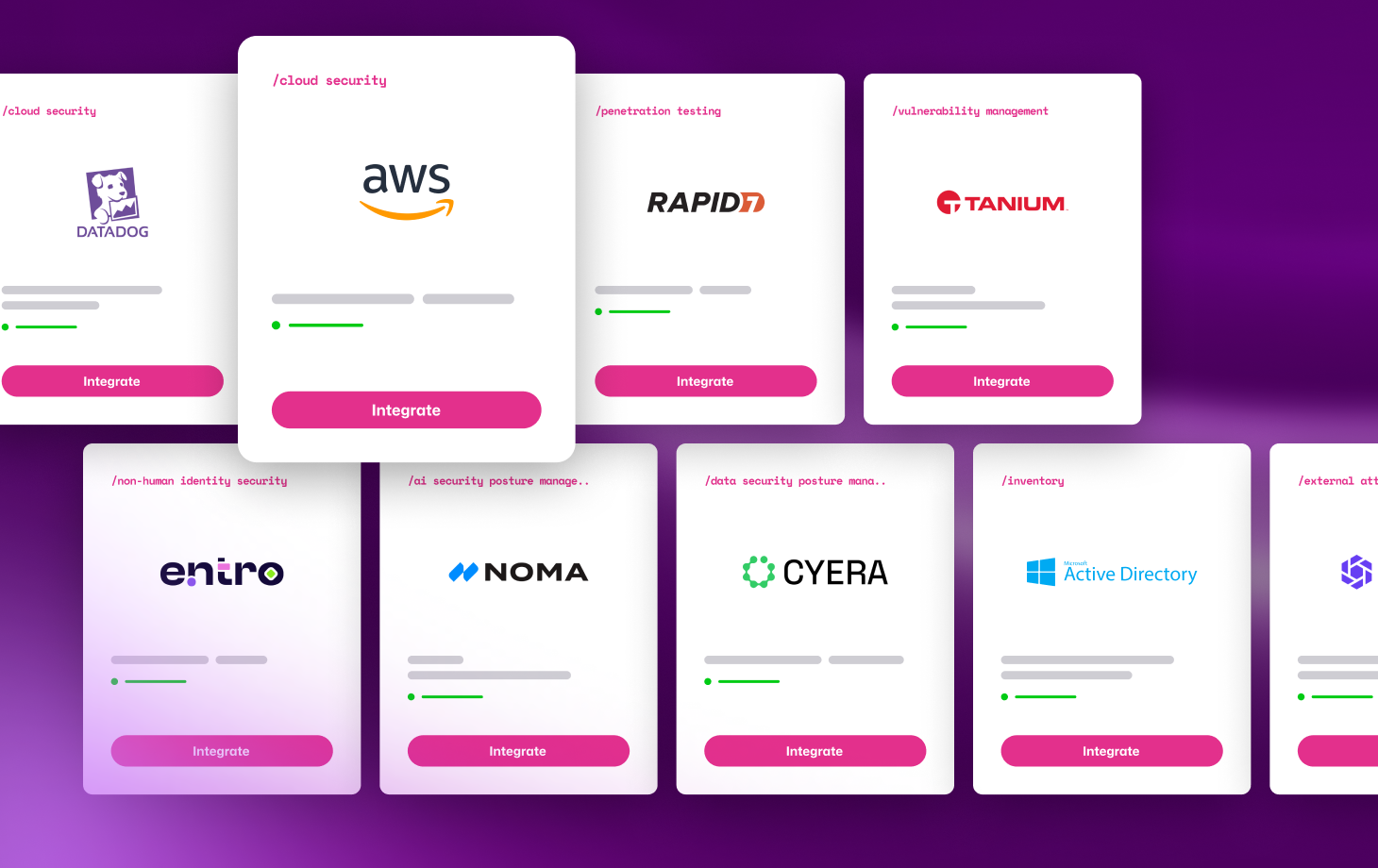
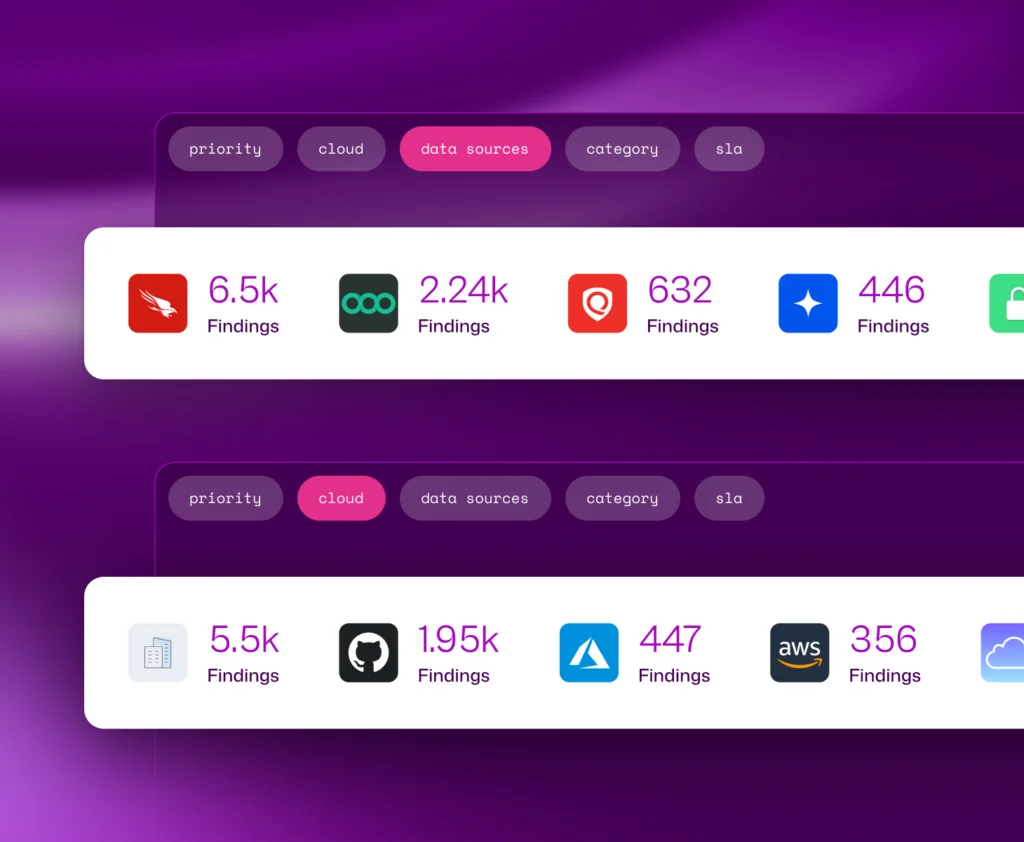
Ingest data from scanners, CNAPPs, ASM, and more into a single, consistent model. Eliminate fragmentation and create a reliable foundation for your CTEM program.
Shrink thousands of findings into a handful of real fixes
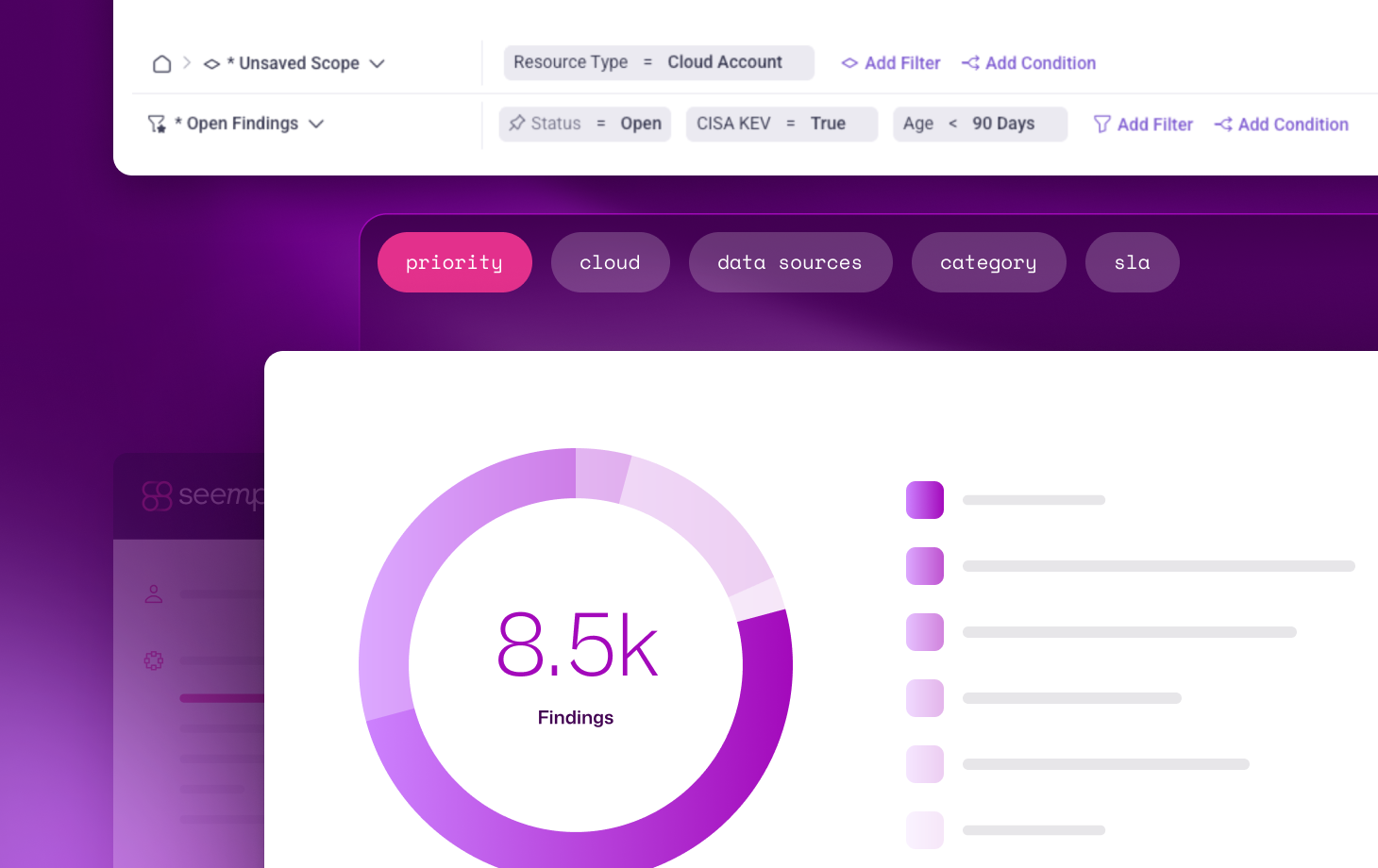
CTEM creates volume. We collapse it. By grouping exposures by the fix, not the finding, teams focus on a small set of actions that actually reduce risk.
AI agent teams drive remediation forward
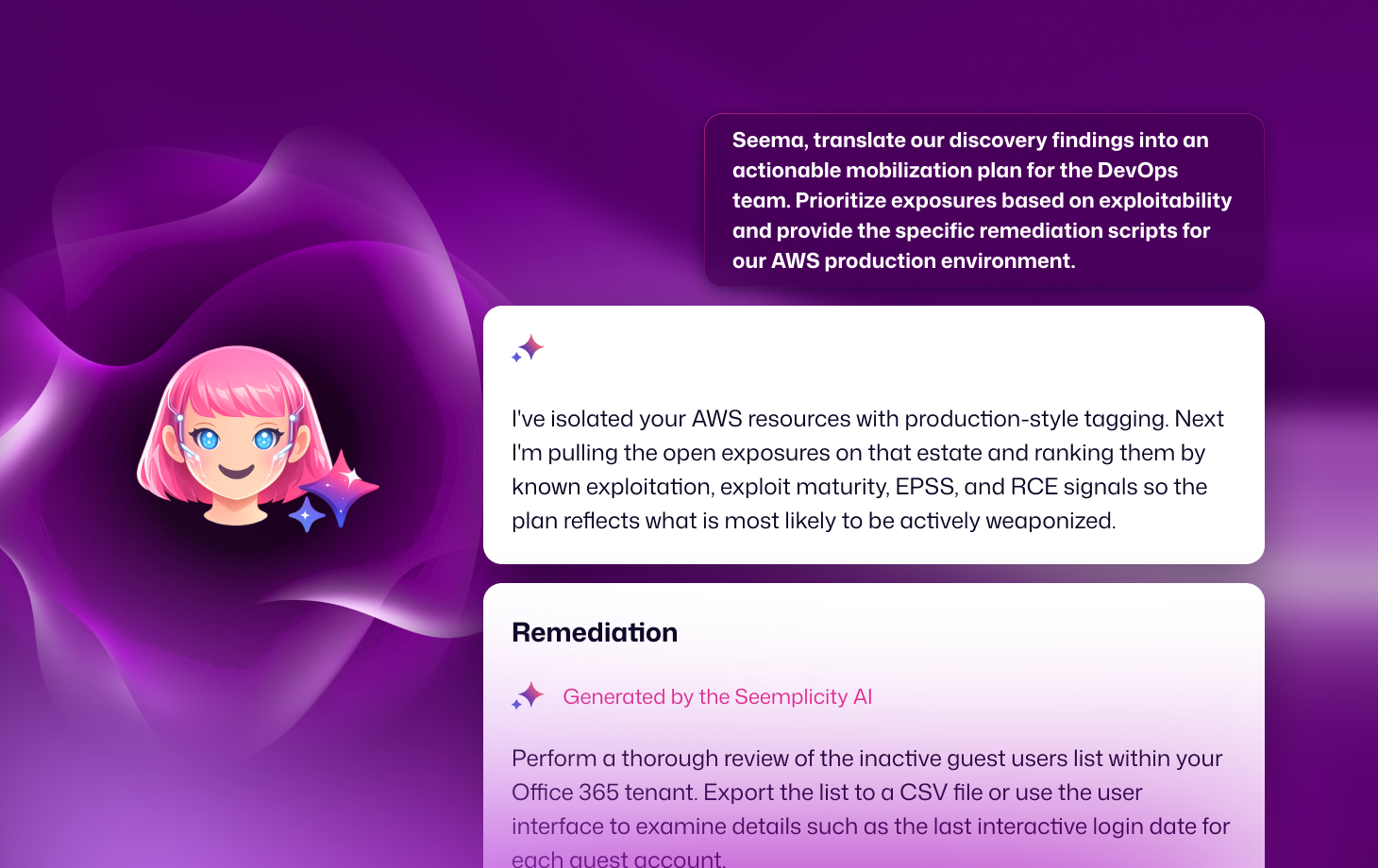
Specialized AI agents validate exposures, assign ownership, and route fix-ready tasks directly into existing workflows, eliminating manual handoffs and keeping execution moving.
See risk go down, not just activity go up
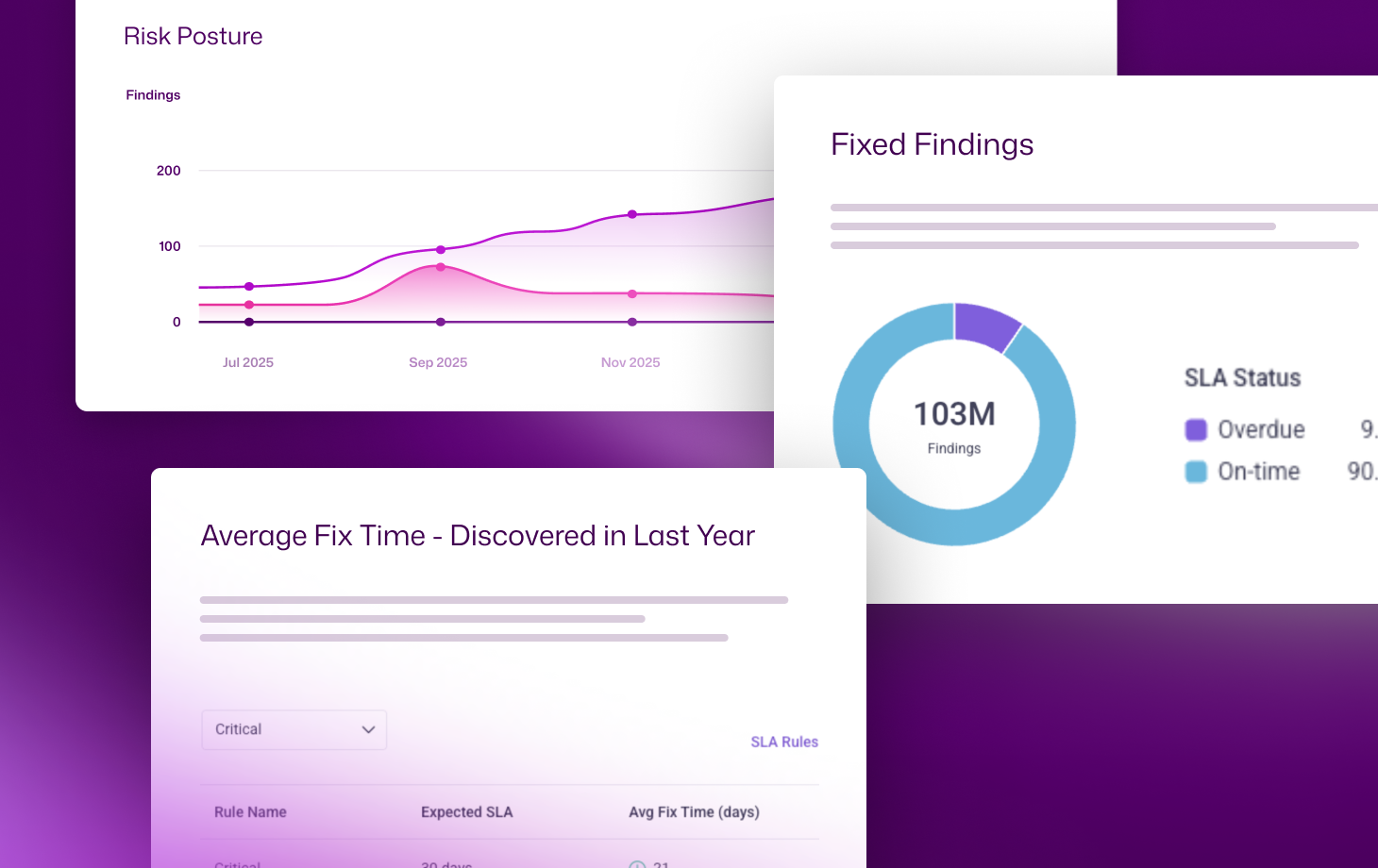
Most programs measure output. We measure impact. Track how exposures are actually reduced over time with live metrics that prove your CTEM program is working.
/research Report
2026 Exposure Action Report
Real exposure management insights based on 2025 customer data. Learn how teams scale remediation, reduce backlogs, and drive measurable risk reduction.
Frequently asked questions
Continuous Threat Exposure Management (CTEM) is a structured, iterative security program that enables organizations to continuously assess, prioritize, and remediate their exposure to cyber threats. Rather than conducting point-in-time assessments, CTEM establishes an ongoing cycle that keeps pace with the speed at which attack surfaces evolve and adversaries adapt their tactics.
The framework is typically organized around five stages: scoping, discovery, prioritization, validation, and mobilization. Together, these stages help security teams move from identifying potential exposures to taking measurable, risk-informed remediation action, ensuring that the most critical vulnerabilities and misconfigurations are addressed before they can be exploited.
CTEM works by establishing a repeating operational cycle that continuously surfaces and evaluates an organization’s exposures across its entire attack surface, including on-premises infrastructure, cloud environments, third-party assets, and human-layer risks. The process begins with scoping the areas of greatest business relevance, followed by discovery of all assets and associated vulnerabilities or weaknesses.
Once exposures are identified, they are prioritized not just by severity score but by exploitability, business context, and threat intelligence, filtering out noise and focusing remediation effort where it matters most. Validation techniques, such as attack path analysis and breach-and-attack simulation, confirm whether an exposure is genuinely exploitable in the organization’s specific environment. The final mobilization stage ensures findings are translated into actionable tasks assigned to the right remediation owners.
Traditional vulnerability management focuses primarily on identifying and scoring software vulnerabilities using frameworks such as CVSS, typically within defined scan cycles. While effective for tracking known CVEs, it often produces large volumes of findings without sufficient context to guide prioritization, and it rarely accounts for the full range of exposures an organization faces.
Continuous Threat Exposure Management extends well beyond vulnerability management by incorporating a broader scope of exposures including identity risks, misconfigurations, cloud security posture issues, and third-party attack surface factors. Critically, CTEM introduces validation and business-context layers that allow security teams to prioritize based on actual exploitability and organizational risk, rather than raw severity scores alone. Where vulnerability management answers “what is vulnerable,” CTEM answers “what is exploitable and what should be fixed first.”
Modern attack surfaces are dynamic and expanding. Cloud adoption, remote work, third-party integrations, and rapid software development cycles mean that new exposures emerge constantly, often faster than periodic assessment programs can detect them. In this environment, organizations that rely on infrequent or siloed security assessments are left with significant blind spots that adversaries can exploit.
CTEM addresses this gap by embedding exposure management into a continuous operational rhythm, giving security teams persistent visibility and the ability to respond proactively rather than reactively. By aligning remediation priorities with real-world threat intelligence and validated exploitability, CTEM also helps organizations optimize limited security resources, ensuring effort is directed toward exposures that represent genuine business risk rather than theoretical vulnerabilities.
The CTEM framework comprises five sequential, repeating stages. Scoping defines which business units, assets, and systems will be assessed in a given cycle, ensuring alignment between security activity and organizational priorities. Discovery inventories all assets within scope and identifies associated vulnerabilities, misconfigurations, and other exposures. Prioritization applies risk-based analysis – combining threat intelligence, asset criticality, and exploitability data – to rank exposures by the threat they pose to the organization.
Validation tests whether prioritized exposures can actually be exploited in the organization’s specific environment, using techniques such as penetration testing, breach-and-attack simulation, or attack path modeling. Finally, mobilization translates validated findings into clearly assigned remediation workflows, ensuring that the right teams act on the right exposures efficiently. The cyclical nature of the framework means that each completed iteration feeds back into subsequent scoping decisions, enabling continuous improvement.
Attack Surface Management (ASM) focuses specifically on discovering and monitoring an organization’s externally facing assets, identifying what is visible and potentially accessible to an attacker from the outside. It is primarily concerned with asset inventory, exposure discovery, and ongoing monitoring for changes to the external attack surface.
Continuous Threat Exposure Management is a broader programmatic framework that encompasses ASM as one of its inputs. In addition to external attack surface visibility, CTEM incorporates internal exposures, identity risks, cloud misconfigurations, and other threat vectors. It also adds the critical stages of prioritization, validation, and mobilization that ASM alone does not address. In practical terms, ASM can be understood as a key data source that feeds into a mature CTEM program.
Organizations beginning their CTEM journey should start by establishing clear scoping boundaries, identifying which parts of the business, which asset classes, and which threat scenarios represent the highest priority for initial cycles. Starting with a well-defined, manageable scope allows teams to build process maturity and demonstrate value before expanding coverage.
From there, the focus should shift to integrating the data sources needed to support discovery and prioritization: vulnerability scan results, cloud security posture findings, threat intelligence feeds, and asset inventory data. Building cross-functional workflows between security operations, vulnerability management, and IT remediation teams is equally important, as CTEM’s mobilization stage depends on clear ownership and accountability. Organizations that treat CTEM as an operational program rather than a technology deployment are best positioned to sustain it effectively over time.

Say Goodbye to
Backlog of vulnerabilities
Misconfigurations
Scattered findings across tools