



/exposure management for governance, risk, and compliance
Continuous compliance without the manual scramble
- Maintain Audit Readiness
- Enforce SLA Accountability
- Validate Fix Outcomes
Seemplicity continuously tracks exposure status and remediation outcomes to provide transparent reporting of your security process.

Drowning in Data But Starving for Proof
Most security stacks were not designed for:

Maintaining Audit Readiness

Enforcing SLA Accountability

Validating Fix Outcomes

Unifying Risk Visibility

Monitoring Process Efficiency






Not only have we seen a reduction in our vulnerabilities, we’ve also used Seemplicity for tool rationalization.
John Lodini
VP of Security Architecture and Engineering, Hertz
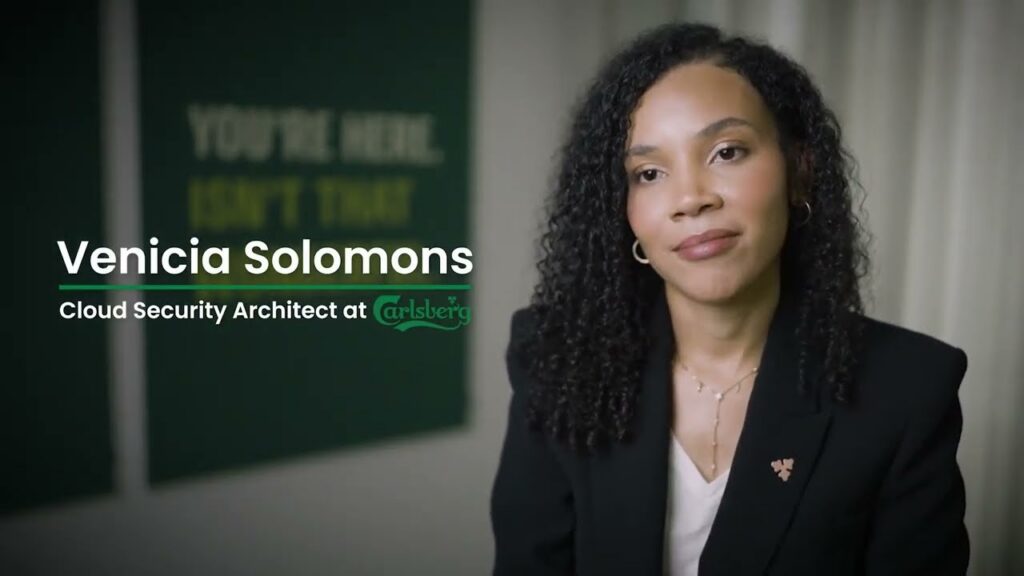
If you’re looking to gain full visibility with automation, then Seemplicity is definitely the right platform.
Venicia Solomons
Cloud Security Architect, Carlsberg Group

We went through a SOC 2 Type II audit and with Seemplicity the auditor had no more questions
Amanda Franklin
Director of Information Security, YipitData

Seemplicity reduces over 90% of the issues that we really need to deal with.
Yaron Blachman
Chief Information Security Officer, OpenWeb
Teams get aligned by design
Security, Engineering, IT, and GRC are aligned by design. Seemplicity meets each team where they work, while giving CISOs centralized visibility and control. No process disruption. No tool replacement.



Frequently asked questions
GRC and compliance teams are frequently caught between the volume of findings produced by security scanning tools and the evidentiary standards required by frameworks such as SOC 2, ISO 27001, PCI DSS, and NIST CSF. The core challenge is not identifying vulnerabilities; it is proving, at audit time, that identified risks were actioned within required timeframes. Without continuous, structured tracking of remediation status, teams default to manual evidence collection, which is both resource-intensive and prone to gaps.
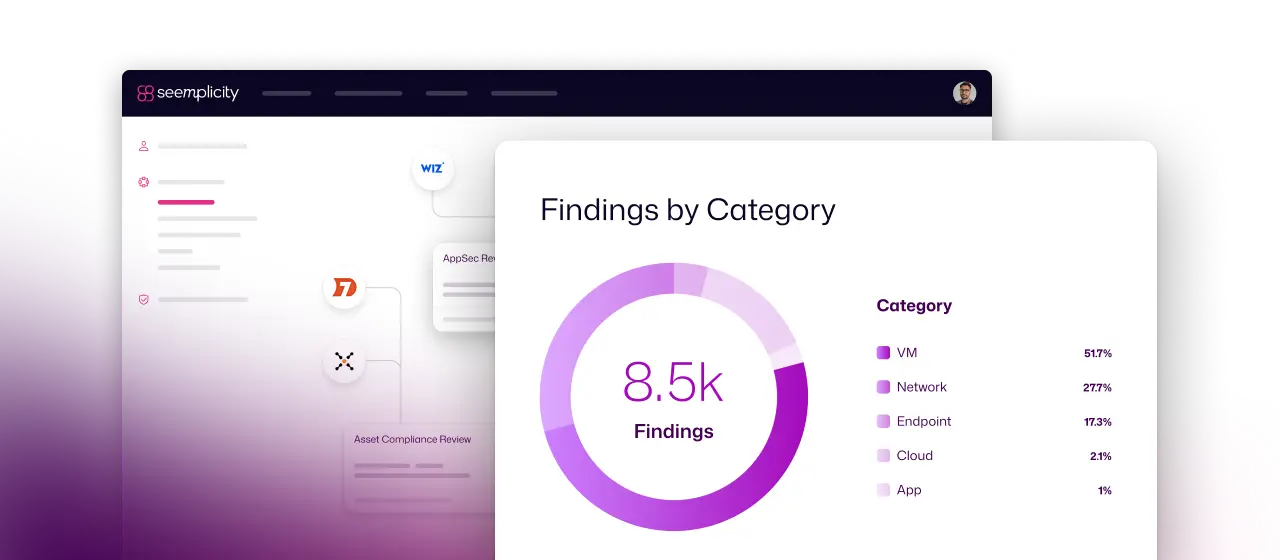
The fragmentation of findings data across disparate scanning tools such as DAST, SAST, cloud security posture managers, and network vulnerability scanners, each with its own severity taxonomy, compounds this challenge. Centralizing this exposure data into a unified risk view that maps meaningfully to control objectives is a persistent operational burden for GRC professionals.
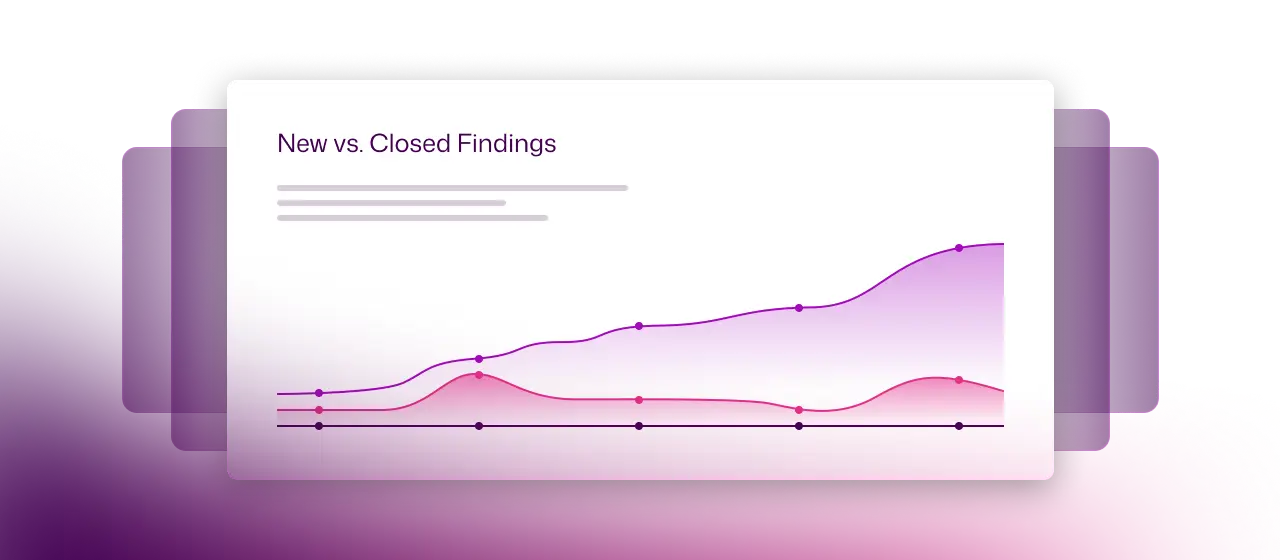
Compliance-oriented measurement typically centers on SLA adherence rates – the percentage of vulnerabilities remediated within the timeframes mandated by internal policy or external frameworks. Supporting metrics include mean time to remediate (MTTR) by severity tier, the ratio of open to closed findings over time, and remediation drift rates, which track how frequently resolved issues re-emerge due to incomplete fixes or regression. These KPIs provide auditors with quantitative evidence that the organization operates a functioning, risk-responsive remediation process.
Increasingly, regulators and auditors are moving beyond point-in-time snapshots toward continuous control validation. GRC teams that can demonstrate ongoing remediation activity, rather than a pre-audit cleanup sprint, are better positioned to satisfy frameworks that emphasize continuous monitoring, such as FedRAMP, CMMC, and DORA.
Compliance frameworks typically define remediation SLAs based on severity classifications, for example, critical vulnerabilities remediated within 15 or 30 days, high within 60 or 90 days. However, raw CVSS scores are a blunt instrument: they reflect theoretical severity rather than contextual exploitability or business impact. GRC teams that rely solely on CVSS-driven prioritization risk over-investing in remediation of low-probability findings while under-prioritizing exposures with active exploitation evidence such as CISA KEV listings or elevated EPSS scores.
A more defensible compliance posture integrates threat intelligence signals into the prioritization model. When a GRC team can demonstrate to an auditor that remediation sequencing was informed by active threat context, not just base severity, they strengthen the narrative that their program is genuinely risk-managed, rather than checkbox-driven.
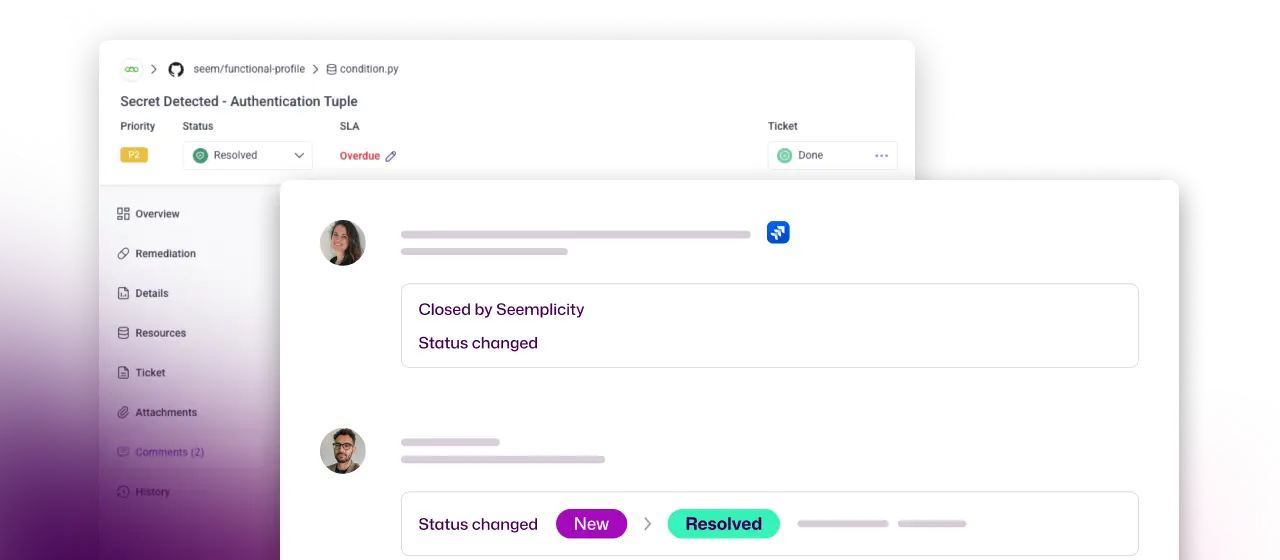
Audit-ready documentation requires a continuous, timestamped record of the exposure management lifecycle: discovery date, severity classification, assigned owner, remediation actions taken, and verified closure. Point-in-time reports extracted at audit preparation are insufficient for frameworks that require evidence of ongoing program operation. The standard auditors increasingly apply is whether the organization can demonstrate that its remediation process functions consistently, not only in the weeks preceding an audit.
Supporting documentation should include SLA exception logs with formal risk acceptance sign-off, evidence of rescans confirming fix validation, and records of escalation for overdue findings. For organizations subject to multiple frameworks simultaneously, mapping these records to specific control requirements – cross-referencing remediation data against SOC 2 CC7.1, PCI DSS Requirement 6.3, or equivalent controls – reduces audit response time significantly and strengthens examiner confidence.
Exposure management extends the traditional vulnerability management scope to encompass the full attack surface, including misconfigurations, identity risks, third-party exposures, and cloud security posture findings. For GRC teams, this broader scope directly intersects with compliance obligations: frameworks such as ISO 27001, NIST SP 800-53, and CIS Controls increasingly require organizations to inventory and manage exposures beyond CVE-based vulnerabilities. Failure to address misconfiguration-driven exposures, for instance, has featured prominently in breach investigations cited in regulatory enforcement actions.
The operational implication is that compliance evidence collection must evolve alongside the attack surface. A GRC program scoped only to traditional vulnerability scanning will accumulate control gaps as cloud-native and application security findings multiply. Aligning exposure management scope with the asset classes covered by applicable compliance frameworks ensures that audit evidence reflects the actual risk environment, not a narrower legacy definition of vulnerability.
The manual effort concentrated in compliance reporting typically arises from three sources: aggregating findings data from multiple scanning tools, correlating remediation status against SLA thresholds, and assembling audit evidence packages on a deadline-driven basis. Each of these tasks is compressible through structured data normalization and workflow automation, specifically by maintaining a continuously updated, deduplicated findings inventory rather than reconstructing it from raw tool exports at audit time.
The compliance benefit of automation is not only efficiency but accuracy. Manual evidence assembly introduces transcription errors, version mismatches, and coverage gaps that create audit findings in their own right. GRC teams that instrument their remediation workflows to generate audit artifacts as a byproduct of normal operations, rather than as a separate evidence-gathering exercise, are better positioned to demonstrate continuous compliance rather than periodic compliance.


Say Goodbye to
Backlog of vulnerabilities
Misconfigurations
Scattered findings across tools