

/improve cross team alignment
Turn silos into synchronized success
Bridge the visibility gap across distributed teams and siloed data streams.
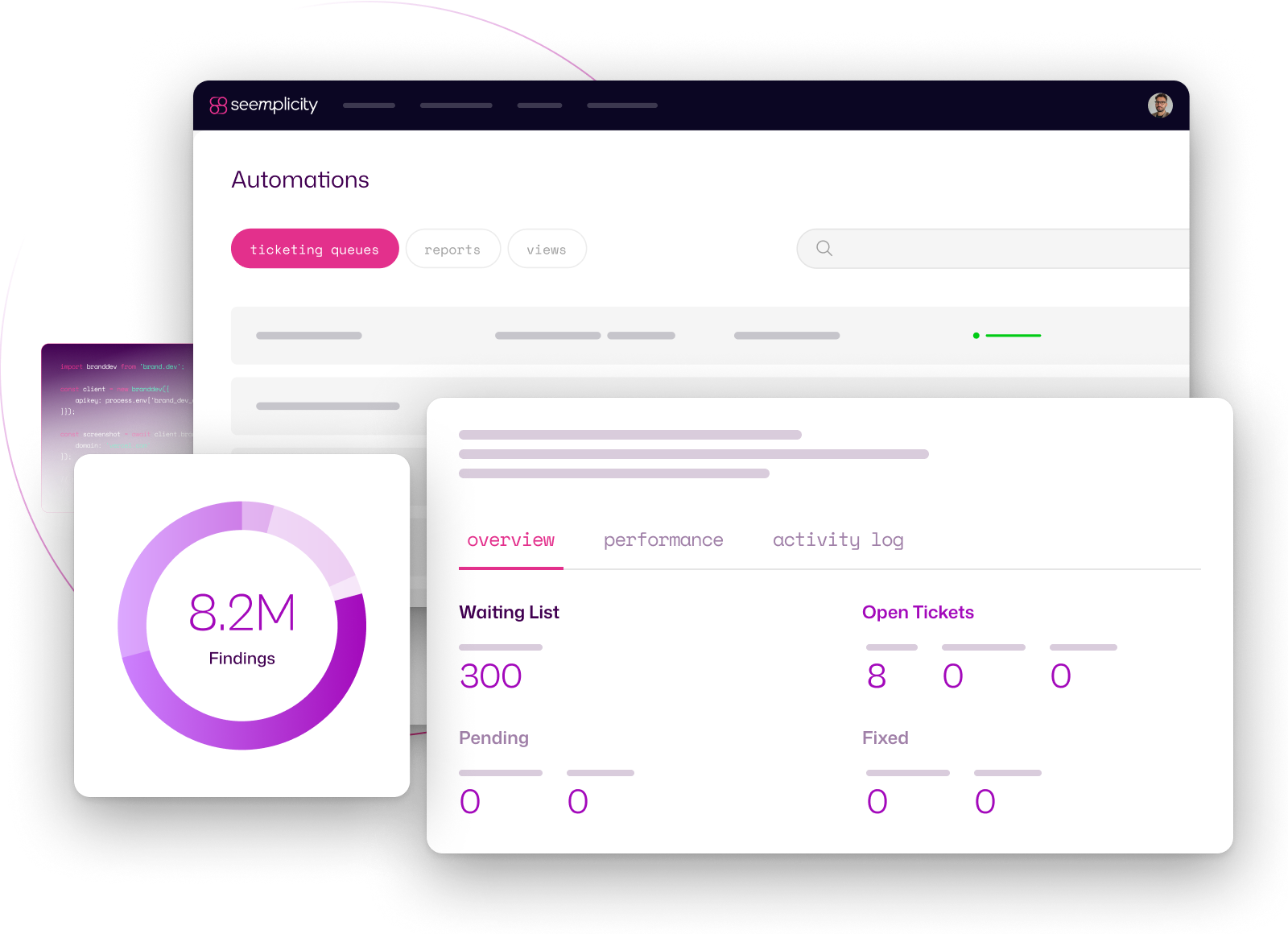
Manual coordination cannot scale with AI-accelerated output
When managing tens of millions of expsoures and assets, manual processes break down under the weight of AI-driven exploitation and discovery.

Contextual Blindness:
Manual efforts to determine asset ownership and business impact delay remediation, forcing teams to waste time on low-priority findings.

Remediation Drift: Infrastructure scales faster than manual ticketing; by the time a human assigns a fix, the resource has changed and the ticket is obsolete.

Verification Deadlocks: Manual re-testing cannot keep pace with rapid deployment cycles, leaving fixed vulnerabilities “open” and cluttering the remediation backlog.

Policy Fragmentation: Slow hand-offs between siloed teams create defensive gaps that AI-driven attacks exploit before internal coordination even begins.
70% More SLAs Met
Automatically consolidate, rank, and normalize alerts to transform raw scan data into a validated queue of critical patches.
Decision-ready data layer
Normalize data across your entire stack to create a shared reality for every team, turning raw security noise into high-context, collaborative insights.

Automate stakeholder & priority mapping
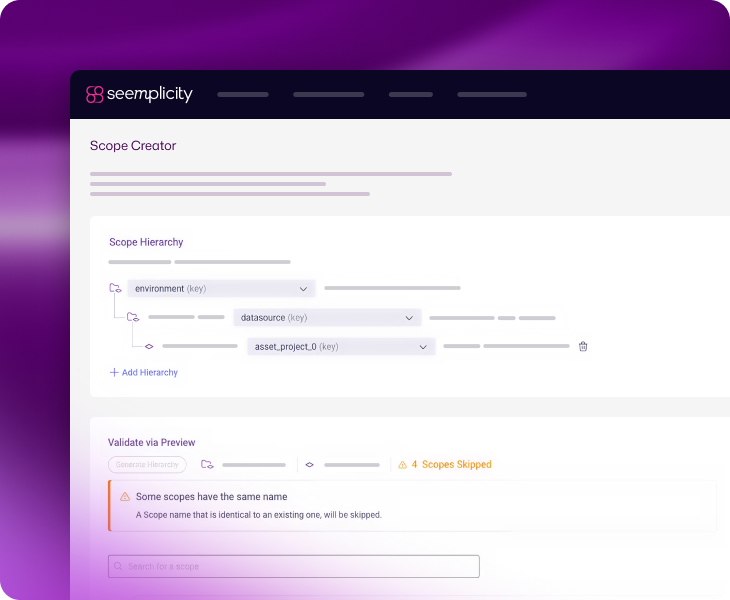
Standardize cross-team SLA tracking

Unify cross-team workflows and policies
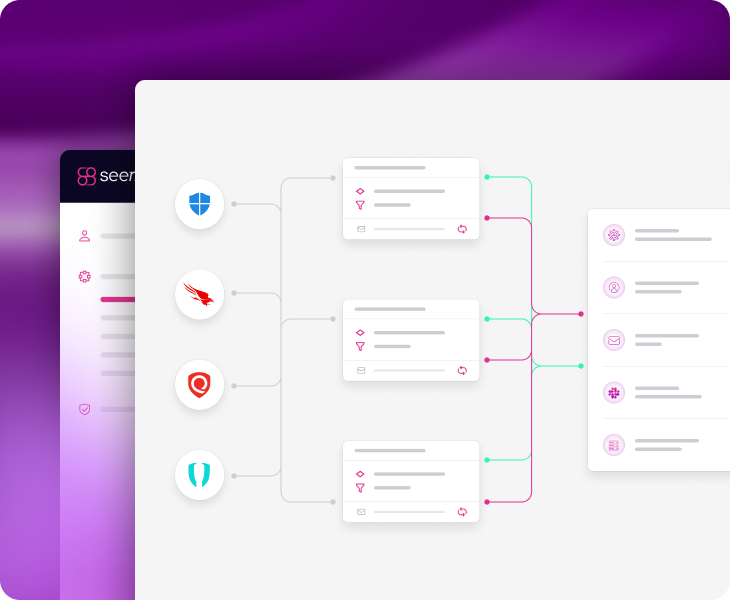
Designed for Cross-team Collaboration
AI-Driven Remediation Agents

Empower your technical teams with intelligent agents that translate complex vulnerabilities into step-by-step, execution-ready instructions.
Team-Aware Remediation Queues

Dynamically balance security urgency against the actual real-time capacity and workflows of your fixing teams.
AI-Powered Data Assistant
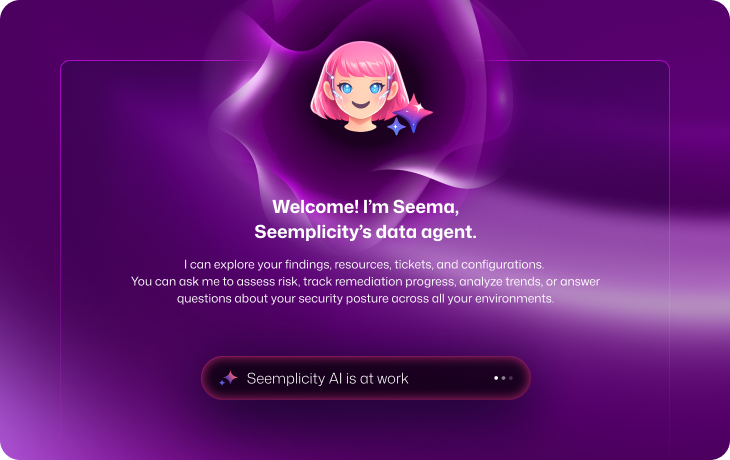
Every team member can ask questions about your program in plain English, turning complex security data into clear, actionable conversation.
Bidirectional Ticketing Integrations
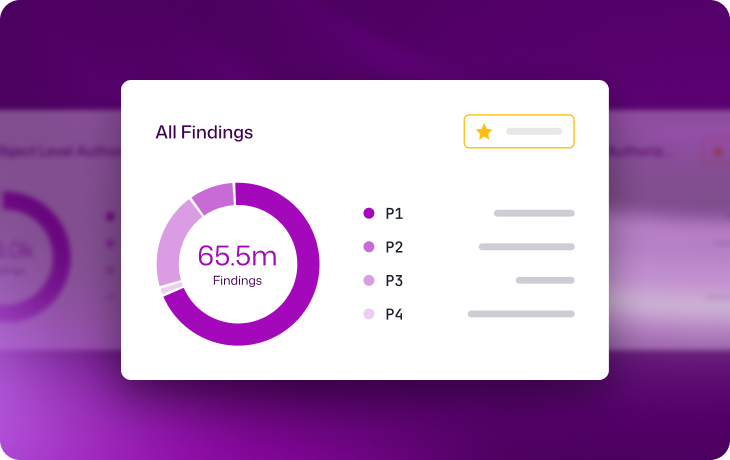
Meet your fixers where they live by delivering remediation tasks directly into their preferred environments without requiring them to log into a security console.
Transform your backlog into a streamlined action plan
Build a scalable process that unifies data streams into a high-impact list of remediation items.


/research Report
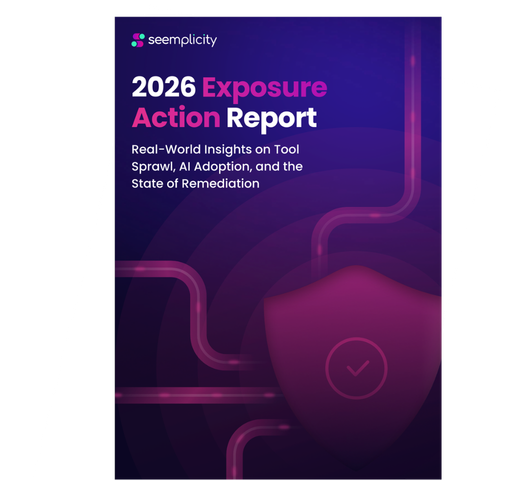
2026 Exposure Action Report
Real exposure management insights based on 2025 customer data. Learn how teams scale remediation, reduce backlogs, and drive measurable risk reduction.
Frequently asked questions
The root cause is structural: security teams identify and prioritize exposures using tools and workflows that are largely invisible to the engineering and IT operations teams responsible for fixing them. This disconnect produces a handoff problem in which findings leave the security domain as raw, uncontextualized data and arrive in development or infrastructure queues without the business impact context, ownership clarity, or prioritization logic needed to act on them efficiently.
Compounding this, each team typically measures success differently. Security measures risk reduction; IT measures uptime and deployment velocity. Without shared SLAs, a unified asset ownership model, and a common remediation workflow, cross-team accountability is difficult to enforce and nearly impossible to track at scale.
Misalignment between security and remediation teams directly extends mean time to remediate (MTTR), allowing exploitable vulnerabilities to remain open far longer than risk tolerance justifies. In environments where attackers increasingly use AI-assisted reconnaissance to identify and weaponize exposures within hours of disclosure, delays in internal coordination compound exposure windows in ways that traditional SLA frameworks were not designed to handle.
Beyond the technical risk, misalignment carries significant operational cost. Duplicated effort, redundant status-check meetings, and manual ticket reconciliation consume analyst capacity that could otherwise be directed at higher-order risk reduction activities. Organizations with poor security-to-IT alignment also tend to perform worse in audit and compliance reviews, where evidence of timely, coordinated remediation is a standard expectation.
Effective ownership assignment begins with a well-maintained asset inventory that maps technical assets, such as hosts, applications, cloud resources, to the organizational units responsible for them. When a vulnerability or misconfiguration is discovered, that mapping enables automatic routing to the correct team, eliminating the manual triage cycles that typically cause the first significant delay in the remediation process.
Beyond initial routing, durable ownership frameworks incorporate escalation paths, deputy assignees, and SLA-based accountability so that findings do not stall when the primary owner is unavailable or when asset responsibility shifts due to team restructuring. Organizations that treat ownership as a living data layer, continuously reconciled against HR, CMDB, and infrastructure records, achieve materially faster remediation cycle times than those relying on static assignment models.
In a mature program, security and remediation teams operate from a shared data layer that normalizes findings from across the scanning and detection stack into a consistent, deduplicated view of organizational risk. Rather than each team maintaining its own interpretation of the exposure landscape, there is a single source of truth that drives prioritization, assignment, and progress tracking for all stakeholders simultaneously.
Mature alignment also manifests in workflow integration: remediation tasks are delivered directly into the tools engineering and operations teams already use, such as ticketing systems, CI/CD pipelines, infrastructure consoles, rather than requiring those teams to engage with a separate security interface. This reduces friction, improves adoption, and ensures that security context travels with the task rather than being lost at the handoff boundary.
SLA enforcement requires more than setting deadlines. It depends on consistent visibility into remediation status at every point in the workflow. Organizations should define tiered SLA thresholds based on vulnerability severity and asset criticality, then track actual closure rates against those thresholds in a way that is transparent to both security leadership and the teams responsible for remediation.
The most effective SLA frameworks include automated escalation triggers that surface aging findings to management before breach, rather than after. They also account for the realities of distributed team capacity, treating SLAs not as uniform deadlines but as dynamic commitments that reflect the context of each finding. Regular cadence reviews – comparing SLA performance across business units, asset classes, and vulnerability types – give security leaders the data needed to identify persistent bottlenecks and drive structural improvements in the remediation process.
Manual coordination between security and IT introduces latency at every stage of the remediation lifecycle, from initial assignment through status tracking to verification of closure. Automated workflow orchestration eliminates these handoff delays by applying consistent routing logic, priority mapping, and SLA assignment without human intervention, ensuring that findings reach the right teams with the right context at the moment they are identified.
Orchestration also enforces policy uniformity across distributed teams that may otherwise apply different standards to similar findings. When remediation workflows are codified rather than improvised, organizations can guarantee that every exposure, regardless of which business unit owns the affected asset, is handled according to the same risk-based criteria. This consistency is particularly valuable during audits, where demonstrable, repeatable processes are a prerequisite for compliance certification.
When security teams cannot reliably determine which team or individual is accountable for a given asset, findings enter a routing limbo that can persist for days or weeks. The time spent manually investigating ownership – cross-referencing CMDBs, querying infrastructure teams, or escalating through management chains – is time during which the exposure remains unaddressed and exploitable.
Asset ownership gaps also create a secondary problem: without confident ownership data, remediation queues are often routed by proximity rather than accountability, resulting in tickets assigned to teams that lack either the access or the authority to implement the required fix. Resolving misrouted tickets consumes significant operational overhead and erodes trust between security and engineering functions, making future collaboration more difficult to sustain.

Say Goodbye to
Backlog of vulnerabilities
Misconfigurations
Scattered findings across tools