




/reduce findings backlog
Agentic backlog reduction at enterprise scale
Shrink overwhelming backlogs into clear, accountable tasks for every team.
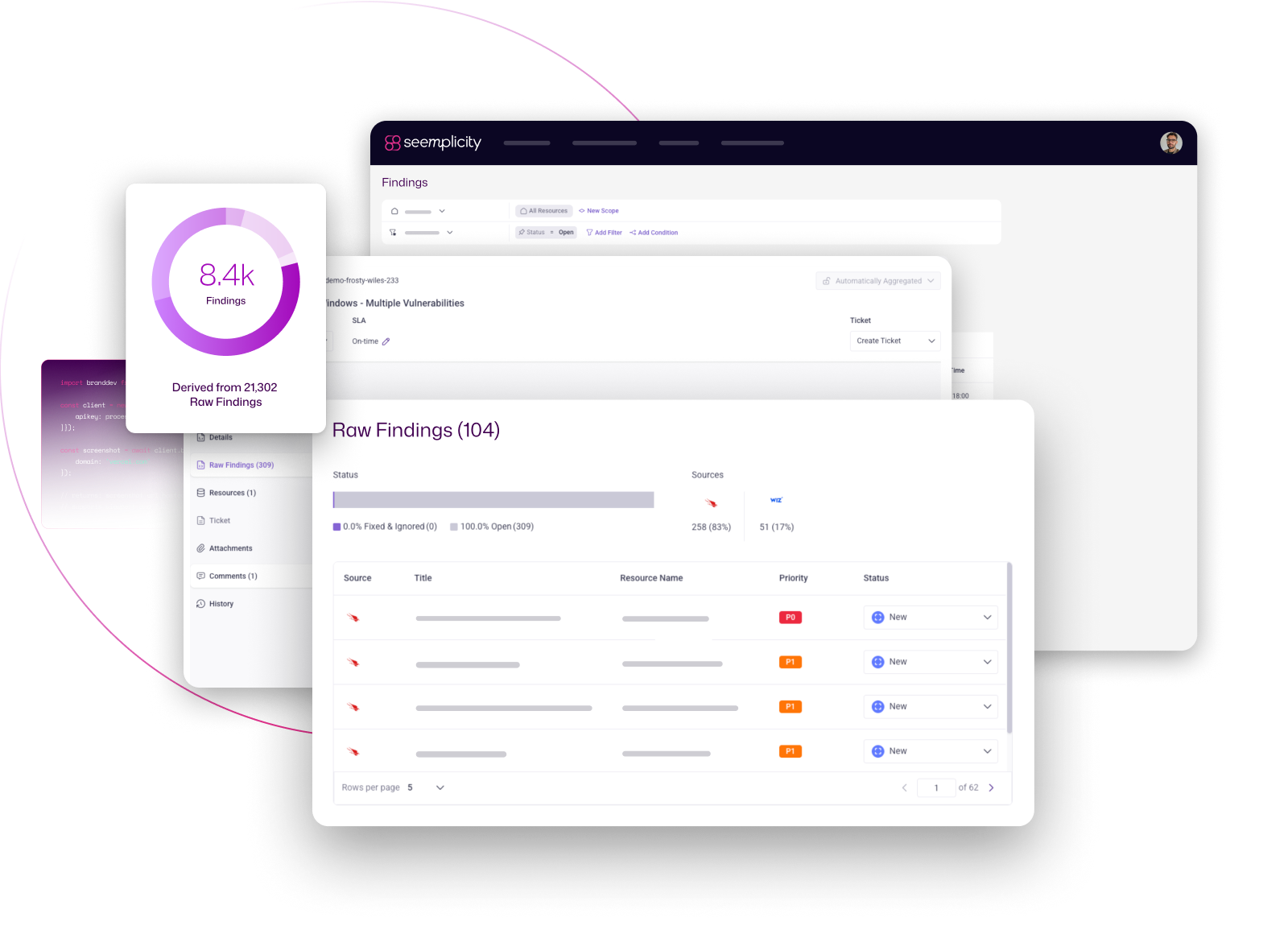
Manual triage cannot keep pace with the volume of new findings
Manual processes break down when trying to manage thousands of scattered alerts across siloed teams.

Findings Volume: The scale of vulnerability findings from multiple testing tools pours in daily, overwhelming security team inboxes.

Scoring Systems: Security tools use different risk scales, making it impossible to prioritize and measure the true number of tasks in each category.

Scanner Noise: Separate scanning tools duplicate vulnerabilities, adding to the backlog and forcing teams to manage deduplication.

Ghost Risks: Backlogs remain cluttered with “ghost findings” associated with decommissioned resources.
Reduce Your Backlog by up to 98%
Deduplicate, aggregate, and prioritize findings to turn scanner noise into a list of actionable fixes.
Aggregate findings with shared fixes and fixers
Clear thousands of individual alerts by aggregating findings into cohesive remediation tasks for each common root cause.

Standardize scoring for accurate prioritization

Eliminate redundancy with automated deduplication

Clear “ghost” risks from the backlog

Intelligent features to automate backlog cleanup
Remediation Aggregation
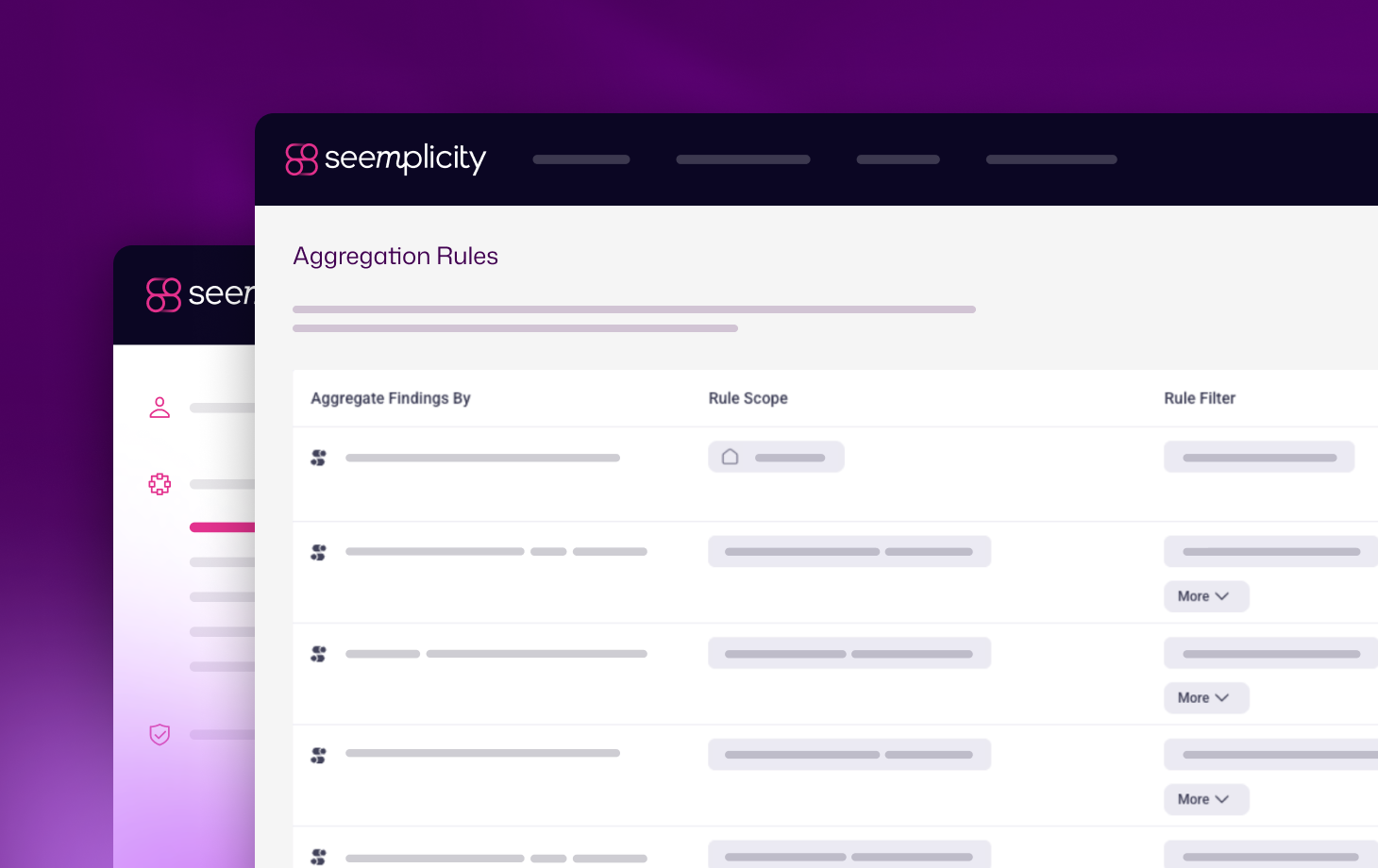
Group vulnerabilities sharing a common fix into a single task to collapse massive findings volumes.
Unified Risk Scoring
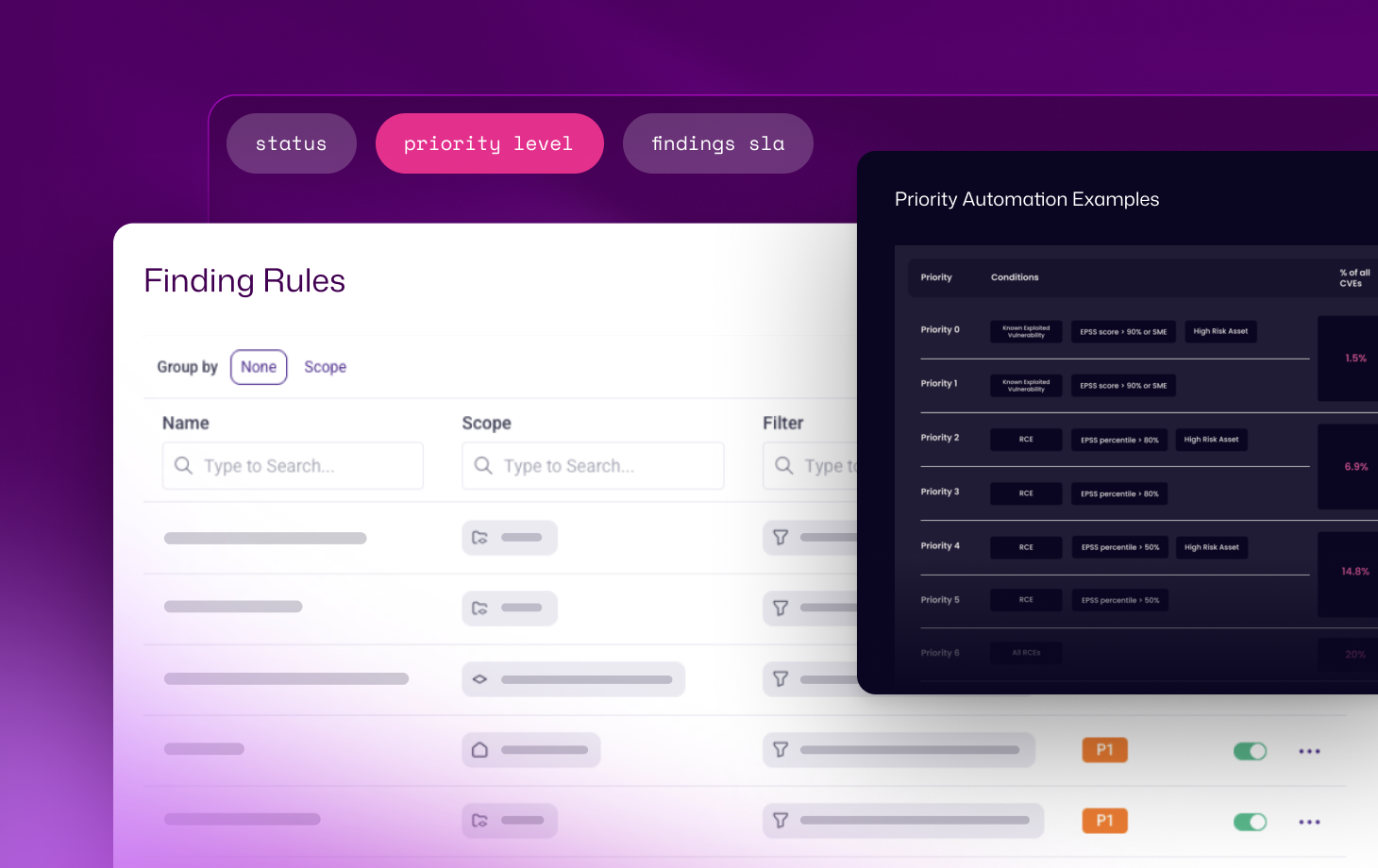
Standardize disparate risk scores into a unified system to accurately compare and prioritize tasks.
Context Enrichment
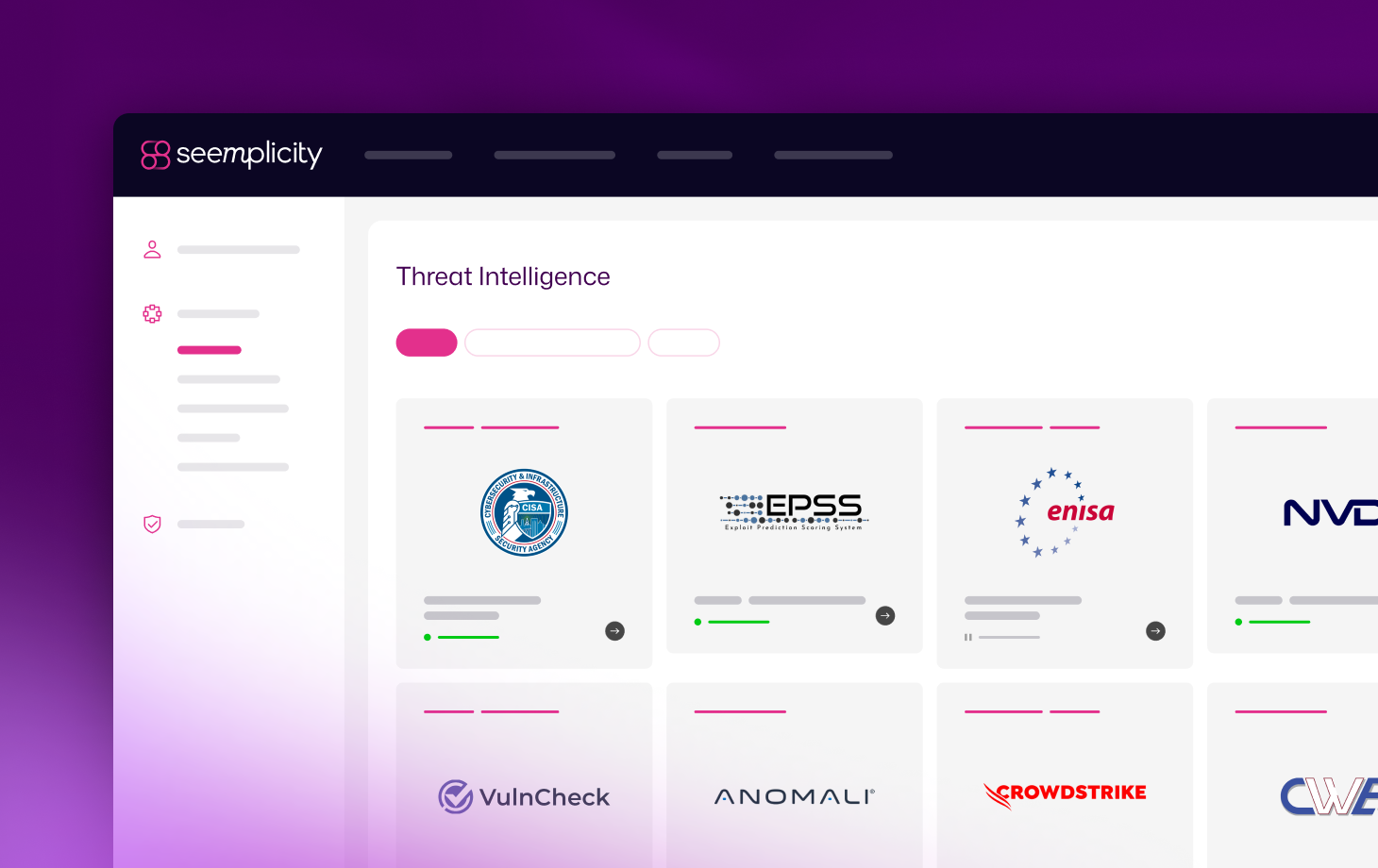
Filter out noise by enriching findings with threat intelligence to focus only on exploitable risks.
Decommissioned Resource Cleanup
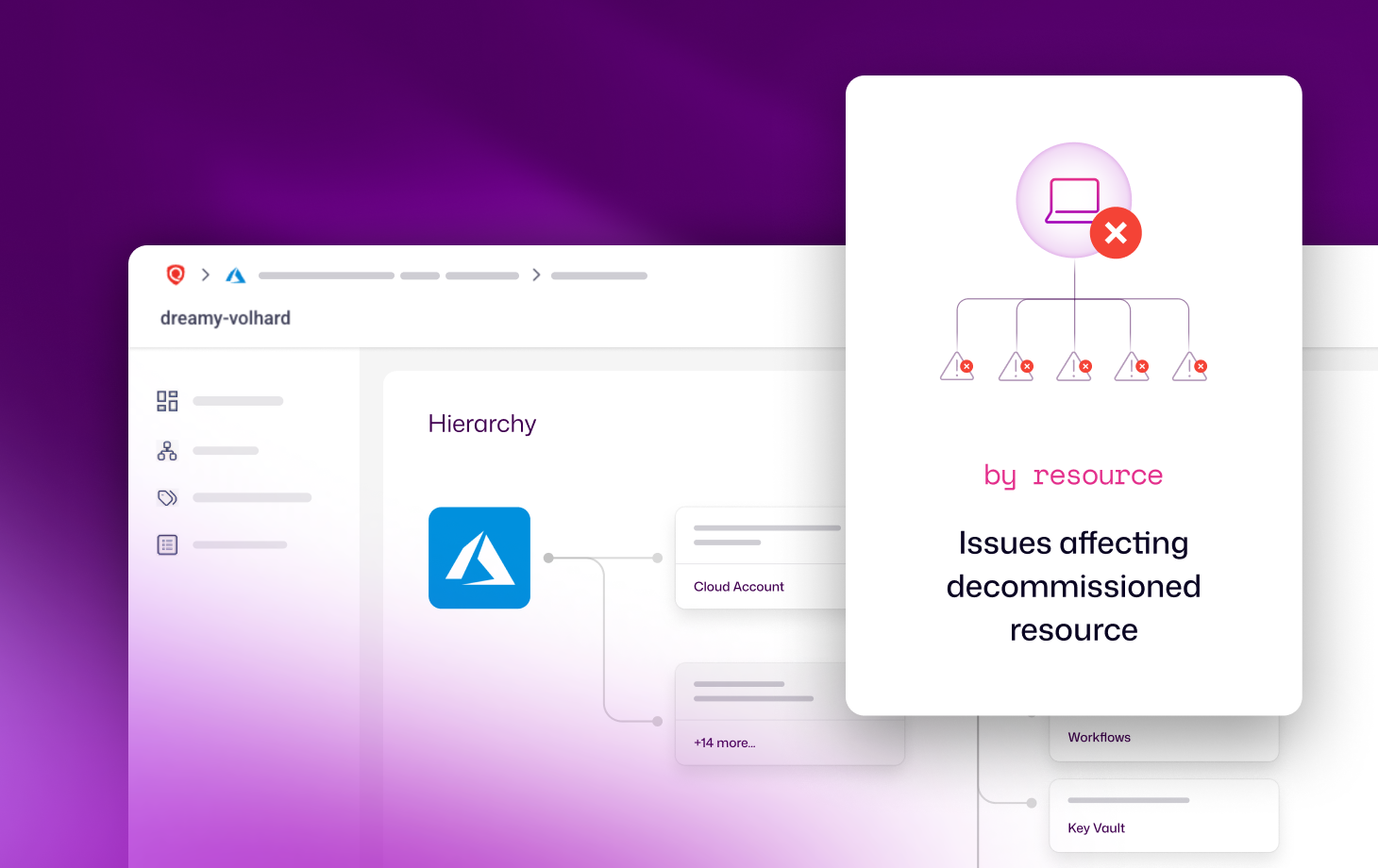
Automatically remove vulnerabilities linked to decommissioned assets to instantly clear “ghost” risks.
Automated Exposure Assignment
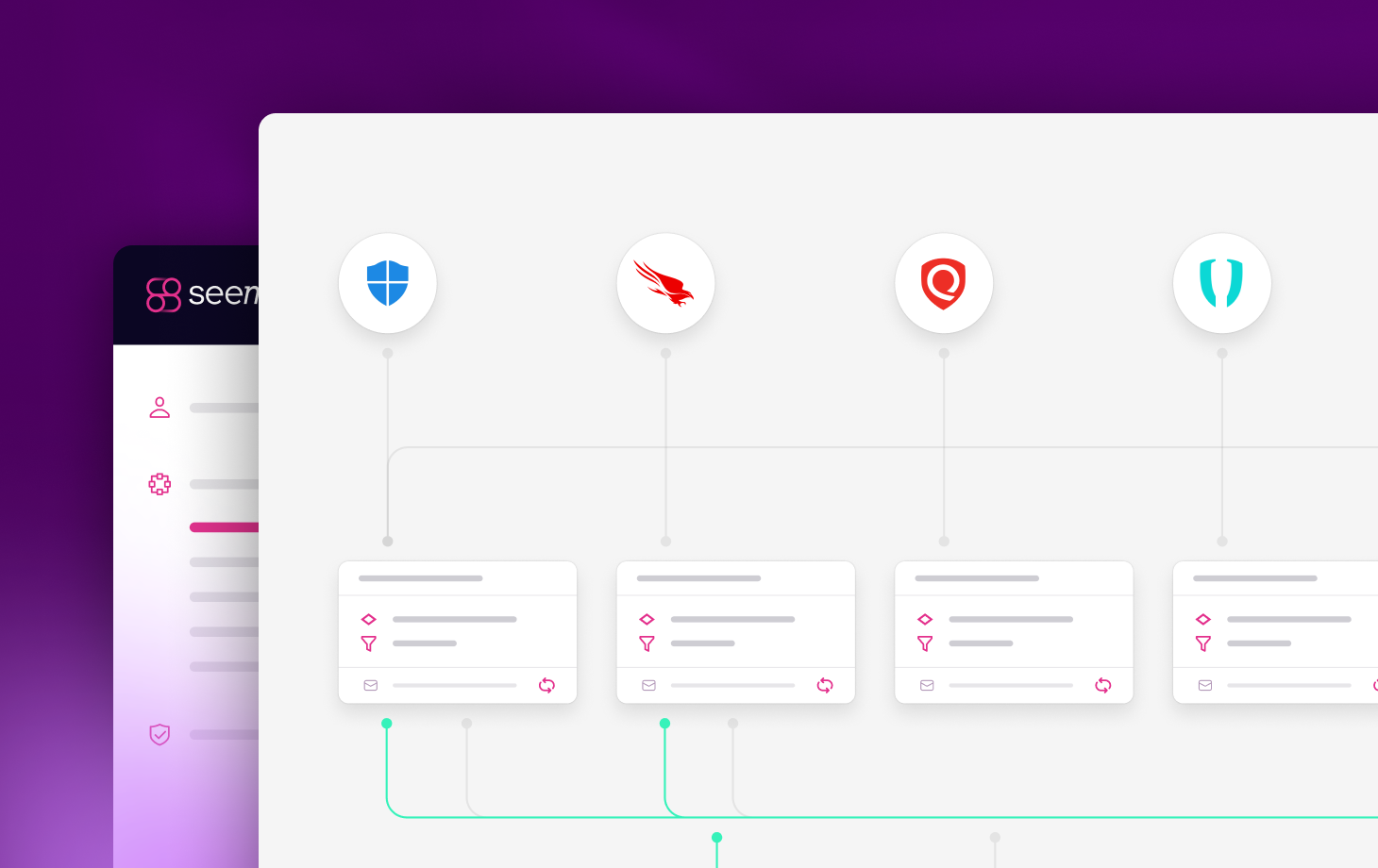
Automate prioritization and ownership decisions to ensure the right tasks are routed to the right teams.
Automated Closure and Validation
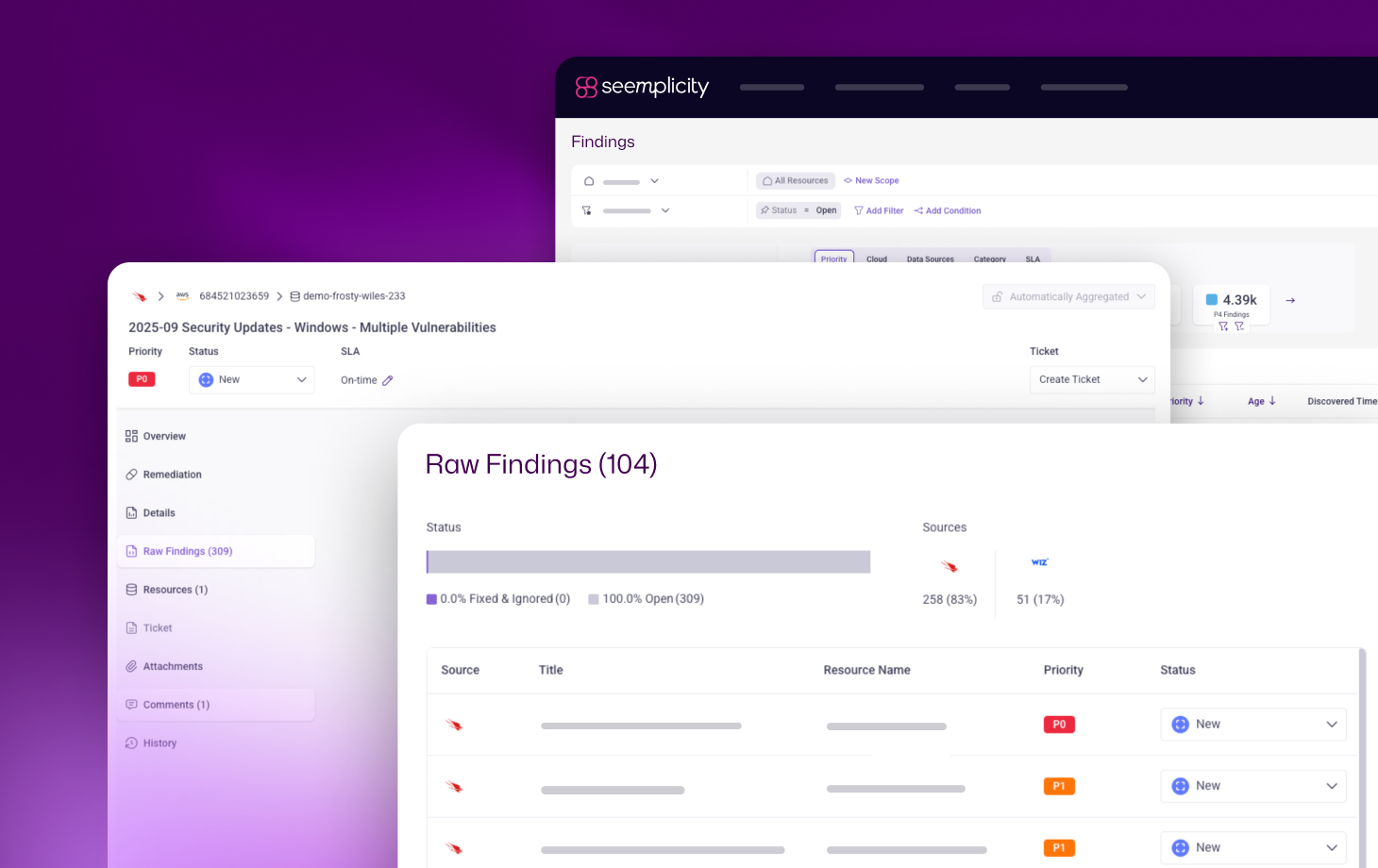
Use incoming scans to confirm fixes and automatically close tickets, keeping your backlog lean.
Transform Your Backlog into a Streamlined Action Plan
Build a scalable process that unifies data streams into a high-impact list of remediation items.


/research Report
2026 Exposure Action Report
Real exposure management insights based on 2025 customer data. Learn how teams scale remediation, reduce backlogs, and drive measurable risk reduction.
Frequently asked questions
Security teams are routinely overwhelmed by the sheer volume of findings generated across multiple scanning tools, each operating on its own risk scale, producing duplicate alerts, and flagging vulnerabilities tied to assets that may no longer exist. Without a unified data layer, analysts spend significant time on manual triage rather than remediation, causing the backlog to grow faster than it can be addressed. The problem compounds as organizations expand their attack surface: more assets, more tools, and more findings with no proportional increase in remediation capacity.
A further structural challenge is the lack of aggregation. When findings that share a common root cause and a common fix are tracked as hundreds of individual tickets, remediation teams face an artificially inflated workload. Addressing this requires a shift from ticket-by-ticket management to a grouped, root-cause-oriented approach that reflects actual remediation effort.
Scanner noise refers to the excess volume of alerts generated when multiple security tools scan overlapping assets and report the same underlying vulnerability as separate, independent findings. This duplication inflates the apparent size of the backlog, making it difficult to assess true exposure levels and causing remediation teams to expend effort on findings they have effectively already addressed. In environments running several scanning tools concurrently, covering infrastructure, cloud, application, and endpoint layers, duplication can account for a substantial portion of total finding volume.
Eliminating scanner noise requires automated deduplication: a process that correlates findings across tools, identifies shared instances, and consolidates them into a single authoritative record. Without this capability, security teams are consistently working against an inflated denominator, which distorts both prioritization decisions and remediation velocity metrics.
Ghost findings are vulnerability records that persist in a security backlog even after the assets they reference, such as servers, containers, cloud instances, or other resources, have been decommissioned. Because many security programs lack automated mechanisms to reconcile scanner output against current asset inventories, these stale findings continue to occupy queue space and can even influence prioritization decisions, directing remediation effort toward risks that no longer exist in the environment.
The operational impact is significant. Ghost findings inflate backlog counts, skew risk metrics, and erode trust in vulnerability management data over time. Organizations that regularly decommission and spin up infrastructure, particularly those operating in cloud-native or containerized environments, are especially susceptible. Maintaining an accurate, up-to-date asset inventory and automatically retiring findings associated with removed resources is a prerequisite for an operationally credible backlog.
Findings aggregation is the practice of grouping individual vulnerability alerts that share a common root cause and a common remediation action into a single consolidated task. Rather than routing hundreds of discrete tickets to an engineering or IT team, each requiring separate review, prioritization, and closure, aggregation collapses that volume into a far smaller set of actionable work items. This dramatically reduces the cognitive overhead on both security and remediation teams, and allows organizations to achieve meaningful risk reduction with each fix applied.
Beyond efficiency, aggregation improves accountability. When a single task encompasses all findings addressable by one patch or configuration change, ownership is unambiguous and progress is measurable. This structure also simplifies SLA tracking and supports clearer reporting to leadership on remediation throughput and outstanding exposure.
Different scanning tools apply different risk scoring methodologies, CVSS base scores, proprietary severity ratings, threat-weighted adjustments, making direct comparison across tool outputs unreliable. When a security team must prioritize across findings from five or six distinct scanners, inconsistent scoring creates ambiguity: a “high” in one tool may reflect a materially different level of actual risk than a “high” in another. This inconsistency leads to misallocation of remediation effort and can leave genuinely critical exposures deprioritized relative to lower-impact findings that happened to score higher in a particular tool’s framework.
Normalizing findings into a unified risk scoring model – one that accounts for asset criticality, exploitability, threat intelligence context, and business impact – enables security teams to prioritize their backlog on a consistent, comparable basis. This is particularly important for organizations managing hybrid environments where cloud, application, network, and endpoint findings must be evaluated side by side.
An effective backlog reduction process begins with consolidation: aggregating findings from all security tools into a single, deduplicated inventory with normalized risk scores. This baseline eliminates the noise and redundancy that cause backlogs to appear larger than they are in practice. From there, findings should be enriched with contextual data, such as asset criticality, network exposure, active exploitation intelligence, so that prioritization reflects actual business risk rather than raw vulnerability severity alone.
The next layer is operational: assigning remediation ownership based on asset classification and team structure, grouping findings into actionable work packages, and establishing automated workflows that route tasks to the appropriate teams without manual intervention. Closed-loop validation – confirming fixes through subsequent scans and automatically retiring resolved findings – ensures the backlog remains an accurate reflection of current exposure rather than a historical artifact. AI-assisted triage is increasingly used to accelerate each of these stages, particularly in high-volume environments where the speed of adversarial exploitation has compressed the available remediation window.
An unmanaged findings backlog creates compounding risk at both the technical and organizational level. Technically, the inability to prioritize and remediate high-severity vulnerabilities in a timely manner extends the window of exploitability, the period during which threat actors can leverage a known weakness before it is addressed. As adversaries increasingly use automated tooling to accelerate reconnaissance and exploitation, even modest delays in remediation can have material consequences for breach likelihood.
Organizationally, a persistent backlog signals a breakdown in the vulnerability management program’s ability to demonstrate risk reduction. It undermines confidence among leadership and board stakeholders, complicates audit and compliance reporting, and creates friction between security and IT teams who are accountable for remediation outcomes. Over time, backlog fatigue can also contribute to analyst burnout, as teams lose confidence that their effort is producing measurable progress against organizational risk.


Say Goodbye to
Backlog of vulnerabilities
Misconfigurations
Scattered findings across tools