





Secure the cloud at the speed of deployment
/Cloud Security Risk Management
Stop chasing scores and start closing gaps. AI-driven prioritization that finds the vulnerabilities that actually matter.

Cloud infrastructure changes in seconds.
Security needs to keep up.
When visibility is fragmented across siloed CSPM, CWPP, and CIEM tools, security teams are left guessing what to fix first while developers continue to deploy.

Ephemeral blind spots from shadow IT create unknown entry points that point-in-time snapshots miss, leaving your perimeter porous between scans.

The “Critical” noise floor buries internet-facing threats in a sea of isolated alerts, forcing your team to waste time on low-risk flaws that lack business context.

The cloud ownership guessing game turns security teams into full-time detectives, wasting hours just to identify the right DevOps team to fix a single misconfiguration.

Continuous decay from static reporting leaves you with “snapshot compliance” that fails to provide the real-time proof required for modern, high-velocity cloud audits.
AI that reduces cloud risk at scale
Aggregate, prioritize, and automate your cloud-native remediation workflow, turning a sea of ephemeral CVEs into a single, fix-ready request.
Unify, contextualized visibility across the cloud-native stack
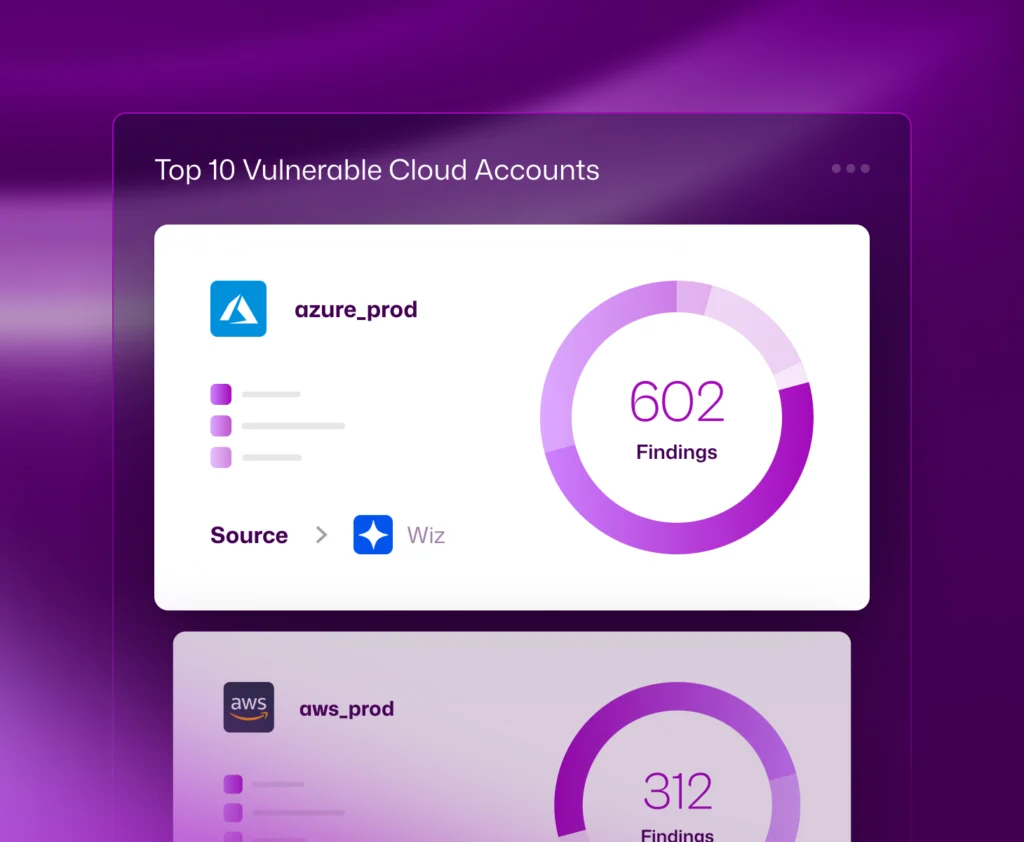
Get a single, comprehensive view of your digital footprint. Integrate findings from CSPM, CWPP, and CIEM to eliminate blind spots and normalize risk data across every cloud layer.

Prioritize by reachability and business impact
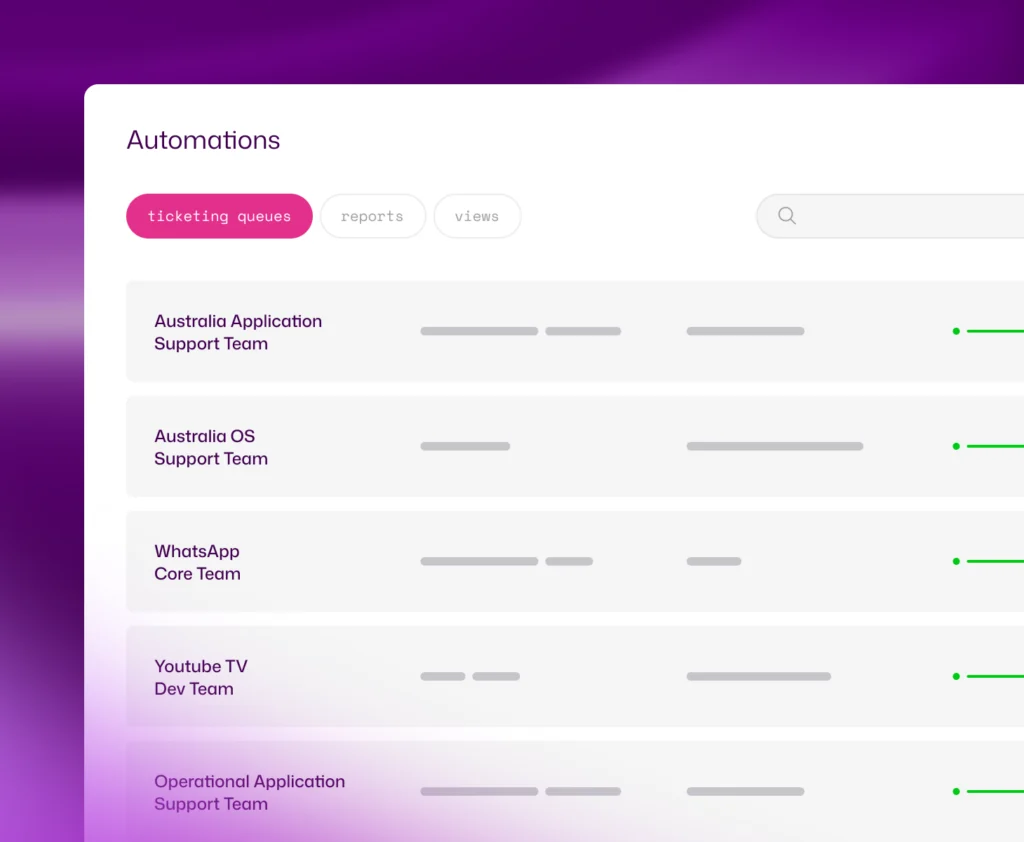
Bridge the gap between Security and DevOps with AI Agents
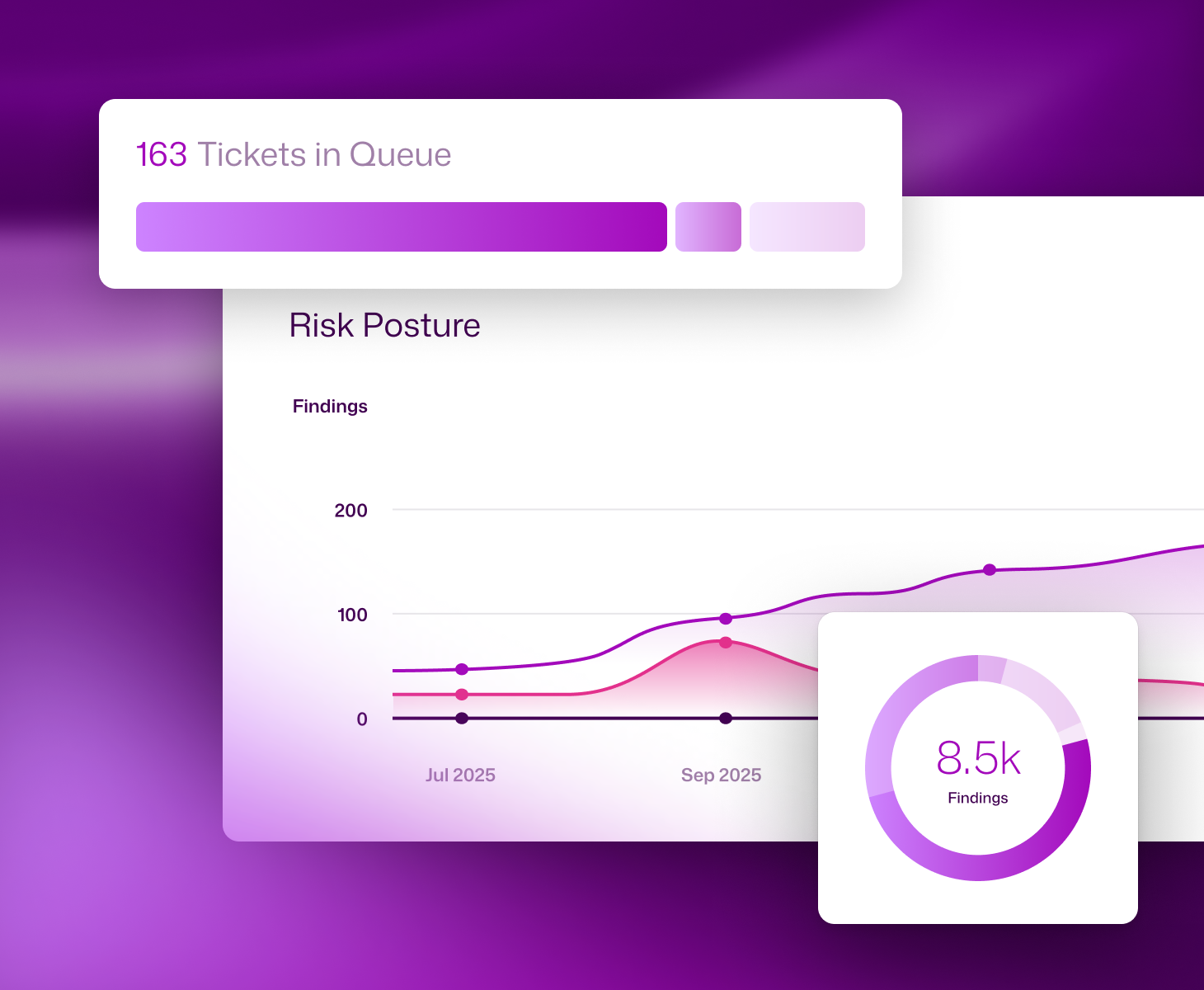
Continuous validation of your risk posture
Real results for teams of every size.
Assets without owners
%
%
Critical findings resolved
%
%
Finding backlogs reduced
K
K
Remediation velocity
Weeks
Days
AI-driven automation for the cloud-native lifecycle
Group cloud exposures by root cause “Fix”
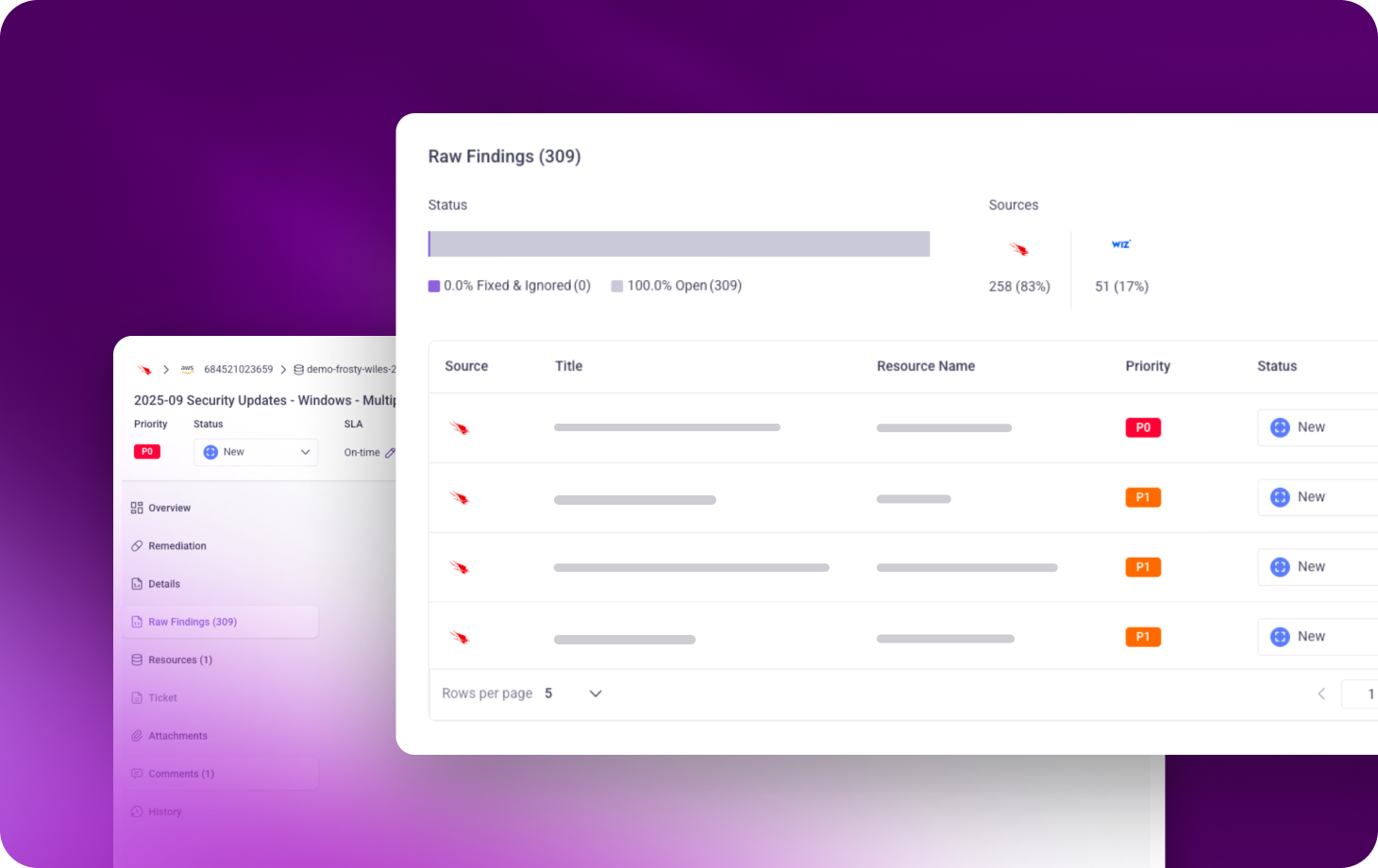
Automatically cluster thousands of cloud findings by their shared root cause so one fix resolves the entire group.
Automate the hand-off with AI Agent teams
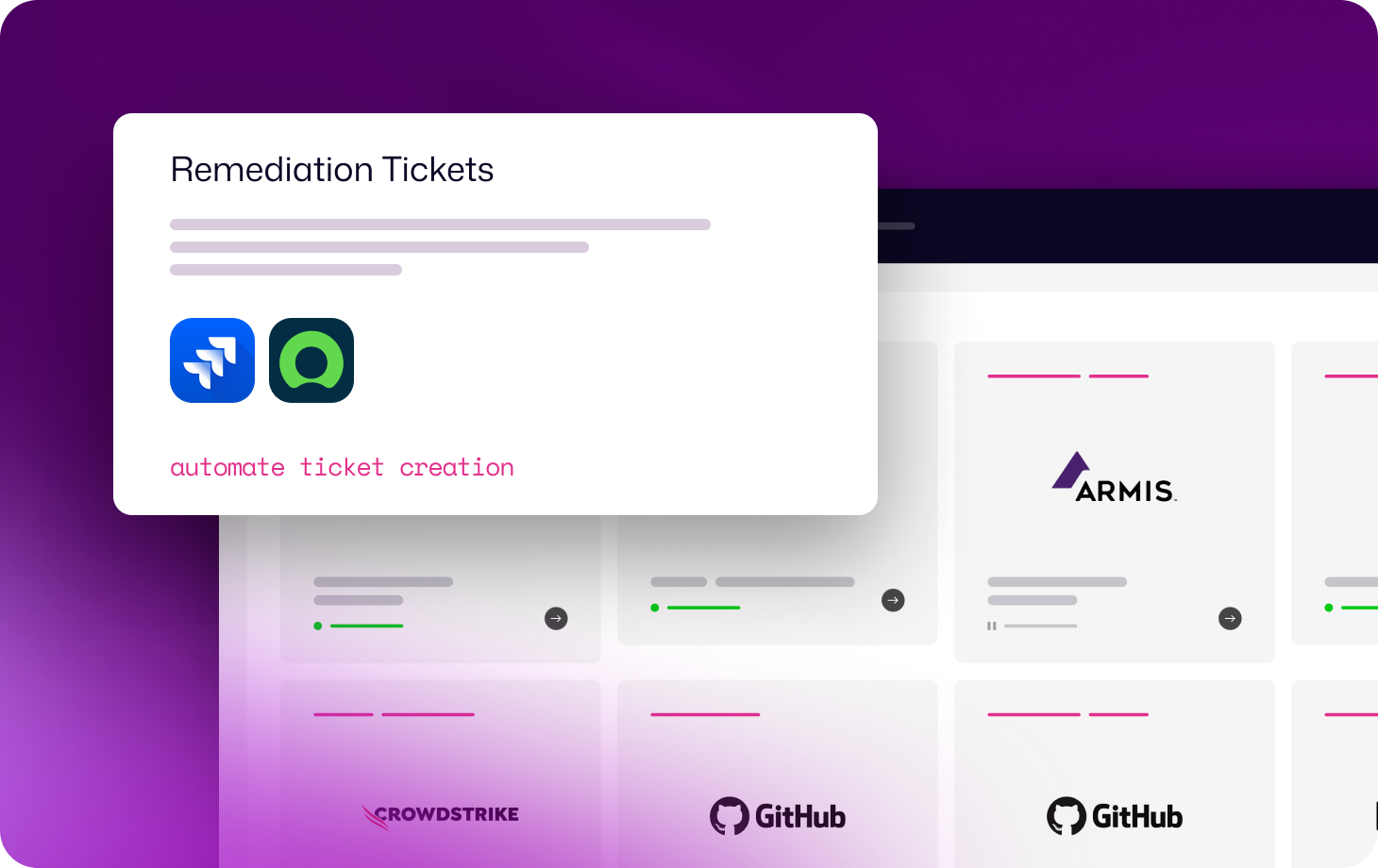
Specialized AI agents identify the right cloud resource owner and route fix-ready data directly into existing DevOps workflows.
Query your cloud risk in plain English
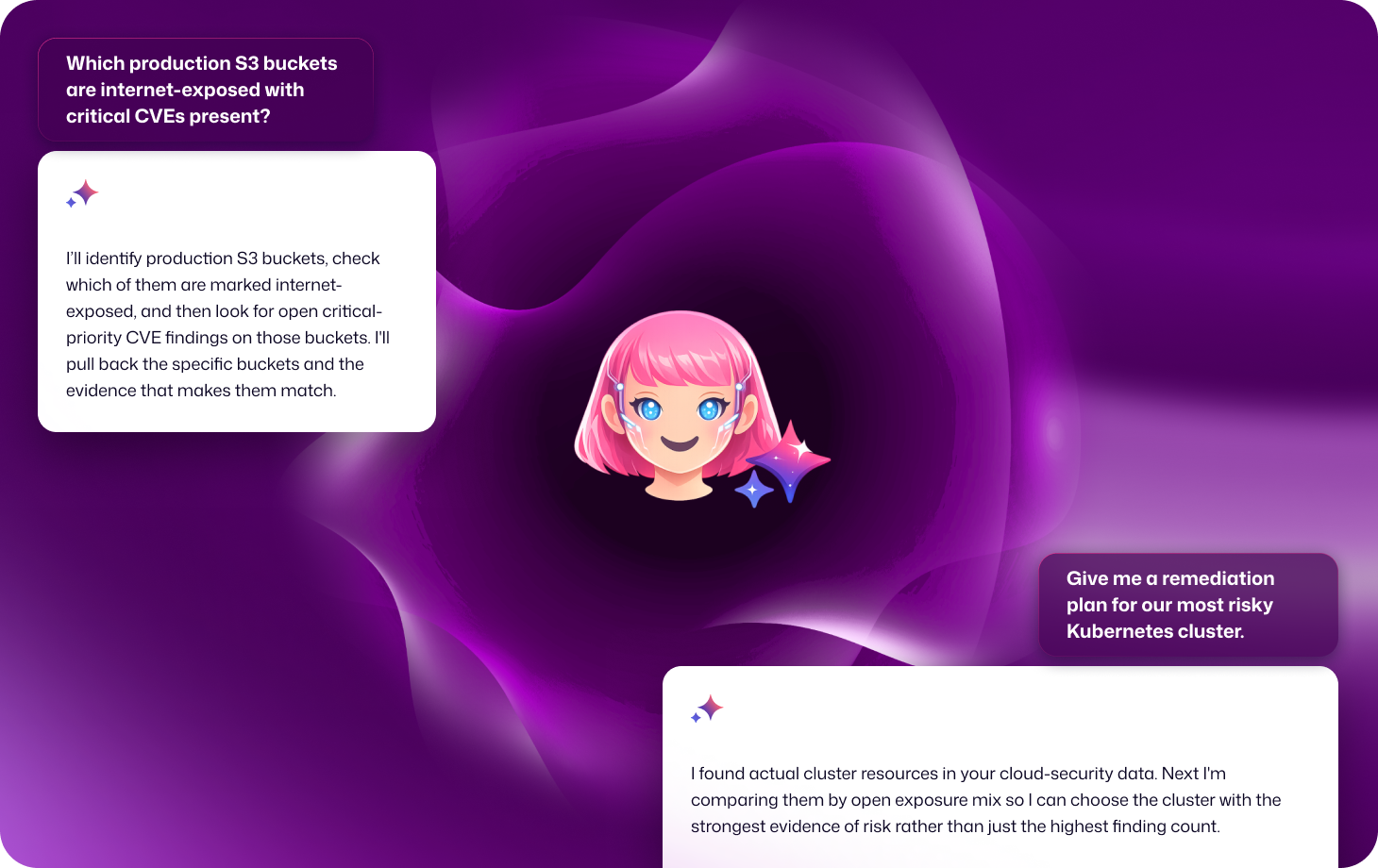
Use Seema, your conversational AI assistant, to get instant clarity on your cloud posture, whether tracking a zero-day or preparing for an audit.
Prove your resilience with live Cloud-SLA metrics
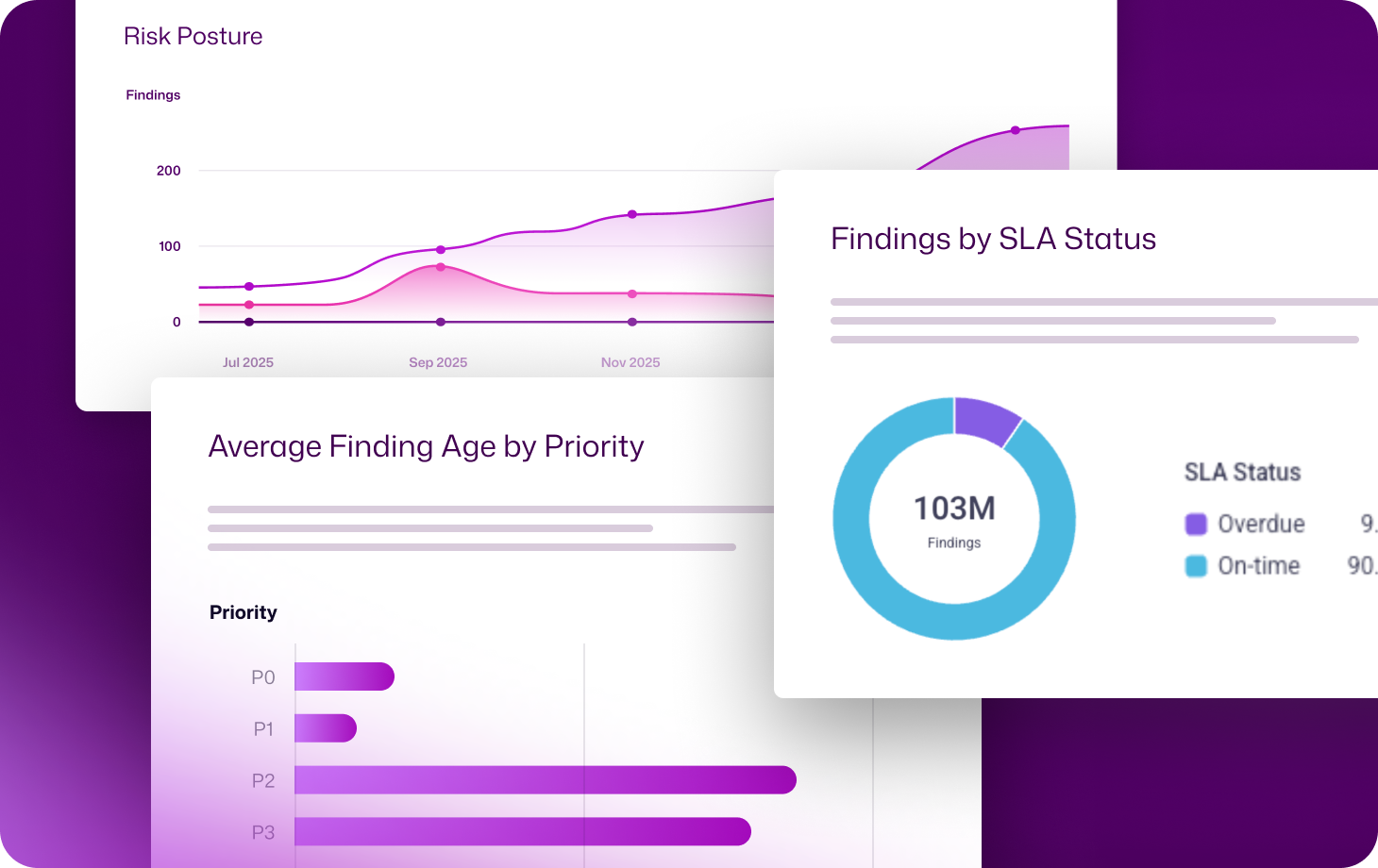
Build custom, live dashboards in seconds to track cloud-specific SLAs, remediation velocity, and risk trends across every provider.
/research Report
2026 Exposure Action Report
Real exposure management insights based on 2025 customer data. Learn how teams scale remediation, reduce backlogs, and drive measurable risk reduction.
Frequently asked questions
Cloud security is the set of policies, controls, technologies, and practices designed to protect cloud-based infrastructure, applications, data, and services from unauthorized access, data breaches, and other cyber threats. It encompasses both the security responsibilities of cloud service providers and those of the organizations using cloud environments.
Unlike traditional on-premises security, cloud security must address the dynamic, distributed nature of cloud computing, including multi-tenant architectures, ephemeral workloads, and internet-facing APIs. As organizations migrate critical assets to the cloud, a robust cloud security posture becomes a foundational requirement rather than an optional enhancement.
Cloud security operates across multiple layers: network security, identity and access management (IAM), data protection, workload security, and continuous monitoring. Controls are applied at each layer to enforce least-privilege access, encrypt data in transit and at rest, and detect anomalous activity before it escalates into a breach.
A key concept in cloud security is the shared responsibility model, in which the cloud provider secures the underlying infrastructure while the customer is responsible for securing their data, configurations, and access controls. Effective cloud security requires organizations to understand precisely where their responsibilities begin and implement controls accordingly, particularly around misconfiguration management, which remains one of the leading causes of cloud-related incidents.
Cloud environments represent one of the largest and most dynamic components of the modern enterprise attack surface, making them a critical focus within any exposure management program. The continuous provisioning of cloud resources, combined with the complexity of multi-cloud and hybrid architectures, means that new exposures such as misconfigured assets, over-privileged identities, unpatched workloads, and publicly accessible services, can emerge faster than traditional security processes can detect and remediate them.
Exposure management provides the framework for continuously discovering, prioritizing, and remediating these risks across the entire attack surface, with cloud infrastructure as a primary domain. By integrating cloud security findings from CSPM, cloud workload protection, and identity governance tools into a unified exposure management workflow, security teams gain the context needed to prioritize cloud risks based on actual business impact and exploitability, rather than treating every finding with equal urgency. The growing use of AI-powered analytics within exposure management platforms further enhances this capability, enabling faster correlation of findings across complex cloud estates and more accurate identification of the exposures that pose the greatest real-world risk.
This connection between cloud security visibility and structured, AI-assisted remediation workflows is what transforms point-in-time assessments into a continuous, scalable security operation.
The shared responsibility model is a framework that delineates which security obligations belong to the cloud service provider and which belong to the customer. Providers typically secure the physical infrastructure, hypervisors, and core services, while customers are responsible for their workloads, identities, data classification, and security configurations.
The boundaries of responsibility shift depending on the service model in use. In infrastructure-as-a-service (IaaS) environments, customers carry broader security responsibilities than in platform-as-a-service (PaaS) or software-as-a-service (SaaS) arrangements. Misunderstanding or overlooking these boundaries is a common source of security gaps, making it essential for security teams to clearly map ownership for every asset and control across their cloud environment.
The most prevalent cloud security risks include misconfigured cloud resources, excessive or poorly governed access permissions, insecure APIs, inadequate data loss prevention, and insufficient visibility into cloud activity. Cloud misconfigurations, such as publicly exposed storage buckets or overly permissive security groups, are consistently identified as a primary cause of cloud data breaches.
Additional risks stem from the speed and scale at which cloud environments change. Rapid provisioning of new services, the proliferation of shadow IT, and the complexity of multi-cloud deployments all expand the attack surface faster than many security teams can track. Without automated discovery and continuous posture assessment, vulnerabilities and policy violations can persist undetected for extended periods.
An increasingly significant risk category involves the adoption of AI services and workloads within cloud environments. Organizations integrating AI APIs, deploying machine learning pipelines, or consuming AI-powered SaaS applications introduce new exposure vectors, including sensitive training data stored insecurely, overly permissive service accounts granted to AI workloads, and third-party AI integrations that bypass established security review processes. As AI adoption accelerates, securing AI infrastructure within the cloud is becoming an essential component of overall cloud security strategy.
Traditional network security was built around a defined perimeter – firewalls, intrusion detection systems, and access controls secured a relatively static boundary between internal and external environments. Cloud security, by contrast, must protect assets that are inherently perimeter-less, distributed across multiple providers and regions, and accessed from diverse locations and devices.
In cloud environments, the network perimeter is replaced by identity as the primary control plane. Access decisions depend heavily on IAM policies, zero trust principles, and workload-level controls rather than network boundaries alone. This shift requires organizations to adopt security approaches that are API-driven, highly automated, and capable of operating at the scale and velocity of modern cloud infrastructure.
Cloud Security Posture Management (CSPM) refers to the continuous process of identifying and remediating misconfiguration risks, compliance violations, and security policy deviations across cloud environments. CSPM tools automate the discovery of cloud assets and assess their configurations against security benchmarks and regulatory frameworks.
CSPM matters because manual auditing cannot keep pace with the rate of change in cloud infrastructure. As organizations deploy hundreds or thousands of cloud resources, even minor configuration errors can create significant exposure. By providing continuous visibility and prioritized remediation guidance, CSPM enables security teams to maintain a consistent, defensible security posture without being overwhelmed by the volume and complexity of their cloud estate.
Securing a multi-cloud environment requires a unified strategy that can operate consistently across different provider platforms, each with its own native security controls, terminology, and configuration interfaces. Organizations should establish a centralized visibility layer that aggregates security findings, asset inventories, and compliance status from all cloud environments into a single management plane.
Key principles for multi-cloud security include enforcing consistent identity and access policies across providers, normalizing security standards rather than relying solely on each provider’s native defaults, and implementing automated remediation workflows to address findings at scale. Given the complexity of multi-cloud estates, security teams should also prioritize risk-based remediation, focusing resources on the exposures most likely to be exploited or most damaging if breached, rather than attempting to address every finding with equal urgency.

Say Goodbye to
Backlog of vulnerabilities
Misconfigurations
Scattered findings across tools