
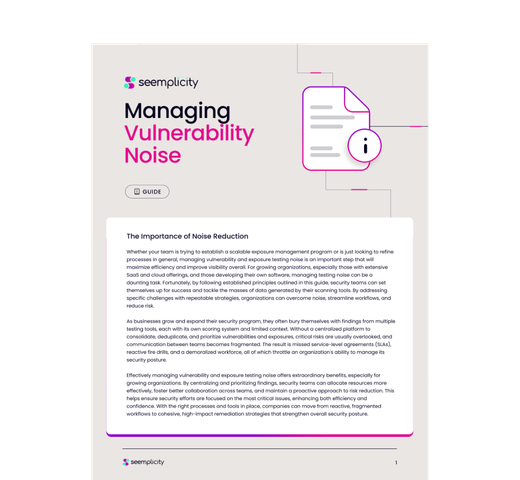
The Importance of Noise Reduction
Whether your team is trying to establish a scalable exposure management program or is just looking to refine processes in general, managing vulnerability and exposure testing noise is an important step that will maximize efficiency and improve visibility overall. For growing organizations, especially those with extensive Saas and cloud offerings, and those developing their own software, managing testing noise can be a daunting task.
Fortunately, by following established principles outlined in this guide, security teams can set themselves up for success and tackle the masses of data generated by their scanning tools. By addressing specific challenges with repeatable strategies, organizations can overcome noise, streamline workflows, and reduce risk.
As businesses grow and expand their security program, they often bury themselves with findings from multiple testing tools, each with its own scoring system and limited context. Without a centralized platform to consolidate, deduplicate, and prioritize vulnerabilities and exposures, critical risks are usually overlooked, and communication between teams becomes fragmented.
The result is missed service-level agreements (SLAs), reactive fire drills, and a demoralized workforce, all of which throttle an organization’s ability to manage its security posture. Effectively managing vulnerability and exposure testing noise offers extraordinary benefits, especially for growing organizations.
By centralizing and prioritizing findings, security teams can allocate resources more effectively, foster better collaboration across teams, and maintain a proactive approach to risk reduction. This helps ensure security efforts are focused on the most critical issues, enhancing both efficiency and confidence.
With the right processes and tools in place, companies can move from reactive, fragmented workflows to cohesive, high-impact remediation strategies that strengthen overall security posture.
The Challenges of Vulnerability Testing Noise
- Overlapping findings from multiple tools.
- Reliance on manual workflows.
- Poor communication between teams.
- Missed SLAs and inefficiencies.