
Evolving State of Vulnerability Management and Remediation Operations
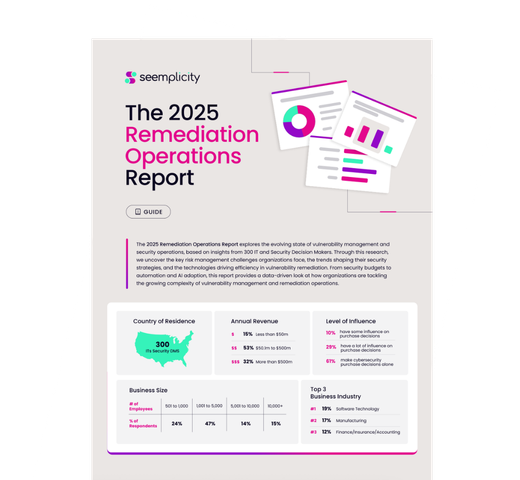
The 2025 Remediation Operations Report explores the evolving state of vulnerability management and security operations, based on insights from 300 IT and Security Decision Makers. Through this research, we uncover the key risk management challenges organizations face, the trends shaping their security strategies, and the technologies driving efficiency in vulnerability remediation. From security budgets to automation and AI adoption, this report provides a data-driven look at how organizations are tackling the growing complexity of vulnerability management and remediation operations.
Executive Summary
IT and Security Decision Makers report that their organizations are increasing their security investments, but financial constraints persist, forcing teams to allocate their spending strategically. The findings reveal a growing shift toward risk-based vulnerability management and AI-driven remediation, yet many organizations still struggle with making security findings actionable, prioritizing effectively, and addressing inefficiencies in their remediation processes.
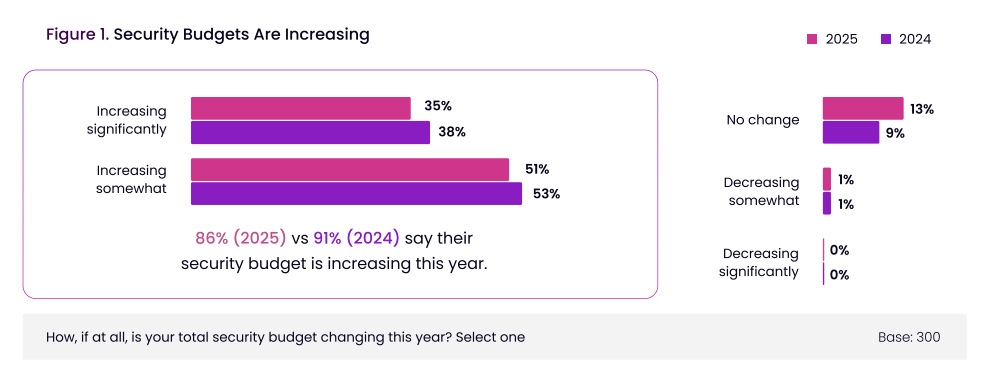
The research shows that automation and structured collaboration have a strong, positive influence on the efficiency of vulnerability management. However, manual processes, unstructured workflows, and excessive noise from vulnerability scanning tools continue to slow remediation efforts, leading to delays and security risks. Despite advancements in automation, a significant portion of vulnerability management remains manual, increasing operational inefficiencies and contributing to alert fatigue.
Collaboration plays a critical role in improving remediation speed and decision-making. While many organizations perceive their collaboration as strong, the data reveals that poor communication and fragmented workflows persist, reinforcing the need for structured processes and centralized collaboration. Strengthening cross-team coordination can significantly reduce inefficiencies, ensuring that security and development teams are aligned in prioritization and remediation efforts.
To close these gaps, organizations must adopt structured risk-based prioritization models, enhance collaboration through centralized workflows, and scale automation to reduce manual inefficiencies. By optimizing these areas, security teams can accelerate remediation efforts, reduce exposure time, and enhance overall resilience against evolving threats.
Unlock powerful insights into the trends, challenges, and strategies shaping remediation in 2025.
What’s inside:
- How AI is evolving from detection to remediation planning
- Why collaboration gaps are slowing down remediation efforts
- How automation is growing but manual work still holds teams back
- The disconnect between prioritization methods and real-world execution