
/What are the best appsec solutions in 2026?R
The best appsec solutions depend on the job. Snyk and Semgrep suit developer-first code and dependency scanning, Black Duck is strong for open source risk, Checkmarx, Veracode and OpenText Fortify cover broad enterprise testing, StackHawk focuses on DAST and APIs, GitHub Advanced Security is native to GitHub, and OX Security covers ASPM. Seemplicity sits on top of these tools to consolidate findings and drive them to remediation.
Shopping for appsec solutions is confusing. Every vendor says they cover the whole software lifecycle. Every product page uses the same five acronyms. And somehow your team still ends up with more findings than anyone can fix.
So this guide skips the “best overall” game. In appsec, “best” depends on what job you’re hiring the tool to do. A great dependency scanner won’t help much with a runtime API problem, and the reverse is true too.
Below is a quick rundown of the main categories, what to look for, and which tools stand out for specific use cases.
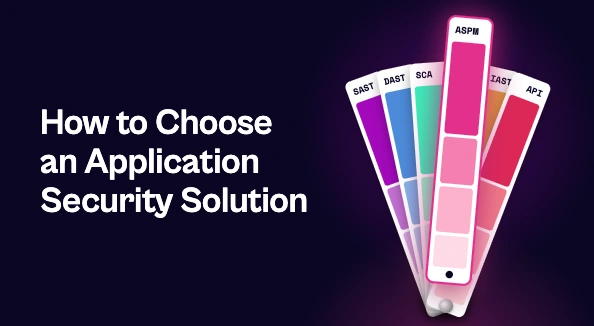
The Main Types of AppSec Solutions
Before getting to vendors, it helps to know what each category actually does.
SAST (static application security testing) scans source code for security flaws before it runs. It’s great for catching issues early, but it can be noisy.
SCA (software composition analysis) looks at your open source dependencies for known vulnerabilities and license problems. Since most modern apps are mostly open source code, this one matters a lot.
DAST (dynamic application security testing) tests a running application from the outside, the way an attacker would. It’s good at finding issues that only show up at runtime.
Secrets and IaC scanning catches hardcoded credentials and risky infrastructure-as-code settings before they ship.
ASPM (application security posture management) pulls results from all those tools into one view, adds context and helps you prioritize across the whole app portfolio.
Most teams end up running several of these at once. That’s normal. It’s also where the trouble starts, which we’ll get to.
How to Choose AppSec Solutions
A few questions will narrow things down fast.
Where do your developers live? If a tool doesn’t fit into their IDE, pull requests and CI pipeline, they’ll ignore it. Developer experience isn’t a nice-to-have.
What languages and frameworks do you use? Coverage varies more than vendors admit. Test against your real code, not a demo app.
How noisy is it? Ask about false positive rates and whether the tool can tell you if a vulnerable function is actually reachable.
Does it play well with others? You’ll have more than one tool. Make sure results can be exported or pulled into a central place.
Who fixes what? Finding issues is the easy part. Think about how findings get to the right developer with enough context to act.
Best AppSec Solutions for Specific Use Cases
These are all real, current tools with solid reputations in their categories. The order isn’t a ranking.
Best for developer-first security, Snyk
Snyk built its name on making security feel like part of the developer workflow instead of a gate at the end. It covers open source dependencies, code, containers and IaC, with integrations into IDEs, Git repos and CI tools. A good fit if getting developer adoption is your biggest challenge.
Best for open source and license risk, Black Duck
Black Duck has deep roots in software composition analysis and is especially strong on open source license compliance and SBOMs. It was named a Leader in Gartner’s 2025 Magic Quadrant for Application Security Testing. Useful for organizations where legal and compliance teams care as much about licenses as security teams care about CVEs.
Best for broad enterprise AppSec programs, Checkmarx One
Checkmarx One bundles SAST, SCA, DAST, API security, IaC and more into a single platform. It tends to suit larger enterprises that want one vendor covering a lot of ground, with central policy and reporting.
Best for regulated and on-prem environments, OpenText Fortify
Fortify has been around a long time and is common in government, financial services and other regulated industries. OpenText says Fortify has been a Leader in Gartner’s Magic Quadrant for Application Security Testing for eleven years in a row. It supports both on-prem and SaaS deployment, which matters when code can’t leave your network.
Best for SaaS-based testing at scale, Veracode
Veracode offers static, dynamic and composition analysis delivered as a cloud service, along with policy management for large app portfolios. Teams that want testing without running their own scanning infrastructure often look here.
Best for customizable code scanning, Semgrep
Semgrep is popular with security engineers who want to write their own rules in a format that looks like the code being scanned. It’s fast, has a strong open source following and works well for teams that want precise control over what gets flagged.
Best for DAST and API testing in CI, StackHawk
StackHawk focuses on dynamic testing built for developers, running scans against apps and APIs inside the CI/CD pipeline. A good option if runtime and API coverage is your gap and you want results before production.
Best for teams standardized on GitHub, GitHub Advanced Security
If your code already lives in GitHub, Advanced Security adds code scanning, secret scanning and dependency review right where developers work. The big advantage is having almost no extra tooling to roll out.
Best for application security posture management, OX Security
OX Security is an ASPM platform that gives visibility across the software supply chain, from code through build to cloud. It helps teams see which application risks matter most across many repos and pipelines.
Best for turning AppSec findings into fixes, Seemplicity
Seemplicity isn’t a scanner. It doesn’t do SAST, SCA or DAST itself. Instead it pulls in findings from the appsec solutions you already run, alongside your cloud and infrastructure tools, then dedupes, groups and prioritizes them with ownership context. From there it routes fixes to the right development teams in Jira, ServiceNow or wherever they work, and tracks remediation to the finish. It also partners with ASPM vendors like OX Security, so it fits next to these tools instead of replacing them.
The Too Many Tools Problem
Here’s what tends to happen. You buy a SAST tool, then SCA, then DAST, then a secrets scanner. Each one works. Each one also creates its own pile of findings in its own format.
Now the same vulnerable library shows up in three dashboards. Developers get tickets from four different systems. Nobody’s sure which issues are real, which are duplicates and which are already fixed.
More appsec solutions doesn’t automatically mean less risk. Sometimes it just means more noise. The teams that do well usually put as much thought into how findings get consolidated and assigned as they do into which scanners to buy.
Pick Tools for the Job, Then Connect Them
There’s no single best appsec solution, and that’s fine. Pick tools that fit how your developers work and cover your real gaps. Then make sure everything they find ends up in one place, with clear owners and a path to a fix.
If your team has plenty of scanners but not enough fixes, see how Seemplicity helps turn findings into code that actually ships.

Stay updated on Seemplicity blog
Subscribe today to stay informed and get regular updates from Seemplicity.