
What Seemplicity’s Exposure Action Report Reveals about Modern Exposure Management


/ Exposure Action Report: Solving the 67M+ Finding Execution Gap
In large-scale security environments, the primary challenge is often execution rather than a lack of detection. When multiple security tools report the same missing patch on a single machine, it creates hundreds of redundant findings that inflate backlogs and cause ticket-based workflows to break down. By aggregating these overlapping alerts into a single remediation action centered on the root cause, organizations can align their work with actual outcomes. This approach reduces operational friction and simplifies the path to resolution without sacrificing visibility, allowing teams to resolve all associated findings at once by installing the required patch.
For years, security teams have invested heavily in improving visibility, which meant more scanners, more dashboards, and more findings. But as exposure management programs mature, a different reality is setting in: visibility is no longer the limiting factor, execution is.
The 2026 Exposure Action Report looks at what exposure management actually looks like in practice, based on aggregated remediation and operational data from real-world environments throughout 2025. It reveals a picture of modern security operations where progress is defined not by how much you find, but by how effectively you fix.
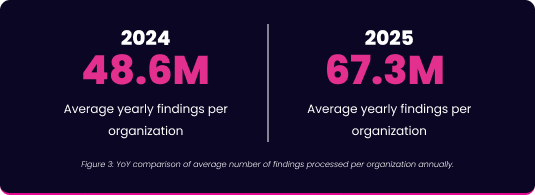
At this scale, traditional vulnerability management assumptions start to fall apart:
- Manual triage doesn’t scale
- Ticket-by-ticket remediation becomes unsustainable
- Tool-by-tool prioritization creates fragmentation instead of clarity
Even well-resourced teams are forced to make tradeoffs. The challenge is no longer just finding issues, it’s turning massive volumes of findings into coordinated action.
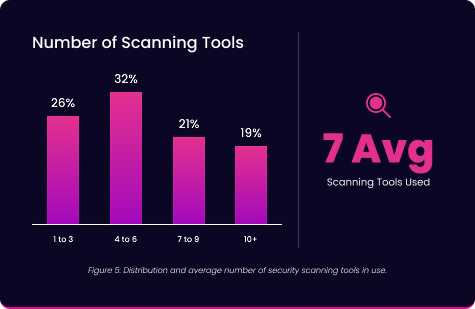
Each tool still brings its own severity score and remediation guidance. In practice, that means multiple tools often flag the same underlying assets from different angles – especially machines, which serve as the foundation for cloud workloads, containers, and applications.
This results in parallel queues, duplicated effort, and findings that compete for attention instead of reinforcing priority.
At this level of complexity, detection is no longer the differentiator, execution is.
Risk Converges in Predictable Places
When exposure data is viewed at scale, risk isn’t distributed equally throughout the environment, it forms little clusters.
The report shows that the majority of findings converge around machine-level resources, not because infrastructure is the only source of risk, but because it underpins everything else. Cloud scanners, container tools, endpoint protection, and vulnerability management solutions all evaluate the same foundational assets through different lenses.

This is motivating an important shift in how remediation needs to work. Treating each finding or category in isolation makes execution harder, not easier. Real progress comes from:
- Consolidating related findings
- Addressing root causes instead of individual alerts
- Prioritizing fixes that reduce exposure across multiple tools at once
Most Exposure Isn’t Exotic
Another clear pattern emerges from the data: most exposure isn’t driven by novel attacks or zero-days.
The most common findings in 2025 were well-understood issues:
- Containers running as root
- Excessive container privileges
- Missing or unencrypted cloud snapshots
- Known CVEs in widely used libraries
None of these are surprising. What’s notable is how consistently they appear across environments.
These issues persist not because teams don’t understand them, but because addressing them repeatedly and consistently at scale is hard. Exposure management, at this point, is less about knowledge and more about operational discipline.
AI Is Becoming a Practical Tool for Data Interpretation
As exposure volumes grow, security teams don’t just need help seeing data, but interpreting it fast enough to act.
In 2025, more than half of organizations on the Seemplicity platform enabled AI capabilities, which represents steady adoption as more AI agents have been released. Importantly, AI usage wasn’t experimental or occasional. On average, teams used AI features multiple times per week as part of day-to-day remediation workflows.
Rather than replacing human judgment, AI is being used to:
- Provide context inside findings
- Summarize exposure and remediation options
- Help teams cut through noise and focus on what matters
At scale, AI becomes a tool for data interpretation, one that supports execution by accelerating understanding and decision-making.
What Actually Reduces Risk at Scale
The data makes one thing clear: reducing exposure isn’t about fixing everything.
Organizations that made meaningful progress focused on how remediation work is structured and executed. In 2025, teams achieved:
- 40% average backlog reduction
- 33,000 hours saved per year
- $1.7M in average annual savings
These gains didn’t come from adding more tools. They came from prioritization, consolidation, and workflows designed around fixes rather than alerts.
At this level, remediation becomes an operational process, not a series of one-off decisions.
The Takeaway for Security Leaders
The Exposure Action Report reinforces a shift many leaders are already feeling:
- Findings do not equal risk reduction
- Cloud-native risk is an execution problem
- Scale rewards focus, not coverage
- Efficiency requires discipline
- Outcomes define maturity more than activity
When security meets reality, success is measured by what actually gets fixed and how sustainably teams can reduce exposure over time.
If you would like to see how exposure data can be consolidated and remediation prioritized at scale, schedule a demo of Seemplicity’s Exposure Action Platform and see how execution changes when workflows are built for results.
Stay updated on Seemplicity blog
Subscribe today to stay informed and get regular updates from Seemplicity.