


/what is ctem?
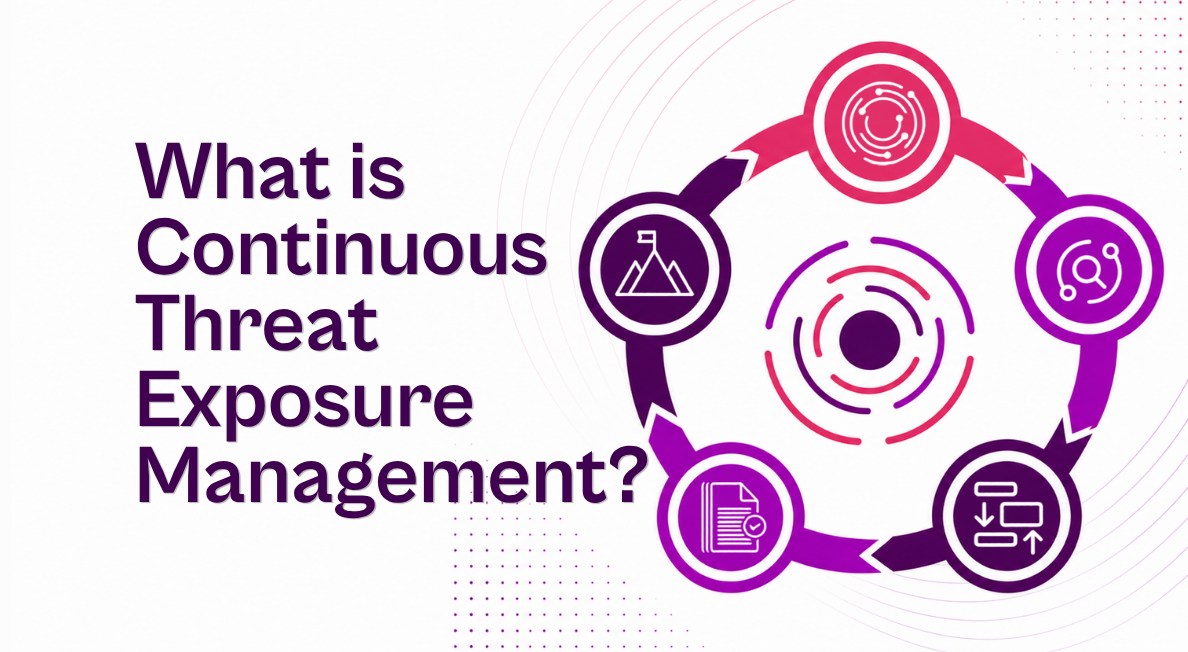
Continuous Threat Exposure Management (CTEM) is a five-stage security framework – scoping, discovery, prioritization, validation, and mobilization – introduced by Gartner in 2022. Instead of point-in-time vulnerability scans, CTEM runs as an ongoing cycle that continuously identifies, validates, and remediates the exposures that pose real, exploitable risk to a business.
Widespread, rapid digital transformation across industries presents a unique, unprecedented challenge when it comes to managing the sheer scale and risk of an organization’s attack surface.
Traditional vulnerability and risk management solutions lack the level of visibility and control necessary to keep environments safe and secure, calling for a new approach to vulnerability management that addresses the changed landscape and the limitations of traditional vulnerability management programs.
What is CTEM?
Continuous threat exposure management (CTEM) is a process framework introduced by Gartner in 2022, designed to help organizations proactively evaluate the accessibility, exposure, and exploitability of enterprise IT in a consistent, repeatable, and scalable fashion. CTEM was named a 2024 Gartner Top Technology Trend because of cyber security challenges like lack of visibility into the volume of exposures, difficulty tracking issues and remediation progress across siloed environments, lack of clarity around remediation owners, and increased dependency on third party technology.
It’s important to note CTEM isn’t a product or a tool you can buy off the shelf – it’s an operating model. Organizations typically need a combination of platforms to execute it, which is part of why so many security teams struggle to move from understanding the framework to actually running it.
A CTEM program helps organizations shift from a reactive approach, to a proactive approach, where steps are taken to strengthen security and compliance throughout the organization proactively.
The Five Stages of CTEM
The CTEM framework is a process made up the following five stages:
| Stage | What it does |
|---|---|
| Scoping | Defines which assets, systems, and business units matter most |
| Discovery | Inventories all assets and identifies vulnerabilities and weaknesses |
| Prioritization | Ranks exposures by exploitability and business impact, not just severity |
| Validation | Tests whether an exposure can actually be exploited in your environment |
| Mobilization | Assigns ownership and routes fixes into existing workflows |
Scoping
CTEM recommends strategically mitigating risk by adopting the “attacker’s point of view” which means going beyond traditional vulnerabilities and CVEs. This starts with organizational collaboration to identify which assets and systems are most business-critical, and therefore attractive to attackers; examples could include production or development environments, cloud infrastructure, on-prem assets, APIs, or other systems that are most valuable to organizational stakeholders and attackers. This step establishes a foundational level of context and visibility and helps with prioritization later on in the process.
Discovery
The discovery stage of the CTEM process aims to uncover any and all assets and vulnerabilities that exist in your attack surface, from third-party to on-premises environments, and from misconfigurations to insecure APIs to noncompliance and more. The CTEM framework leverages the context and conclusions from the Scoping step to help you project how each vulnerability impacts the rest of your attack surface. Further, understanding the types and levels of vulnerabilities that exist in your attack surface helps organizations prepare remediation and security plans accordingly.
Prioritize
Understaffed security and development teams aside, solving for every single weakness in your attack surface is untenable and an inefficient use of time; therefore organizations need to identify their most urgent issues. Rather than solely relying on risk scores provided by their security testing tools or risk scoring systems, Gartner recommends organizations consider a combination of urgency, severity, availability of compensating controls, risk appetite, and level of risk posed to the organization as inputs to determine how critical the weakness is. Insights from the “Scoping” and “Discovery” stages of the CTEM process, like business context and asset relationships, can also be part of the equation.
Validate
The validation stage tests whether vulnerabilities and other security gaps discovered and prioritized during the earlier phases can actually be exploited in a meaningful way, by leveraging pentesting, breach and attack simulation, attack path analysis, and red teaming exercises.
Although success varies on each organization’s level of risk acceptance, there are a few factors to look at:
- Attack success: If the attackers could actually succeed at exploiting the discovered vulnerabilities in your organization
- Potential impact: How far the attacker could get into the attack path before reaching a critical asset
- Response efficacy: How effectively and efficiently the processes respond to and remediate vulnerabilities
Mobilize
The mobilization stage operationalizes the CTEM process by defining communication standards, creating process documentation, assigning roles across stakeholders, and implementing automated workflows.
Although full automation is rarely possible or even desirable, automating basic patching or configuration changes can help organizations refocus remediation efforts toward more complex vulnerabilities. For example, in the event that a detected vulnerability has multiple fixes, the remediation team must decide which fix makes the most sense for the business.
Mobilization is often the most difficult part of implementing the CTEM framework because it requires a change in how the organization approaches risk management as a whole.
CTEM vs. Traditional Vulnerability Management
While they’ve been in use for decades, traditional vulnerability management methods are not equipped to handle the growing complexity and dynamic nature of today’s attack surfaces. Further, traditional methods of gathering vulnerability findings are often siloed and separate from the processes used to remediate those findings. As a result, vulnerabilities are typically triaged and remediated in a manual, ad-hoc way.
CTEM innovates on traditional vulnerability management and transforms it into a proactive, repeatable, and scalable process. By broadening the scope to consider all physical and digital assets, attack paths, likelihood of exploit, and current processes, organizations can achieve a holistic and actionable vulnerability management program that prioritizes with context and eliminates the most critical risks at a pace that works for your organization. Further, the emphasis on repeatability creates space for organizations to evaluate process efficacy and continuously improve on inefficiencies.
CTEM vs. Risk-Based Vulnerability Management
Risk-Based Vulnerability Management (RBVM) is itself an improvement on traditional vulnerability management; it adds threat intelligence and asset criticality to severity scoring, so teams aren’t just patching by CVSS alone. But RBVM still typically operates within the boundaries of known CVEs and scheduled scan cycles.
CTEM extends further in two ways. First, scope: CTEM accounts for exposures beyond software vulnerabilities, including misconfigurations, identity risks, and cloud posture issues that RBVM tools generally don’t cover. Second, structure: CTEM adds validation and mobilization as formal stages, meaning exploitability is tested rather than estimated, and remediation ownership is built into the process rather than handled ad hoc afterward. In practice, a mature RBVM program is often one of the inputs that feeds a CTEM cycle, not a replacement for it.
How CTEM Relates to Exposure Management
CTEM is sometimes used interchangeably with “exposure management,” but the two aren’t quite the same thing. Exposure management is the broader organizational discipline of identifying, understanding, and reducing risk across an evolving attack surface. In other words, it’s the overall goal. CTEM is the operational cycle that drives it: the specific, repeatable five-stage process an organization runs to actually execute exposure management day to day.
Other practices, like attack surface management (ASM) and cloud security posture management (CSPM), feed data into the CTEM cycle but don’t replace it on their own. Think of exposure management as the destination, and CTEM as the route you take to get there.
Benefits of CTEM
Although CTEM can take some time and resources to implement, the overall long-term benefit is monumental. According to Gartner, organizations that prioritize their security investments based on a CTEM program will realize a two-thirds reduction in breaches by 2026.
- Quicker MTTRCTEM’s emphasis on scoping and discovery enables vulnerability management teams to understand the existing environment and set a critical foundation to anticipate and defend against the risk in their environment. Further, the context-driven prioritization and clearly defined roles and responsibilities set during the mobilization stage help security teams reduce triage time and accelerate remediation before vulnerabilities turn into incidents.
- Enhanced Security PostureContinuous vulnerability scanning and context-based prioritization ensures that your organization is remediating the risks that matter most. It’s neither feasible nor a good use of resources to attend to every single vulnerability, so focusing on the most critical risks offers the greatest return. Continuous monitoring and risk assessment also helps security teams identify new attack vectors and stay ahead of risk.
- Business and Regulatory AlignmentAll too often, compliance is a point in time, check-the-box activity that puts stress on the security team to quickly whip up all relevant compliance materials. Not only does this give an inaccurate picture of compliance health and security posture, but can also leave the organization open to unknown risks and failed audits. The CTEM framework is great for establishing business and strategic alignment with any governance, risk, and compliance (GRC) mandates. Both CTEM and GRC activities have a symbiotic relationship to further the vulnerability management strategy as a whole. CTEM follows and informs GRC status, and GRC helps drive and prioritize CTEM processes. This way, GRC is a part of the broader vulnerability management strategy rather than an afterthought, ensuring audit readiness at any time.
Common Challenges in Implementing
Despite the clear benefits, most organizations hit the same handful of obstacles when they try to put CTEM into practice:
- Mobilization is where programs stall. Scoping, discovery, and even prioritization can often be handled within the security team alone. Mobilization requires IT, DevOps, and application owners to actually act. But without clear ownership and workflow integration, validated findings sit untouched.
- Tool sprawl creates fragmented scope. Most organizations already run separate scanners, CNAPPs, and ASM tools. Without a way to normalize and de-duplicate findings across them, “discovery” produces more noise than clarity.
- Validation is resource-intensive. Manual penetration testing and red teaming don’t scale to the speed of a continuous cycle, which is why many programs default back to severity scores instead of true exploitability. That shortcut is also getting less reliable: AI-accelerated exploit generation means a growing share of findings are technically exploitable somewhere, which makes CVSS and exploit-availability scores far less useful as a filter than they used to be. Validation increasingly has to confirm exploitability in the specific environment, not just in theory.
- CTEM is treated as a project instead of a program. Organizations that run it as a one-time initiative lose the benefit of the “continuous” part of CTEM. The cycle needs to repeat and feed improvements back into future scoping decisions.
Implementing a CTEM Program
CTEM is a process framework rather than a product category, meaning organizations should expect to combine a few different platforms to support it. A mature, optimized CTEM program takes time to build, but most organizations can get started with three concrete steps:
- Build cross-functional remediation workflows early. CTEM’s mobilization stage depends on clear ownership between security, IT, and remediation teams. Organizations that treat CTEM as an operational program, rather than a one-time deployment, are the ones that sustain it.
- Start with a narrow, well-defined scope. Pick the business units, asset classes, or threat scenarios that matter most rather than trying to cover everything at once. This builds process maturity and demonstrates value before expanding.
- Connect your existing data sources. Vulnerability scan results, cloud security posture findings, threat intelligence feeds, and asset inventory data are the inputs discovery and prioritization depend on. Most organizations already have these, just not unified.
CTEM with Seemplicity’s Agentic Exposure Action Platform
Understanding the CTEM framework is one thing. Operationalizing it end to end, at the pace exposures actually accumulate, is the harder problem most organizations run into at the mobilization stage.
Seemplicity’s Agentic Exposure Action Platform™ is built to close that gap. A coordinated Agentic Workforce of AI agents validates real-world exploitability, assesses business context, synthesizes findings into clear remediation plans, and routes fixes to the right owners, turning the CTEM cycle from a framework on paper into a system that actually reduces exposure.
Learn more about how Seemplicity operationalizes CTEM.

Stay updated on Seemplicity blog
Subscribe today to stay informed and get regular updates from Seemplicity.
Stay updated on Seemplicity blog
Subscribe today to stay informed and get regular updates from Seemplicity.