


/What is the best Zafran alternative?
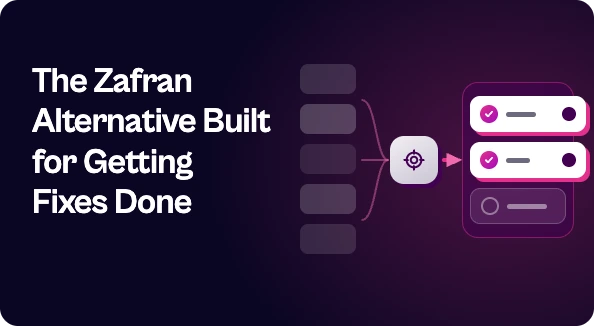
The best Zafran alternative depends on what you need beyond a shorter list. Zafran is strong at showing which vulnerabilities your existing controls already mitigate. If your bottleneck is getting exposures fixed, Seemplicity is built for that: AI Analysts confirm exploitability across hosts, code and dependencies, then AI agents find the right owner, group findings into root-cause fixes and track remediation to closure. Teams with other needs may look at Nagomi, XM Cyber, Brinqa or Tenable One.
Zafran has earned its spot in exposure management. It pulls findings from your existing scanners, removes duplicates, and does something many tools skip: it checks whether the security controls you already run, like your EDR, firewall or WAF, make a vulnerability less dangerous. That can shrink a backlog of thousands down to the handful that matter. The company raised a $60 million Series C in late 2025, and the momentum is real.
So why look for a Zafran alternative? Usually it’s not because the list is wrong. The list is shorter, but the work still isn’t getting done. Findings still sit in a queue nobody owns. Tickets still go to the wrong team. The same root cause shows up as forty separate tasks.
If that sounds familiar, the question isn’t “who prioritizes better.” It’s “who gets the fix shipped.”
What Zafran Does Well
It’s worth being fair here, because a good evaluation starts with knowing what you’d be giving up.
- Compensating controls. Zafran’s core idea is that your existing defenses already block some exposures. It maps vulnerabilities against those controls and offers mitigation steps you can take before a patch is ready.
- Exploitability context. It looks at things like internet reachability, whether a vulnerability is loaded at runtime, and active exploitation in the wild.
- Exposure hunting. Teams can search across their environment for exposures tied to a new CVE, zero-day or threat actor.
If your main problem is “we patch too much of the wrong stuff,” Zafran is a strong fit.
When Teams Start Looking for a Zafran Alternative
The trigger is usually one of these:
- Prioritization is fine, but remediation is the bottleneck. You know what matters. Getting the right engineer to fix it is the hard part.
- Ownership is a mess. Asset tags are stale, and findings land with whoever happens to be on call.
- AppSec findings matter as much as infrastructure. You need code and open-source dependency findings handled with the same rigor as host vulnerabilities.
- Ticket volume is crushing the engineering teams. One bad base image shows up as hundreds of tickets.
Why Teams Choose Seemplicity as a Zafran Alternative
Seemplicity is an agentic Exposure Action Platform. Both platforms bring findings together from the tools you already own. The difference is where each puts its weight. Seemplicity is built around what happens after prioritization.
It proves exploitability with evidence, then moves straight to the fix. Seemplicity’s AI Analysts, launched in June 2026, run evidence-based exploitability investigations inside the remediation workflow. The Host Analyst checks live runtime conditions on hosts. The Code Analyst reads your GitHub or GitLab source to confirm the vulnerable code can actually be reached. The SCA Analyst checks open-source dependencies, and can help you respond to a zero-day before scanners have a signature for it. Compensating controls are part of every verdict.
It finds the right owner automatically. The Find the Fixer agent cleans up messy scanner and asset tags and builds an ownership map, so each fix reaches the team that can actually make it.
It groups findings into root-cause fixes. Instead of a ticket for every instance, related findings become one fix, like updating a single base image. Engineers get fewer, clearer tasks.
It tells engineers exactly what to do. The Remediation agent writes fix guidance specific to each environment and puts it inside the finding, so nobody has to go research it.
It tracks every fix to closure. Work goes into the tools your teams already use, like Jira and ServiceNow, and Seemplicity follows it until the fix is verified.
It covers AppSec as well as infrastructure. Gartner listed Seemplicity as a Sample Vendor for ASPM in two 2026 Hype Cycles, along with its recognition in preemptive exposure management research.
Other Zafran Alternatives by Need
Seemplicity isn’t the right answer for every team. Depending on why you’re leaving, these may fit better.
Best for getting more value from security tools you already own: Nagomi. Nagomi maps current threats against your existing defenses to show where they’re underused or misconfigured. It’s close to Zafran’s compensating-controls idea, but focused on the controls themselves.
Best for attack path analysis: XM Cyber. It shows how exposures chain together toward critical assets.
Best for a custom risk model: Brinqa. It suits teams that want to build their own prioritization logic.
Best for scanning and prioritization from one vendor: Tenable One. It makes sense if you’d rather consolidate on one scanning vendor than run a separate layer on top.
Best for turning prioritized exposures into finished fixes: Seemplicity.
Questions to Ask Any Zafran Alternative
- “Show me one finding go from detected, to proven exploitable, to the right owner, to verified fixed.”
- “How do you decide who owns a finding when the asset tags are wrong?”
- “How many tickets would our current backlog turn into after you group findings by root cause?”
- “Can you check exploitability in our code and dependencies, not just on hosts?”
- “What does an engineer actually see when a fix lands in their queue?”
The Bottom Line
Zafran helps you see which exposures your controls already cover. That’s valuable. But a shorter list only reduces risk once the items on it get fixed. If that’s where your program stalls, Seemplicity is the Zafran alternative built for that job.
See how Seemplicity turns your prioritized exposures into fixes your teams actually finish.

Stay updated on Seemplicity blog
Subscribe today to stay informed and get regular updates from Seemplicity.