/why do ctem programs fail?
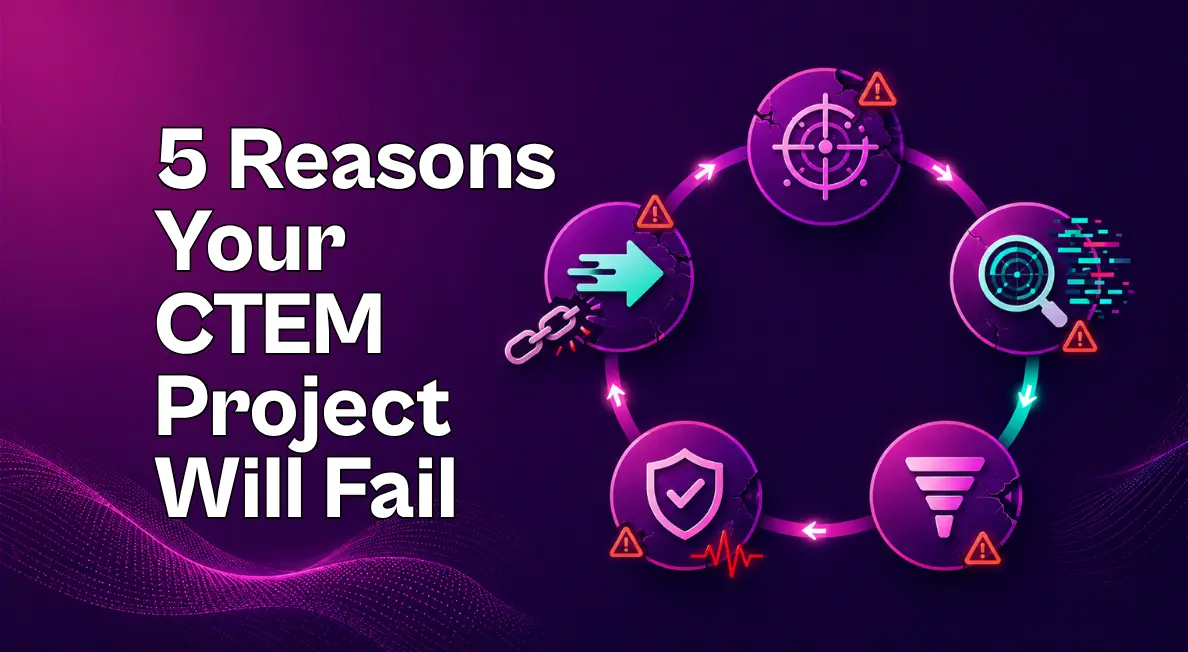
CTEM sounds straightforward as a five-stage loop, but most programs stall quietly somewhere inside it. This post breaks down the five places CTEM projects actually break — bad scoping, unreconciled discovery tools, severity mistaken for risk, skipped validation, and unowned remediation — and argues that these aren’t five separate problems, but symptoms of running CTEM as disconnected efforts instead of one continuous workflow.
Continuous Threat Exposure Management (CTEM) sounds simple on a slide. Scope, discover, prioritize, validate, mobilize. Five stages, one continuous loop, and in theory your organization’s exposure just keeps getting smaller.
In practice, most CTEM programs stall somewhere in that loop. It usually happens quietly. Nobody announces that scoping got skipped, or that validation never made it onto anyone’s calendar. The program just slows down, the backlog grows, and by the time someone asks why the security posture hasn’t improved, the root cause is buried five steps back.
This isn’t a framework problem. Gartner didn’t hand you a bad model. It’s an execution problem, and it tends to show up in the same five places, over and over, regardless of company size or industry. Here’s where CTEM projects actually break.
1. You’re Scoping Wrong
Scoping is supposed to answer one question: what actually needs to be managed? Most teams answer it in one of two broken ways.
The first is scoping everything. Every asset, every cloud account, every repository gets thrown into one giant inventory project that takes months to complete and is out of date the day it finishes. Nobody can prioritize “everything,” so the scope becomes a spreadsheet nobody opens again.
The second is scoping almost nothing. Teams point their tools at whatever’s easiest to reach, usually the assets that were already being scanned before CTEM entered the conversation. Shadow IT, unmanaged cloud sprawl, and anything outside the usual toolset gets left out entirely, not because it doesn’t matter, but because nobody went looking for it.
Both versions share the same root cause. Scope gets treated as a one-time checklist instead of a living definition of what’s actually critical to the business. And if the definition of “in scope” isn’t tied to business impact from day one, every stage after it inherits the same blind spot.
2. More Scanners, Same Blind Spots
Discovery is where a lot of security teams feel the most progress, because it’s the stage where you buy things. A cloud security tool here, an application scanner there, an EASM tool to cover what’s exposed externally. Each purchase feels like visibility improving.
The problem is that more scanners don’t automatically mean more clarity. They usually mean more raw data, sitting in more places, described in more inconsistent ways. The same asset might get flagged by four different tools using four different names, four different severity scales, and zero awareness that the other three tools even exist.
Discovery was never supposed to be a data collection exercise. It’s supposed to be an intelligence exercise, where findings from every source get reconciled into a single, coherent picture of what’s actually out there. Without that reconciliation, “discovery” just means a bigger pile of alerts that still has to get sorted out by hand.
3. Your “Critical” Findings, Aren’t
At some point, most security teams end up with a queue of findings labeled critical that number in the hundreds, sometimes thousands. That’s usually a sign that severity and risk are being treated as the same thing, and they aren’t.
CVSS measures how technically severe a vulnerability is in isolation. It has no idea whether the affected system sits on an air-gapped test box nobody touches, or a customer-facing payment system processing transactions right now. A 9.8 is a 9.8 either way, even though the actual business risk is nowhere close to equal.
When prioritization runs purely on severity score, teams end up with a backlog that’s technically accurate and practically useless. Everything looks urgent, so nothing actually is, and remediation turns into reactive whack-a-mole instead of a plan built around what would actually hurt the business if it were exploited.
4. Nobody’s Validating
A scanner flagging something as vulnerable is a hypothesis, not a fact. Somewhere along the way, a lot of teams stopped treating it that way.
Validation is the stage that confirms whether a finding is actually exploitable in the real environment it lives in, not just theoretically possible on paper. It’s also the stage that gets skipped most often, usually because there’s no dedicated time, tooling, or team assigned to do it. Everyone’s too busy working through the backlog from stage three to double back and confirm which of those findings are actually dangerous.
Skipping validation doesn’t make risk disappear. It just means remediation effort gets spent on theoretical vulnerabilities while the ones that are actually exploitable sit untouched, waiting to be found the hard way.
5. Nobody Owns the Fix
This is usually where CTEM programs quietly die.
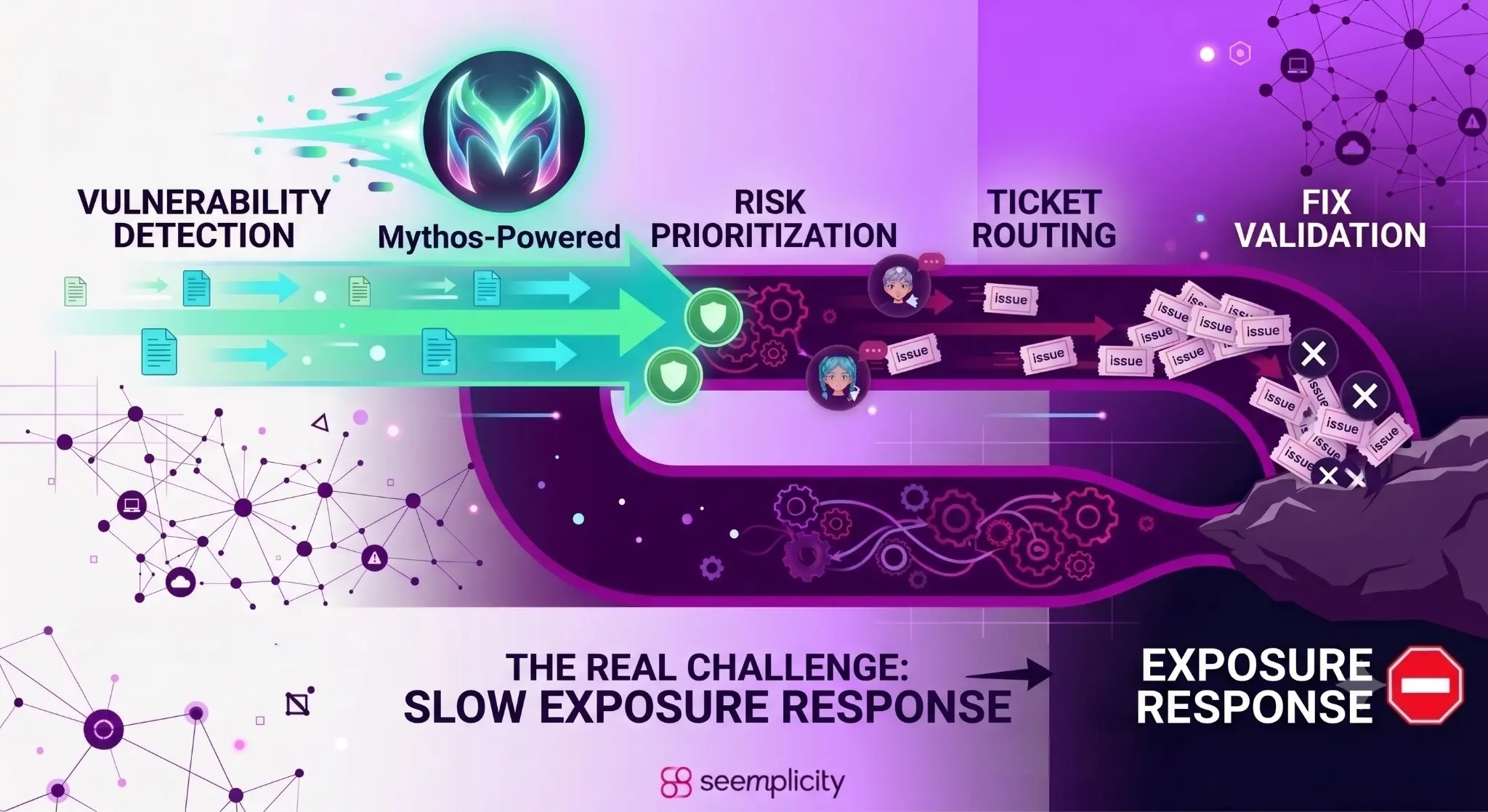
A finding can be correctly scoped, properly discovered, accurately prioritized, and fully validated, and still never get fixed, because nobody handed it to the person who could actually fix it. Security teams surface the risk. IT, engineering, and DevOps teams own the systems. If there’s no clear, automatic path connecting the two, findings pile up in a queue that security owns but can’t act on alone.
This is where good work goes to rot. Not because the analysis was wrong, but because there was no mechanism to turn analysis into an assigned, tracked, accountable fix. A remediation program without clear ownership isn’t a remediation program, it’s a really well organized list of problems.
The Real Problem
None of these five failures are actually separate problems, they’re symptoms of the same root cause: trying to run CTEM as five disconnected efforts instead of one continuous workflow.
A scoping spreadsheet that lives in one place. A pile of scanners that don’t talk to each other. A prioritization meeting based on severity scores instead of business context. A validation backlog nobody owns. A ticketing free-for-all with no clear handoff to the people who fix things. Each one might function fine on its own, but the whole thing still falls apart, because CTEM was never meant to be five separate projects. It’s one loop, and every stage depends on the one before it.
Closing these gaps takes a platform built to connect all five stages together, where scope, findings, business context, validation status, and ownership all live in the same place instead of getting lost between five different tools and five different teams.
If your team is looking to solve these particular issues, we’d love to show you how Seemplicity is innovating in agentic technology to impact exposure response at speed and at scale. It’s a conversation worth having no matter your current tech stack, since the speed of the game has changed drastically in recent months.
Visit our Demo Center.

Stay updated on Seemplicity blog
Subscribe today to stay informed and get regular updates from Seemplicity.