
/What is automated vulnerability detection?
Automated vulnerability detection is the use of tools like SAST, DAST, SCA, cloud posture scanners, and network scanners to continuously find security weaknesses without manual review. It gives teams speed and coverage that manual testing can’t match. The catch is volume: more tools mean more duplicate, noisy findings. The teams that get value from detection pair it with prioritization and automated remediation workflows.
Automated vulnerability detection is how most security teams find weaknesses today. Nobody is reading every line of code or checking every cloud setting by hand anymore. Scanners do that work around the clock and report back what they find.
That part works well. The hard part is what comes after. Let’s go through how automated detection works, what the main tool types do, and why finding vulnerabilities has stopped being the bottleneck.
What Is Automated Vulnerability Detection?
Automated vulnerability detection means using software to find security weaknesses in your environment on an ongoing basis, without someone checking each one by hand. That covers your code, the open source packages it depends on, container images, cloud configurations, network assets, and applications that are already running.
The goal is simple: find problems early and often, across more ground than people could ever cover manually.
The Main Types of Automated Vulnerability Detection Tools
Most organizations run several of these at once, because each one covers a different layer.
Static application security testing (SAST). Scans source code for insecure patterns before the code ships. Good at catching injection flaws, hardcoded secrets, and risky functions early in development.
Dynamic application security testing (DAST). Tests a running application from the outside, the way an attacker would. It finds issues that only show up at runtime, like authentication gaps or misconfigured headers.
Software composition analysis (SCA). Checks your open source dependencies against known vulnerability databases. Since most modern apps are built mostly from third-party code, this one matters a lot.
Container and IaC scanning. Looks at container images and infrastructure-as-code templates for known CVEs and risky configurations before they get deployed.
Cloud security posture management (CSPM). Keeps watching your live cloud accounts for misconfigurations, like public storage buckets or overly broad permissions.
Network and infrastructure scanners. The classic vulnerability scanners. They check servers, endpoints, and network devices for missing patches and exposed services.
AI is also showing up across all of these categories. Newer tools use it to cut false positives, explain findings in plain language, and suggest code fixes. That’s useful, but it doesn’t change the basic job. These tools are still finding things.
Why Automated Vulnerability Detection Alone Isn’t Enough
Here’s the problem nobody puts on the product page. Every scanner you add produces more findings, and those findings don’t line up with each other.
The same vulnerability can show up in your SCA tool, your container scanner, and your cloud scanner, written up three different ways. One tool calls it critical, another calls it high. None of them knows who owns the affected asset, whether it faces the internet, or whether it’s in a test environment nobody uses.
So you end up with:
- Thousands of findings spread across separate consoles
- Lots of duplicates and noise
- Severity scores without business context
- No clear owner for most of the work
- Security teams stuck manually triaging and chasing other teams to fix things
Detection got automated. Fixing didn’t. That gap is where risk actually piles up.
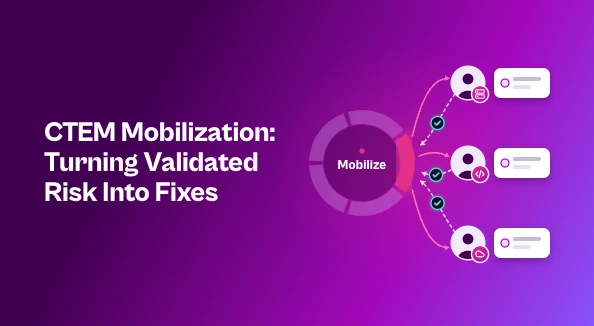
From Automated Vulnerability Detection to Automated Remediation
The teams getting real value out of their scanners treat detection as the start of a pipeline, not the end. A healthy flow looks roughly like this:
- Consolidate. Pull findings from every scanner into one place.
- Deduplicate and normalize. Collapse the same issue reported by multiple tools into one record.
- Add context. Factor in asset ownership, business criticality, exposure, and threat intel like the CISA KEV catalog.
- Prioritize. Focus on the small set of issues that actually create risk.
- Route to the right owner. Send grouped, actionable tickets to the team that can fix them, in the tools they already use.
- Track to closure. Check that fixes landed and measure how long it took.
Doing this by hand doesn’t scale. That’s why remediation is turning into its own area of automation, sitting right next to detection.
Questions to Ask About Your Detection Stack
Before you buy another scanner, it’s worth asking:
- How many tools are producing findings today, and where do those findings end up?
- How much of your team’s week goes to triage versus actual risk reduction?
- Can you tell who owns a given vulnerability within a minute?
- Do you know your mean time to remediate, and is it getting better?
- If you added a new scanner tomorrow, would it reduce risk or just make the backlog bigger?
If those questions are uncomfortable, you probably don’t have a detection problem. You have a remediation problem.
Where Seemplicity Fits
Seemplicity doesn’t replace your scanners. It works with the ones you already have. As an agentic exposure action platform, it takes in findings from your detection tools, removes duplicates, adds business and ownership context, and uses AI agents to drive the right fixes to the right teams through your existing workflows. Your scanners handle the finding, and Seemplicity makes sure that work turns into fixes.
If your automated vulnerability detection is already doing its job, the next step is making sure all those findings actually get fixed.

Stay updated on Seemplicity blog
Subscribe today to stay informed and get regular updates from Seemplicity.