
/What are the best platforms for CTEM?
The best platforms for CTEM depend on the problem your program has right now. Microsoft Security Exposure Management fits Microsoft-heavy shops, Palo Alto Cortex Exposure Management and Rapid7 Exposure Command fit SOC-led programs, Armis Centrix covers OT and unmanaged devices, Brinqa suits custom risk models, Cymulate and Picus prove controls work, and Seemplicity turns prioritized exposures into owned, tracked fixes. Diagnose the gap first, then buy for it.
If you’re asking what the best platforms for CTEM are, you’ve probably noticed that every exposure vendor now says it does CTEM. Most of them do some of it. None of them do all of it equally well.
So the useful question isn’t “which platform is best?” It’s “what’s broken in my program right now?” A team that doesn’t know what it owns needs something different from a team that has great visibility and a backlog that never shrinks.
This guide starts from the problem and works back to the platform.
First, Figure Out Where Your CTEM Program is Stuck
Answer these five questions honestly before you look at a single demo:
- Do we have an asset inventory we’d bet on, including OT, IoT and devices nobody manages?
- When we say something is critical, do we know it’s reachable and exploitable in our environment?
- Can we prove our existing controls would stop a real attack?
- Are we running one security stack, or stitching together a dozen scanners?
- When we find something that matters, does it get fixed, and do we know who fixed it?
A “no” on one of these is a good sign of the platform you need next. A “no” on all five means you should start with visibility and work forward. Trying to validate or mobilize exposures you can’t see yet doesn’t work.
What Are the Best Platforms For CTEM, by Problem
- Best if you’re all-in on Microsoft: Microsoft Security Exposure Management
If Defender, Entra and Azure already run most of your security, Microsoft’s exposure management product pulls signals from those tools into one view of your attack surface and likely attack paths. The benefit is less integration work. The tradeoff is that coverage is deepest inside the Microsoft ecosystem, so teams with a lot of third-party tooling will still have gaps. - Best if your SOC owns exposure: Palo Alto Networks Cortex Exposure Management
Some organizations run CTEM out of the SOC instead of a standalone VM team. Cortex Exposure Management fits that model. It filters vulnerability noise by accounting for which compensating controls are already in place, and it sits next to the rest of the Cortex stack your analysts already use. - Best if you want exposure and detection from one vendor: Rapid7 Exposure Command
Rapid7 bundles hybrid exposure management with its detection and response products. It’s added cloud runtime validation and data security posture capabilities in 2026. It’s a practical pick for mid-size teams that want fewer vendors and one place to look. - Best if you can’t see OT, IoT or unmanaged devices: Armis Centrix
If question one made you wince, start here. Armis is known for asset discovery and behavior-based risk context across devices that traditional scanners miss, like medical equipment, industrial systems and anything without an agent. You can’t scope a CTEM program around assets you don’t know exist. - Best if you can’t prove your controls work: Cymulate
Cymulate runs breach and attack simulations that are safe to use in production. They show whether your controls block real techniques, which answers question three with evidence instead of assumptions. It’s especially useful when leadership asks, “would we have caught that?” - Best if you want threat-informed validation: Picus Security
Picus combines attack surface discovery with breach and attack simulation. It ties results to specific adversary behavior and gives you mitigation guidance you can act on. It suits teams that want validation findings mapped to the threats they actually care about. - Best if things get found but never get fixed: Seemplicity
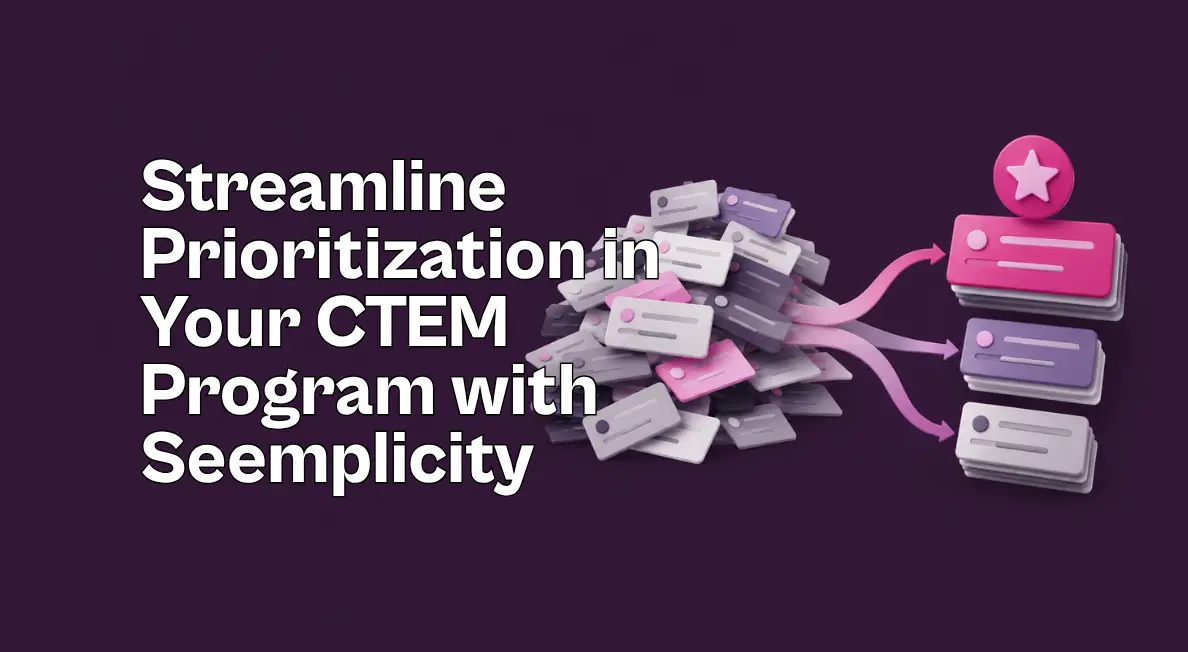
Seemplicity isn’t a scanner. It’s an Agentic Exposure Action Platform that sits on top of the tools you already have. It pulls in findings, removes duplicates, sends each exposure to the person who owns the fix, and tracks it until it’s closed. If your answer to question five was “not really,” this is the gap it fills. It’s also the step where most CTEM programs stall.
How to Combine the Best Platforms for CTEM
Most teams end up with two or three platforms, not one. The usual pattern is:
- A visibility layer (Microsoft, Rapid7, Palo Alto or Armis) to see what you own and what’s exposed
- A validation layer (Cymulate or Picus) to confirm what’s actually exploitable
- An action layer (Seemplicity) to make sure the exposures that matter get fixed
Buy for the gap you have today, not the full diagram. Add the next layer once the current one is working.
The Short Answer
The best platforms for CTEM are the ones that fix the part of your program that’s broken. Figure out whether your gap is visibility, validation or action, and buy for that first.
If your CTEM program finds plenty but fixes too little, see how Seemplicity gets exposures to the right owner and closed.

Stay updated on Seemplicity blog
Subscribe today to stay informed and get regular updates from Seemplicity.