
/TL;DR
If you’re building software, chances are your environment looks nothing like it did a few years ago. Monolithic applications have given way to microservices. On-prem systems have migrated to multi-cloud. Waterfall has become agile, and developers are pushing code daily (sometimes hourly). Security, meanwhile, is still catching up.
It’s never been more important to get the fundamentals right. If you’re looking for clear, actionable application securitybasics to help you build or improve your program, you’re in the right place. Whether you’re just starting out or trying to level up existing operations, this post is your blueprint. What follows are seven foundational principles that offer a grounded approach to doing AppSec right – from day one.
Why Application Security Needs a Fresh Look
The pace of development, combined with the sheer complexity of today’s application ecosystems, has made traditional security models obsolete. Relying solely on periodic scans doesn’t cut it when your attack surface includes dozens of third-party services and components, ephemeral containers, and code written at breakneck speed.
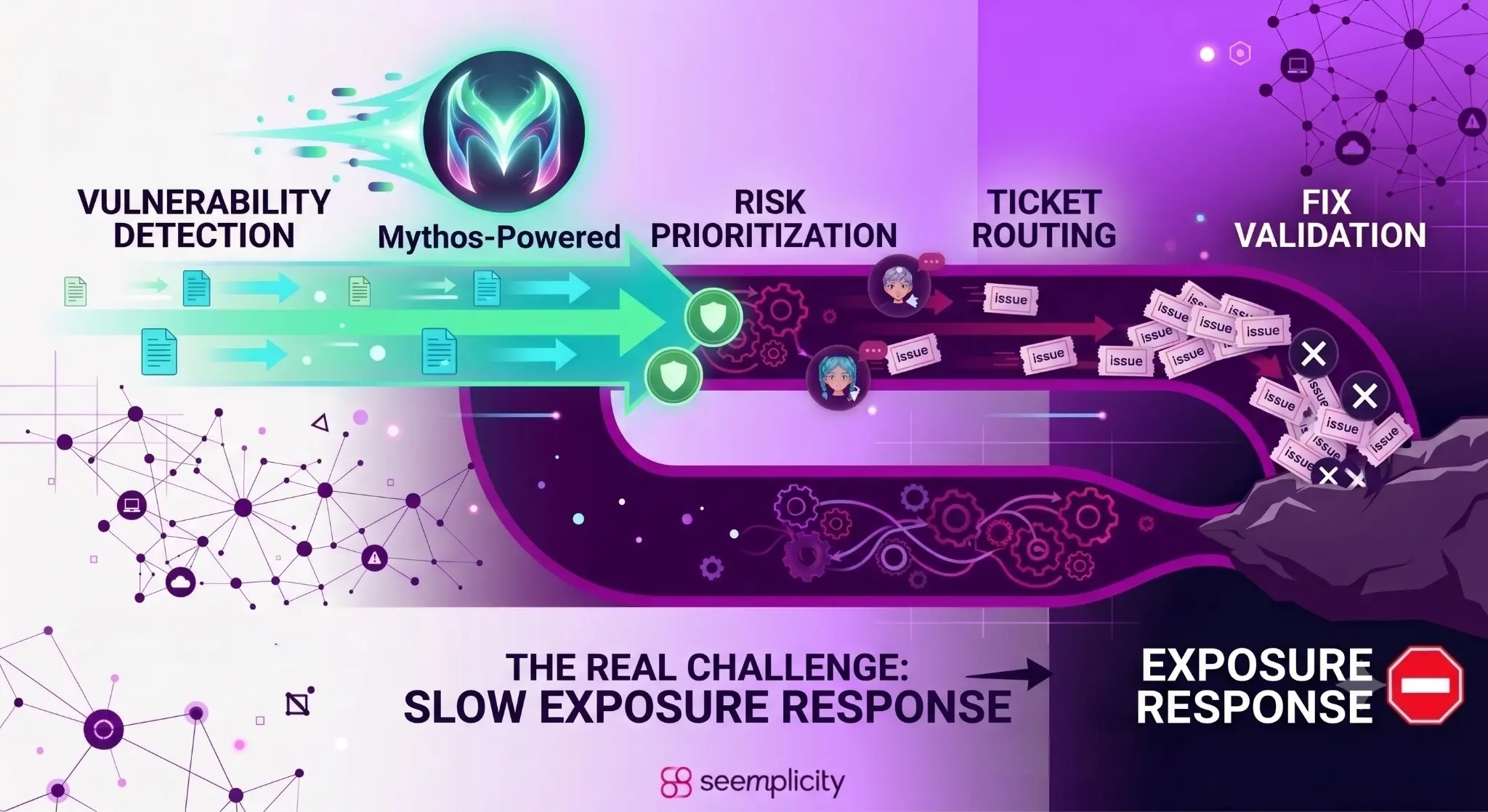
To make things even trickier, the path from detection to remediation is often fragmented. Multiple scanners spit out findings in different formats. Teams argue over ownership. Fixes stall in backlogs. And somewhere in that chaos, actual risk continues to grow.
That’s why getting back to application security basics is about cutting through the noise. It means focusing on the core principles that enable security to scale with development, adapt to modern architectures, and drive real-world risk reduction.
What Is an AppSec Program?
An Application Security (AppSec) program is a structured approach to identifying, prioritizing, and remediating security risks across an organization’s software development lifecycle. Its goal is to ensure that applications are built, tested, deployed, and maintained securely while enabling development teams to deliver software quickly.
A mature AppSec program typically combines people, processes, and technology to:
- Identify vulnerabilities through tools such as SAST, DAST, SCA, and cloud security scanners
- Establish security policies and remediation workflows
- Prioritize risks based on business context and exploitability
- Assign ownership to the right development, DevOps, or infrastructure teams
- Track remediation progress and measure security outcomes over time
As organizations adopt more applications, cloud services, and development tools, AppSec programs often struggle with fragmented data, duplicate findings, and unclear ownership. Modern AppSec programs address these challenges by centralizing security findings, automating remediation workflows, and helping teams focus on the vulnerabilities that pose the greatest risk to the business.
1. Embed Security Early and Often (Shift Left and Right)
Let’s start with one of the most repeated ideas in AppSec: shift left. Yes, baking security into the development lifecycle early is critical. But the reality is, shifting left isn’t enough on its own. A modern application security program needs to shift everywhere: left, right, and continuously – fully integrated into the DevSecOps workflow.
Why? Because vulnerabilities don’t just appear during coding. They surface during design, deployment, integration, and even post-release. If security only checks for issues right before production – or worse, after incidents occur – it’s already too late.
In mature DevSecOps environments, security isn’t a separate checkpoint. It’s embedded directly into CI/CD pipelines, developer toolchains, and runtime environments. The goal isn’t to slow delivery – it’s to make security delivery the default.
| Shift Left: Make it part of the DevSecOps workflow | Shift Right: Extend security beyond deployment |
| Integrate static application security testing (SAST) and software composition analysis (SCA) directly into the DevSecOps pipeline and CI/CD environments. | Use dynamic application security testing (DAST), breach and attack simulation (BAS), and other runtime controls, such as cloud-native application protection platform (CNAPP), to identify vulnerabilities and exposures that become apparent when an application is running. |
| Add guardrails, not gates – configure tools to flag risky code without breaking builds unnecessarily. Only fail builds for critical vulnerabilities in high-impact services. | Incorporate real-world telemetry – from threat intelligence feeds and public repositories to internal signals – to prioritize vulnerabilities that are actually reachable and exploitable in your environment. |
| Offer secure design patterns and threat modeling guidance during planning stages, so security is built into architectural decisions, not as afterthoughts. | Feed production insights back into earlier DevSecOps stages to continuously strengthen security posture across releases. |
This full-spectrum DevSecOps approach reduces the window of exposure while maintaining engineering velocity. You’re not just catching bugs, you’re designing systems that are harder to break in the first place.
2. Establish a Single Source of Truth
A foundational step in any application security program is establishing a single source of truth: one place where all vulnerability data comes together, cleaned up and ready for action. Without it, it’s nearly impossible to understand what to prioritize, what’s already been addressed, and what still poses a risk.
Right now, most organizations are dealing with fragmented visibility. Static analysis tools live in one platform, runtime alerts in another, and penetration testing results might be buried in forgotten spreadsheets and reports. What you end up with is multiple tools flagging the same issue in different ways, without any shared context to tie it all together. In other words: a lot of noise and no action.
Consolidation is the first step, but it’s not enough to just dump everything into one place. You need to turn it into actionable intelligence. When the same vulnerability is flagged by two different application security scanners, you shouldn’t end up with two separate tickets. Deduplication allows security teams to collapse repeat findings so that the same issues don’t get counted multiple times, saving developers from being overloaded with redundant work.
Likewise, vulnerabilities need to be compared on a consistent scale in order to gauge severity meaningfully. Some tools use a 0–10 score, others use 0–1, and some rank findings as low / medium / high /critical. Without normalization, you can’t effectively triage or prioritize across systems – you’re left comparing apples to oranges.
And then there’s the operational benefit: auditability. With a single system of record, you can trace every finding from discovery to resolution. You can see what’s been fixed, what’s still open, and how long each issue has been sitting in the backlog. That visibility isn’t just helpful for tracking progress, it’s essential for accountability, compliance reporting, and making the case for where security investments are actually paying off.
Ultimately, centralization is the foundation of the rest of your program; without it, prioritization is guesswork. But with a clear, unified view of your vulnerability landscape, you can finally move from reactive chaos to deliberate, focused action.
3. Prioritize Based on Risk
When everything is flagged as urgent, nothing gets fixed. One of the fastest ways to burn out your dev team – and blow up your security backlog – is to treat every vulnerability the same. An effective application security program must separate signal from noise and focus on what actually matters to the business.
That starts by going beyond Common Vulnerability Scoring System (CVSS) scores. Yes, a CVSS 9.8 might instantly pique your interest, but if it’s buried in an internal-only app with zero internet exposure and no sensitive data, it’s not your biggest fire. On the flip side, a seemingly “medium” issue in a public-facing API that handles authentication? That’s a different story.
To prioritize based on business risk, consider combining three types of context:
1. Technical Severity
- Use CVSS or other scoring systems as a starting point, not the final word.
- Factor in exploitability, ease of discovery, and availability of public exploits (e.g., is it on ExploitDB or GitHub?).
- Get proactive by incorporating Exploit Prediction Scoring System (EPSS) scores to account for the likelihood of exploitation.
2. Environmental exposure
- Is the affected system publicly accessible?
- Is it running in production or a dev sandbox?
- Does it sit behind authentication or other controls?
3. Asset value and impact
- Does this system handle customer data, financial records, or critical workflows?
- What would happen if it were compromised?
When teams use this type of context to triage findings, they spend less time chasing down low-risk issues and more time fixing the vulnerabilities that could actually lead to business disruption or data exposure.
Risk-based prioritization isn’t just a nice-to-have – it’s what turns AppSec from a blocker into a strategic enabler. The result? Less disruption to software development, faster response to high-impact issues, and a remediation process that aligns with what the business actually cares about: reducing risk, not just closing tickets.
4. Empower Developers and Foster Collaboration
The effectiveness of any application security program depends on the people who actually write and ship code. And yet, in too many organizations, developers are treated as the last line of defense – handed long lists of vulnerabilities with little context and even less support. That approach doesn’t scale. Worse, it creates friction, slows releases, and leads to critical issues slipping through the cracks.
The better path? Treat developers as partners in security, and make developers want to be partners in security: empower them with the context, tooling, and feedback they need to take ownership of security without derailing their workflow.
Here’s what that looks like in practice:
Give them actionable context, not just findings:
Don’t just dump scanner output into a ticket. Add business context – why it matters, what’s at risk, and how urgent it really is. For example, flagging a vulnerable dependency is one thing. Showing that it’s in an exposed, high-traffic API that handles customer authentication? That’s what gets attention.
Make secure development the path of least resistance:
Integrate security feedback loops directly into the development pipeline and the tools developers already use, whether that’s Jira, ServiceNow, or another work management system. Additionally, offer pre-approved secure libraries, reusable code snippets, and reference architectures to make doing the right thing easier than reinventing the wheel.
Close the loop with clear, automated feedback:
When a developer marks an issue as resolved, that update should automatically flow back to the security team. No more chasing down devs for status updates or guessing whether a fix made it to production. Everyone stays aligned, and trust builds across the board.
By giving developers a sense of ownership over security – in a way that’s collaborative and in which they feel supported – they are far more likely to build secure systems from the start, rather than bolting on fixes under pressure. And in an environment where speed matters, security needs to be a teammate, not a timeout.
5. Automate Security Workflows for Speed and Scale
Even the most well-intentioned AppSec program will hit a wall if it’s too reliant on manual security work – before long, the backlog becomes a blackhole. To operate at modern velocity, remediation workflow automation has to be at the core of your application security program.
The goal of remediation workflow automation isn’t to remove humans from the process. It’s to eliminate the repetitive, time-consuming tasks that slow them down or burn them out; it’s about designing an operational flow that mimics how high-performing security teams work – just faster, more reliably, and at scale.
Ownership and responsibility models
Automation only works when ownership is clearly defined. A mature AppSec program doesn’t rely on tribal knowledge to determine who fixes what – it establishes a formal ownership model that maps applications, repositories, services, and cloud assets to accountable engineering teams.
This means:
- Defining clear application and service owners across the organization.
- Maintaining up-to-date mappings between code repositories, microservices, and responsible teams.
- Aligning severity thresholds and SLAs to specific ownership groups.
- Making vulnerability ownership visible, trackable, and auditable – not implicit or assumed.
Without a defined ownership framework, remediation routing becomes guesswork. With it, vulnerabilities can be automatically directed to the right team the moment they’re identified, eliminating manual assignment bottlenecks and reducing friction between security and engineering.
Remediation workflow automation delivers the most value to:
Triage and prioritization
- Correlate, normalize, and aggregate findings from multiple sources to eliminate duplication and reduce alert fatigue.
- Enrich findings with contextual metadata, such as exploitability status, asset classification, and runtime exposure.
- Automatically escalate the highest-risk issues based on combined business and technical risk context.
Routing
- Use historic metadata, repository mapping, or clearly defined ownership models to power automated remediation routing, ensuring vulnerabilities are assigned to the teams that are actually responsible for fixing them.
- Deliver findings directly into teams’ existing workflows so developers never have to leave their tools to understand what needs fixing.
Tracking and SLAs
- Define time-based SLAs by severity and asset criticality, and monitor adherence automatically.
- Trigger notifications – or even escalate issues – when deadlines are approaching, leveraging integrations with chat platforms, ticketing systems, or dashboards to keep teams informed without manual intervention.
When you automate these core operational remediation workflows, you create a system that scales with your engineering velocity. Findings get triaged intelligently, routed instantly, and tracked transparently, so nothing falls through the cracks and no one wastes time babysitting the process. More importantly, it frees up developers from the noise and lets them focus on their core responsibilities.
6. Track, Measure, and Continuously Improve
A mature application security program needs more than just visibility into open vulnerabilities. It needs insight into how effectively issues are being resolved, where bottlenecks exist, and whether risk is actually being reduced over time. This helps identify what’s working, what’s not, and where things are starting to break down.
It starts with choosing the right metrics. Tracking the number of unresolved vulnerabilities might give you a sense of volume, but it doesn’t tell you much about effectiveness. More useful metrics include:
Mean-Time-to-Remediate (MTTR):
How long does it take, on average, to fix a vulnerability from the time it’s discovered? This is one of the most telling indicators of your operational health. MTTR can be broken down further by severity, asset type, or owning team to identify friction points.
Fix rate over time:
Are you closing out more issues than you’re opening, or is the backlog growing? Tracking this trend helps you understand whether you’re getting ahead of risk – or falling behind.
SLA adherence:
If you’ve defined remediation timeframes based on severity or asset criticality, are teams consistently meeting them? Where are the violations happening, and why?
Recurring vs. net-new issues:
Are the same classes of vulnerabilities reappearing in code commits or deployments? This can point to knowledge gaps, missing guardrails, or ineffective secure coding practices.
Beyond the numbers, tracking provides security teams with continuous visibility into the state of remediation across teams and systems, allowing them to drill down instantly when something’s off track.
Importantly, these metrics aren’t just for scorekeeping, they should feed directly into continuous improvement efforts – you can’t improve what you don’t measure. If one team consistently struggles to close critical issues on time, maybe they need better context, more automation, or different ownership models. If certain types of vulnerabilities keep slipping through, it might be time to revisit training or shift detection further left.
7. Design for Resilience, Not Just Prevention
No matter how rigorous your processes, no matter how early you shift security, some vulnerabilities will make it to production. That’s not a failure of your AppSec program: that’s reality. The goal isn’t perfection, it’s resilience – the ability to detect, respond to, and recover from failures quickly and with minimal impact.
Resilience starts with runtime awareness. This means instrumenting your applications and infrastructure to surface meaningful signals: anomalous behavior, unexpected input patterns, or abuse of application logic. Runtime protection such as cloud runtime security tools and web application firewalls (WAFs) can help flag suspicious activity, even if the underlying vulnerability wasn’t previously known or flagged by static analysis.
Equally important is blast radius control. Designing applications with the assumption of compromise forces better containment practices. Sensitive data should never be exposed through over-permissive environment variables. Service accounts should follow the principle of least privilege, with tight access boundaries between components. And lateral movement should be constrained by network segmentation, identity scoping, and strong authentication at every layer. These architectural guardrails ensure that if something goes wrong, the damage is contained rather than cascading through your environment.
Resilience also depends on well-integrated incident response workflows. When a new issue is discovered – whether by a pen testing team, a researcher, or via runtime signals – the ability to verify, isolate, and remediate quickly is essential. That requires coordination between engineering, security, and infrastructure teams, along with predefined processes for emergency fixes, rollback procedures, and compensating controls that can be applied immediately if a code change isn’t possible.
And finally, the most resilient systems are the ones that learn and adapt. Each incident or near miss should inform future threat models, detection rules, and secure development practices. Runbooks should be updated. Patterns should be codified. Postmortems should drive concrete improvements – not just fixes, but systemic changes that reduce the odds of recurrence.
A prevention-only mindset assumes you can catch everything upfront. A resilience-first mindset accepts that you won’t, and builds the safety nets to respond accordingly.
From Principles to Practice: Key Takeaways
There’s no shortage of tools, checklists, and frameworks out there. But building a truly effective application security program starts with getting the fundamentals right. These seven principles aren’t just technical best practices; they’re operational guideposts for scaling security in real-world environments where speed, complexity, and pressure are constant.
From creating a single source of truth to embedding security into developer workflows, from automating triage to designing for resilience, these aren’t one-time tasks – they’re ongoing disciplines that require alignment, context, and buy-in across teams.
This modern take on application security basics addressed not just what to do, but how to do it in a way that actually works – across tools, teams, and time.
Because in the end, the strongest security programs aren’t just built on scanners and policies. They’re built on principles.

Stay updated on Seemplicity blog
Subscribe today to stay informed and get regular updates from Seemplicity.