

How to Prioritize Vulnerability Remediation Based on Validated Active Risk Exposure

/how can i prioritize vulnerability remediation based on active risk exposure?
Prioritizing based on exploitability scores alone no longer works. AI has made that signal too unreliable, turning vulnerability prioritization into a guessing game. True vulnerability triage requires more than a score: it needs exploit validation in your specific environment, clear ownership of the fix, and a defined remediation path. That’s exactly what Seemplicity’s AI Analysts deliver, so your team can respond to the right findings, fast.
For years, exploit availability was the last line of defense against alert fatigue. If a vulnerability didn’t have a known exploit in the wild, you could reasonably deprioritize it. It wasn’t a perfect system, but it was a workable one.
Mythos just broke it.
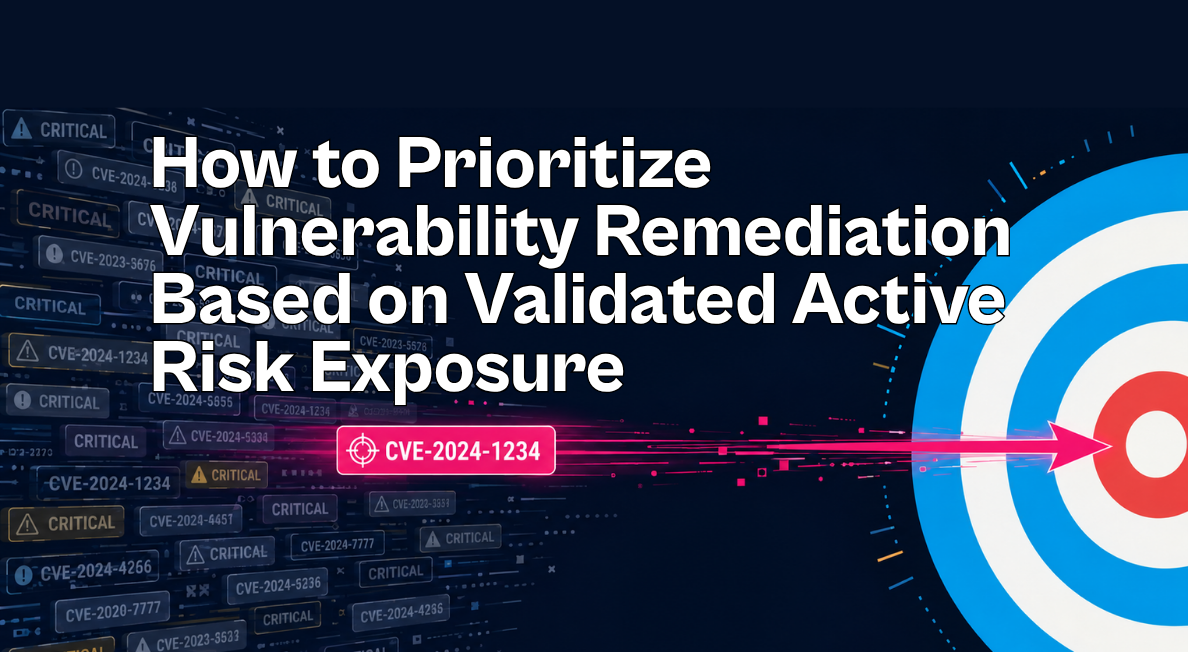
AI-accelerated POC generation means that exploit availability is a less reliable filter. In practice, almost anything can be made exploitable fast enough to matter. Which means if you’re still using exploitability as a primary signal for how to prioritize vulnerability remediation, you’ve likely flagged everything as critical. And when everything is critical, nothing is.
The industry has been leaning on exploit availability as a prioritization crutch for a long time. It was good at helping teams manage a backlog, but it was never built to answer a different, more complex question: what requires action right now, who needs to take it, and exactly what they need to do.
The Shortcut We All Agreed Not to Question
Let’s be honest about what those signals actually were. CVSS gave us severity. EPSS gave us probability. Exploit availability gave us urgency. Together, they gave security teams a defensible basis for prioritization decisions, but not a provable one.
Informed isn’t the same as confirmed.
True certainty about what required immediate action was only ever achievable through hours of manual triage per finding. And when the work is inherently urgent, spending that time on validation isn’t a tradeoff you can actually make. So we all did what any rational team would do: we made peace with “good enough.”
The problem was never the teams. The problem was that we never had to reckon with the gap between shortcuts and actually knowing how to prioritize vulnerability remediation based on validated active risk exposure, until now.
The Gap That Was Always There
The distance between “we prioritized based on available signals” and “we confirmed this was the right call” has always existed. It was just manageable, until now.
When everything scores critical, the signal collapses and the gap is no longer something you can reason around. You’re not making defensible tradeoffs anymore, you’re just guessing. And in an environment where exploits can materialize faster than any team can manually triage vulnerabilities, guessing isn’t a prioritization problem. It’s a response problem.
How to Prioritize Vulnerability Remediation Based on Validated Active Risk Exposure
The right question was never “is this vulnerability exploitable somewhere in the world.” It’s “is it actually exploitable in my environment, on this specific asset, and will it have real impact if it is.”
You can’t close that gap with a more sophisticated scoring model. Scores are static; they know nothing about your environment, your configuration, your actual exposure. Answering the environment-specific question requires active investigation at the asset level.
That doesn’t come from a score. That comes from an agent that can actually go look and validate exploitability.
Exposure Management, Meet Response: Introducing AI Analysts
Everything described above is what led us to build AI Analysts. We kept coming back to the same conclusion: the industry didn’t need a better score, it needed a way to actually perform vulnerability triage and response at scale, in context, without adding more manual work to an already stretched team. So that’s what we built.
AI Analysts are purpose-built agents that investigate vulnerabilities in context, the way a skilled analyst would, but at a scale no team can match manually. Each analyst targets a distinct part of the vulnerability surface, and they all live inside the remediation workflow. No separate tool. No additional handoff. Just exploit validation – or deprioritization – at the point where it actually matters.
Host Analyst
Focuses on exploit validation, pulling exploit prerequisites from threat intelligence sources, verifying whether actual system conditions make exploitation possible on that specific asset, and checking network reachability from the inside out. It also flags remediation complexity upfront, so teams aren’t sequencing work blindly.
Code Analyst
Goes directly to the source code to confirm whether a vulnerability is actually reachable given how the application is built, not just whether a vulnerable function exists somewhere in a dependency. It scopes the blast radius of each fix before surfacing it, so developers get something they can act on immediately.
SCA Analyst
Validates real dependency usage across the build chain before flagging third-party library vulnerabilities. And when a zero-day drops, it can identify every instance of an affected component across your environment — before scanner signatures even catch up.
The early release results were unambiguous: every single finding that went through AI Analysts was reprioritized. Not some findings. Every one. That’s proof that remediation response based on confirmed, context-aware evidence works; and that the gap between perceived and confirmed risk has been quietly undermining vulnerability remediation programs for years.
Where the Category Goes From Here
Scoring and prioritization aren’t going away. CVSS, EPSS, exploit intelligence – these still have a role in helping us separate signal from noise. But without validation underneath them, they’re building on sand that’s shifting faster than ever. And validation can’t be a separate step bolted outside the workflow; another tool, another handoff, another reason for findings to stall. It needs to live where decisions get made and action gets taken.
The programs that will hold up are the ones that have finally answered how to prioritize vulnerability remediation based on active risk exposure – with evidence, not estimates. Not “this score is critical” but “this is exploitable, here, now, here’s why, here’s who needs to fix it, and here’s how.” That’s the bar.
And as AI compresses the time between vulnerability and exploit, the teams that can answer that question completely, and fast, are the ones that can treat the right findings as the incidents they actually are.
The window to get ahead of this is now; before the gap between perceived and confirmed risk becomes a gap between you and an incident you could have prevented.
Stay updated on Seemplicity blog
Subscribe today to stay informed and get regular updates from Seemplicity.