


/What is the difference between security threats and vulnerabilities?
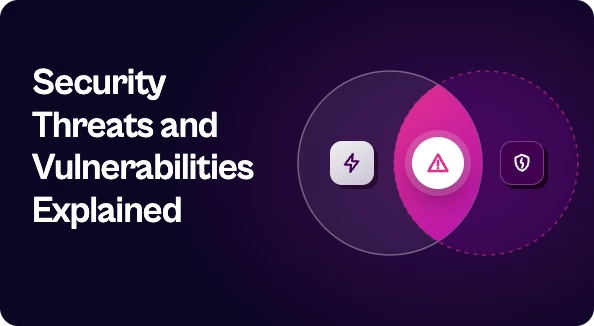
A security threat is anything that could cause harm, like a ransomware group, a phishing campaign, or an insider. A vulnerability is a weakness an attacker can use, like an unpatched server, a misconfiguration, or a weak password. Risk is where the two meet. A vulnerability becomes urgent when a real threat can reach and exploit it, which is why teams prioritize by threat context and not severity alone.
People use “threat” and “vulnerability” like they mean the same thing. They don’t. Mixing them up isn’t just sloppy wording. It changes what your team fixes first.
Here’s a plain-English breakdown of security threats and vulnerabilities, how they connect, and why the difference matters.
What Is a Security Threat?
A security threat is anything that could harm your systems, data, or people. It’s the “who” or “what” that might attack you.
Threats come in a few flavors.
- Threat actors. Ransomware groups, nation-state teams, hacktivists, or a single opportunistic attacker.
- Attack methods. Phishing, credential stuffing, malware, and social engineering.
- Insiders. Employees or contractors who misuse access, on purpose or by accident.
- Non-human events. Outages, natural disasters, and failures that take systems down.
You can’t really control threats. They exist whether you like it or not. What you can control is how much they’re able to do once they show up.
What Is a Vulnerability?
A vulnerability is a weakness an attacker can use. It’s the open door, not the person walking through it.
Common examples include the following.
- Unpatched software. Known flaws in operating systems, apps, and libraries.
- Misconfigurations. Public storage buckets, open ports, and overly permissive cloud roles.
- Weak authentication. Reused passwords, missing MFA, and stale access keys.
- Code flaws. Injection bugs, insecure dependencies, and exposed secrets in repos.
- Process gaps. No offboarding, no asset inventory, and no clear owner for fixes.
Unlike threats, vulnerabilities are something you can actually find and remove.
Where Security Threats and Vulnerabilities Meet
Risk is what you get when a threat and a vulnerability line up. A weakness nobody can reach or exploit is low risk. The same weakness on an internet-facing server that attackers are actively going after is high risk.
A few common pairings make this concrete.
- Phishing campaigns go after accounts without MFA.
- Ransomware groups go after unpatched edge devices and VPNs.
- Data thieves go after exposed cloud storage and leaked credentials.
In each case, the threat is the pressure and the vulnerability is the gap it pushes through.
Why the Difference Matters for Prioritization
Most teams have far more vulnerabilities than they could ever fix. If you sort only by severity score, you end up chasing “critical” issues that no attacker is using, while a “medium” issue that’s being exploited right now sits in the backlog.
Bringing threat context into the picture fixes that. Ask a few questions about each vulnerability.
- Is it being exploited in the wild? Resources like CISA’s Known Exploited Vulnerabilities catalog help here.
- Is the affected asset reachable from the internet or a high-value network?
- What would an attacker gain if they got in, and how important is the asset to the business?
- Is there a fix available, and who owns it?
Answering these turns a giant list of vulnerabilities into a short list of real risks.
Reducing Risk Means Fixing, Not Just Finding
Knowing your security threats and vulnerabilities is step one. The risk only drops when the vulnerability is actually gone, whether it’s patched, reconfigured, or removed. That last step usually belongs to engineering and IT teams, not security, so the handoff between them is where a lot of programs slow down.
How Seemplicity Helps
Seemplicity is an agentic exposure action platform. It doesn’t scan for vulnerabilities or track threat actors on its own. It pulls findings from the tools you already use, adds context to help prioritize what matters, matches each fix to the right owner, and tracks remediation until the issue is closed. The result is less time sorting lists and more vulnerabilities actually fixed.
If your backlog is full of findings and short on fixes, see how Seemplicity helps you close the gaps threats are most likely to hit.

Stay updated on Seemplicity blog
Subscribe today to stay informed and get regular updates from Seemplicity.