
Customizable Priority Rules for Every Team
Every organization has a different risk profile, and a finding that belongs at the top of one team’s queue may be entirely irrelevant to another. Generic severity scores from scanners don’t account for whether a vulnerable machine is exposed to the internet, whether a finding has been exploited in the wild, or whether your environment has compensating controls in place. Without the ability to encode that context into your prioritization logic, teams are left manually sorting through backlogs that don’t reflect what actually matters to them.
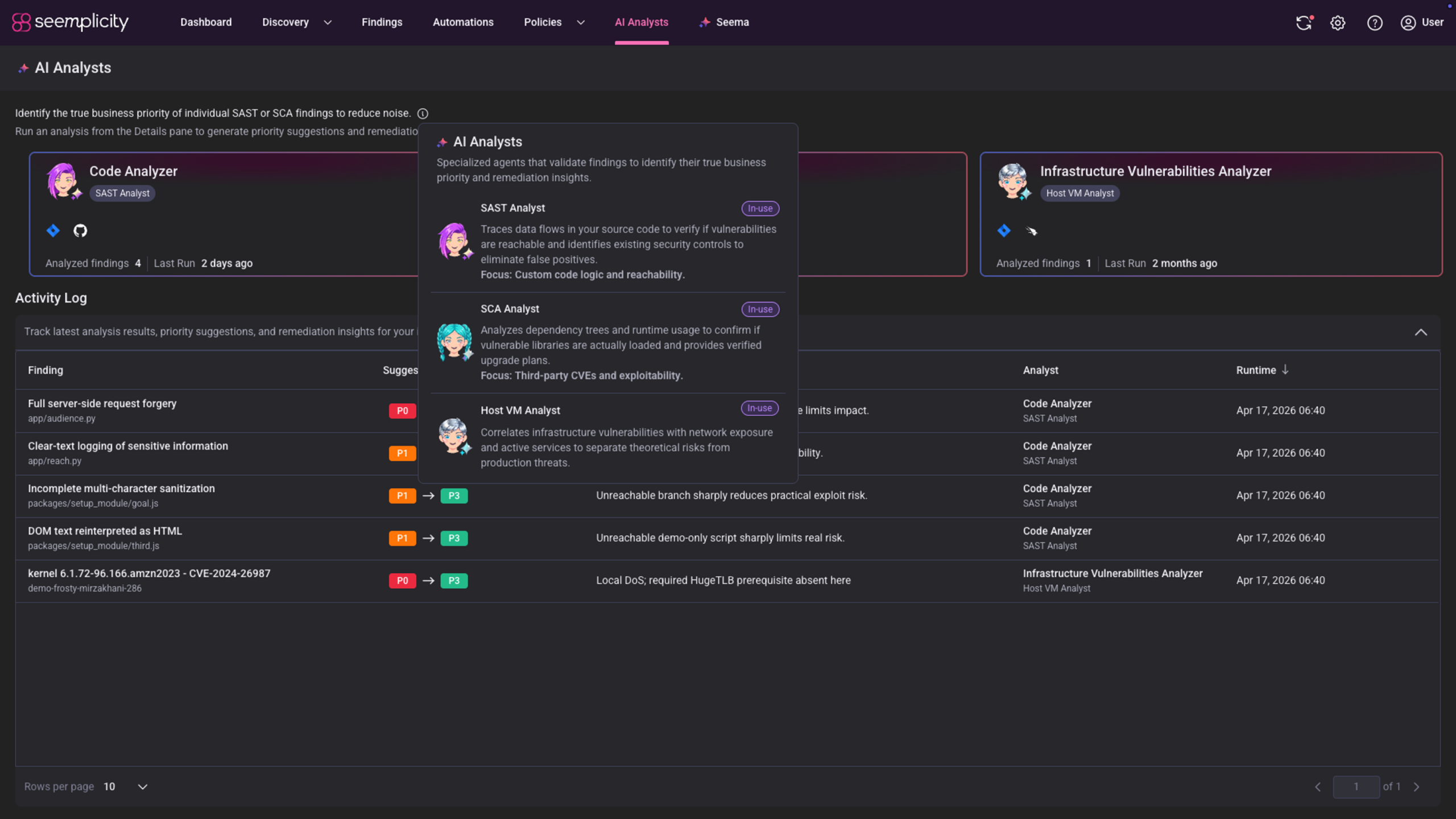
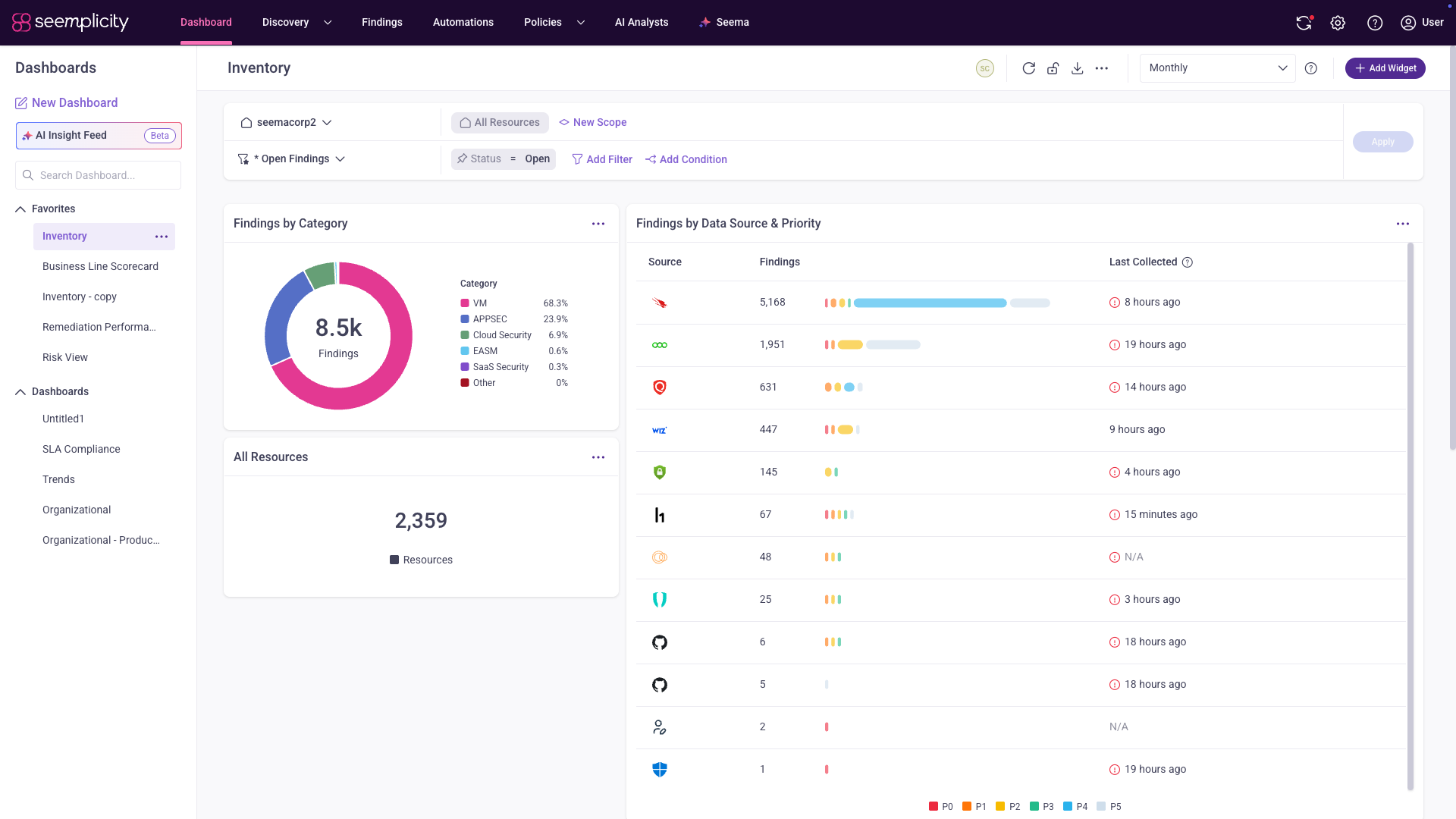
This demo walks through how Seemplicity’s Priority Rules let each team define exactly what makes a finding critical in their environment. You will see how Seemplicity superimposes resource data (including internet exposure) with finding attributes like exploit type and real-world exploitation history to automatically assign the right priority level. The VM team sets their own rules for machines in their scope, AppSec and cloud teams do the same for theirs, and when the backlog opens, the most important issues are already at the top.
What you’ll learn
Build Priority Logic That Reflects Your Environment
See how to combine resource attributes with finding attributes like RCE and exploitation-in-the-wild status to create priority rules that map to your organization’s actual risk, not a scanner’s generic score.
Give Every Team Their Own Rules
Understand how Priority Rules are scoped per domain — VM, AppSec, cloud misconfigurations, and beyond — so each team can calibrate their specific findings and responsibilities without interfering with one another.
Open a Backlog That’s Already Sorted
Learn how Seemplicity applies these rules automatically so that when a team opens their findings view, the issues that need immediate attention are already ranked at the top, including aggregated findings.
Key Features
Resource-Aware Prioritization
Seemplicity superimposes resource context with finding attributes to determine priority.
Team-Scoped Priority Rules
Priority rules can be configured per domain, so VM, AppSec, and cloud teams each maintain their own logic.
Multi-Signal Rule Conditions
Priority incorporates data from scanners, resource metadata, and threat intelligence, and more.
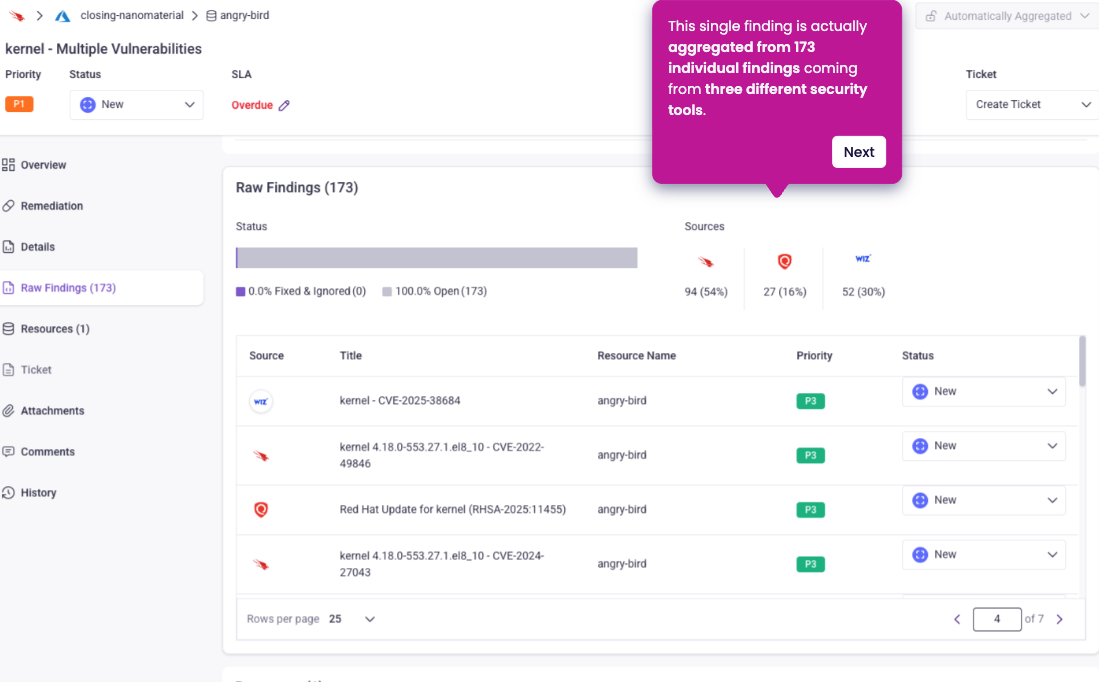
Automatic Priority for Aggregated Findings
When multiple findings are aggregated into a single action item, Seemplicity assigns the highest individual priority to the group.