

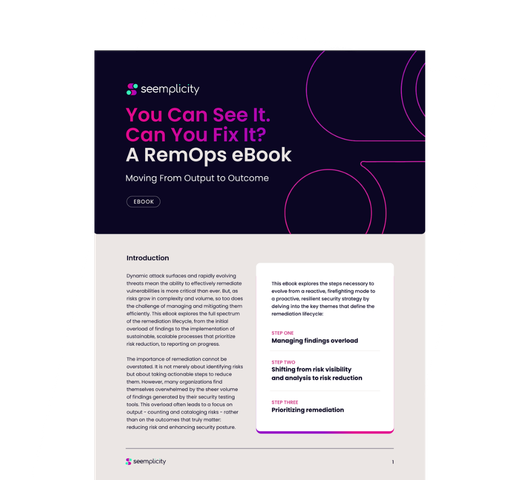
Dynamic attack surfaces and rapidly evolving threats mean the ability to effectively remediate vulnerabilities is more critical than ever. But, as risks grow in complexity and volume, so too does the challenge of managing and mitigating them efficiently. This eBook explores the full spectrum of the remediation lifecycle, from the initial overload of findings to the implementation of sustainable, scalable processes that prioritize risk reduction, to reporting on progress.
The importance of remediation cannot be overstated. It is not merely about identifying risks but about taking actionable steps to reduce them. However, many organizations find themselves overwhelmed by the sheer volume of findings generated by their security testing tools. This overload often leads to a focus on output – counting and cataloging risks – rather than on the outcomes that truly matter: reducing risk and enhancing security posture.
This eBook explores the steps necessary to evolve from a reactive, firefighting mode to a proactive, resilient security strategy by delving into the key themes that define the remediation lifecycle:

Step One
Managing Findings Overload

Step Two
Shifting from risk visibility and analysis to risk reduction