
/What is the difference between CTEM and CaaSM?
CTEM (Continuous Threat Exposure Management) is the end-to-end framework for scoping, discovering, prioritizing, validating, and fixing exposures. CaaSM (Cyber Asset Attack Surface Management) is a narrower tool category focused on asset discovery and inventory. CaaSM feeds the early phases of CTEM, but a complete program still needs prioritization, ownership, and remediation on top of it.
Spend any time researching exposure management and you’ll run into a wall of acronyms: CTEM, CaaSM, EASM, ASM. They get thrown around like they’re interchangeable, but they’re not, and the CTEM CaaSM difference actually matters for how you build out your security program.
Here’s a plain-English breakdown of it, and how the two work together in practice.
What CTEM Actually Is
Continuous Threat Exposure Management (CTEM) is a framework, coined by Gartner, for how security teams should continuously find, prioritize, validate, and fix exposures. It’s not a tool you buy. It’s a way of running your program.
CTEM breaks down into five phases:
- Scoping – figuring out what matters: critical assets, systems, business processes
- Discovery – continuously finding assets, vulnerabilities, and misconfigurations
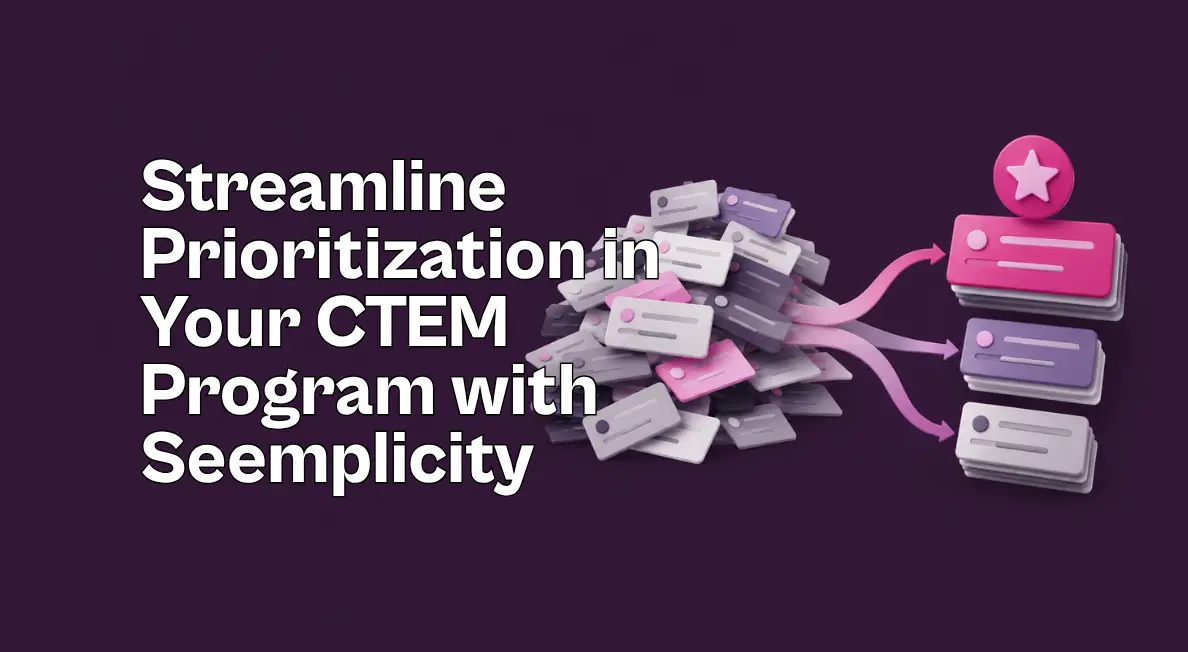
- Prioritization – narrowing down to the exposures that are actually likely to be exploited and actually matter to the business
- Validation – confirming exploitability and mapping out realistic attack paths
- Mobilization – getting the right people to fix what’s been found
The whole point of CTEM is getting away from giant vulnerability lists that nobody acts on, and toward a cycle that keeps narrowing down to what’s worth fixing and then actually gets it fixed.
What CaaSM Actually Is
Cyber Asset Attack Surface Management (CaaSM) is a lot narrower. It’s a category of tools solving one specific problem: building a complete, continuously updated picture of every asset in your environment. Devices, applications, cloud resources, identities, and how they all relate to each other, including the stuff nobody knew was there.
Most CaaSM tools work by pulling data from sources you already have (cloud platforms, endpoint agents, identity providers, scanners, your CMDB) through API integrations, rather than scanning anything themselves. What you get out of it is a unified inventory you can actually query: what do we own, where does it live, who owns it, and what’s missing basic controls.
Breaking Down the CTEM CaaSM Difference
The short version: CTEM is the program. CaaSM is one of the tools that feeds it.
CTEM covers the full lifecycle, from scoping through remediation, and its main job is answering “what should we fix first, and is it actually getting fixed?” CaaSM is much more contained. It’s focused on discovery and inventory, and its job is answering “what do we own, and where is it?” One gives you a prioritized, validated set of exposures moving toward resolution. The other gives you an asset inventory.
Gartner places asset visibility tools like CaaSM and EASM (its externally focused cousin) squarely in the first three phases of CTEM: scoping, discovery, and prioritization. That visibility is genuinely useful groundwork. But it was never meant to carry a program through validation, and especially not through mobilization, which is the phase where exposures actually get closed.
That last part is where a lot of teams get stuck. They build out excellent asset visibility with a CaaSM tool and still don’t see their overall risk posture move, because the inventory was never the bottleneck to begin with.
Why This Trips People Up
The most common mistake we see is treating CaaSM as if it already is CTEM. It leads to programs that are great at finding and cataloging exposures and pretty weak at reducing them. The asset inventory gets more complete every quarter, but mean time to remediate barely budges, because finding things was never the hard part.
A CaaSM tool (or an EASM tool) should feed into CTEM, not stand in for it. Once assets are mapped and exposures are surfacing from your scanners and other detection tools, someone still has to:
- Pull all of that together and cut out the duplicates
- Prioritize based on actual business risk, not just a CVSS score
- Get each issue to the right owner, in whatever tool that team already lives in
- Track it against an SLA until it’s actually resolved
That stretch from finding to fix is where most CTEM programs quietly stall out, and it’s the gap Seemplicity is built to close.
Turning Visibility Into Action
Seemplicity sits downstream of your discovery and detection tools, including any CaaSM or EASM platform you’re already running, and picks up right where they leave off. It pulls findings from across your security stack into one contextualized view, prioritizes based on business impact, figures out who actually owns each exposure, and routes the fix directly into the tools your teams already use, with SLA tracking built in.
CaaSM tells you what’s out there. Seemplicity makes sure someone actually fixes it.
Where This Leaves You
CTEM and CaaSM aren’t rivals. They cover different parts of the same job. CaaSM gives CTEM the asset visibility it needs early on, but a real exposure management program needs prioritization, ownership, and remediation handled too, not just bolted on later. If your visibility is solid but remediation still feels like chaos, the problem was never what you could see. It’s what happens after.

Stay updated on Seemplicity blog
Subscribe today to stay informed and get regular updates from Seemplicity.