

/what is the scoping stage of ctem?
CTEM scoping isn’t about putting everything you can scan into scope. It’s about defining what matters most to the business and keeping that definition current as your environment changes. Get scoping right, and every stage that follows—from discovery to prioritization and mobilization—becomes more focused, relevant, and effective.
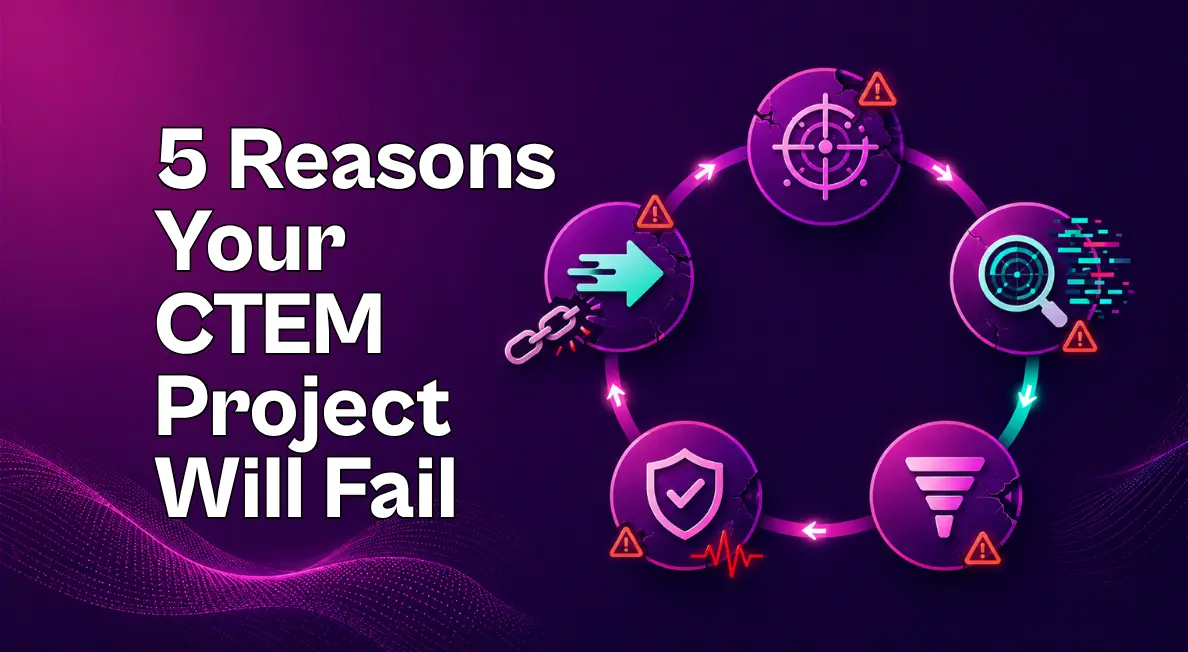
Continuous Threat Exposure Management breaks down into five stages: scoping, discovery, prioritization, validation, and mobilization. Let’s begin by breaking down where CTEM itself starts. Scoping.
Ask ten security teams what’s in their scope for exposure management, and you’ll get ten different answers, and about half of them will be some version of “everything we can scan.” That answer feels safe. It’s also the first mistake most CTEM programs make.
Two Ways to Fail Scoping
Scoping everything sounds thorough, but it isn’t a scope at all. It’s the absence of one. If every asset, every account, and every repository is equally in scope, nothing has been prioritized yet, and the actual work of figuring out what matters just gets pushed downstream to whoever has to sort through the results later.
The opposite mistake is scoping too narrowly, usually by accident. Teams scope based on what their existing tools already cover, which means shadow IT, newer cloud accounts, and anything outside the usual toolset quietly falls outside the boundary. Not because it’s unimportant, but because nobody went looking for it.
Both versions share the same gap. Scope gets treated as a one-time inventory task instead of an ongoing definition of what’s actually critical to the business. And a business-critical asset added last week won’t show up in a scope that was finalized last quarter.
What Scoping Actually Requires
Good scoping starts with a different question than “what can we scan.” It starts with “what would actually hurt us if it were compromised.” That’s a business question as much as a technical one, and answering it well means pulling in context that lives outside any single scanner. Which systems touch revenue, which hold customer data, and which ones would trigger a compliance problem if they went down.
This is also where a lot of teams get stuck, because that context doesn’t live in one place. It’s split across CMDBs, cloud inventories, asset tags that half the organization forgot to apply, and institutional knowledge sitting in a few people’s heads. Reconciling all of that manually is exactly the kind of work that turns into a stalled spreadsheet project.
How Seemplicity Approaches Scoping
Seemplicity takes the raw output coming out of your scanners, cloud security tools, code scanners, EASM tools, whatever you already run, and organizes it around defined scopes instead of one undifferentiated pile of findings.
In practice, that means you can build a scope around a business unit, a compliance boundary, an asset class, or a specific set of crown-jewel systems, and every finding from every connected tool gets mapped into it automatically. Instead of asking an analyst to manually cross-reference which findings belong to which critical system, the scope does that work continuously, as new findings come in and as the environment changes.
The result isn’t a smaller version of “everything.” It’s a working definition of what matters, kept current without anyone having to rebuild it every quarter.
Scoping Sets Up Everything After It
Every stage after scoping inherits whatever mistakes happened here. Discovery pulls in noise from assets that were never actually relevant. Prioritization treats a forgotten test server the same as a production system, because nothing told it otherwise. Getting scope right the first time is what makes the other four stages of CTEM possible to run well at all.
If your team is looking to ramp up your CTEM program, we’d love to show you how Seemplicity is innovating in agentic technology to impact exposure response at speed and at scale. It’s a conversation worth having no matter your current tech stack, since the speed of the game has changed drastically in recent months.

Stay updated on Seemplicity blog
Subscribe today to stay informed and get regular updates from Seemplicity.