
/How do you conduct a threat and vulnerability assessment?
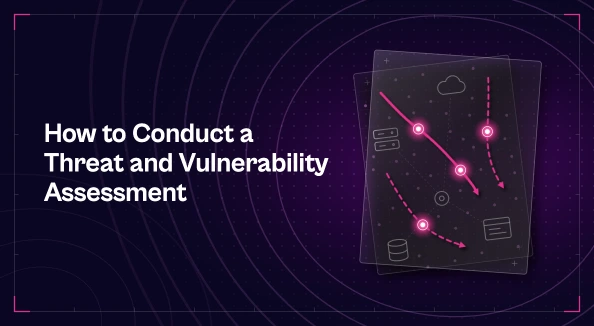
To conduct a threat and vulnerability assessment, first define your scope and inventory the assets in it. Next, identify the threats that realistically target your organization and gather vulnerabilities from your scanners, cloud tools, and application testing. Map each vulnerability to the threats that could exploit it, then rate the risk by likelihood (exploitation activity, reachability, exposure) and impact (asset criticality), accounting for compensating controls. Prioritize the results, assign each fix to an owner with a deadline, and reassess continuously. A one-time assessment goes stale as new vulnerabilities and exploits emerge.
Your scanners produce thousands of findings. Most of them will never be used against you, and a few of them might be. A threat and vulnerability assessment is how you tell the difference.
This guide covers how to run one, from scoping to reassessment. For the difference between security threats and vulnerabilities themselves, start there.
What a Threat and Vulnerability Assessment Covers
A threat and vulnerability assessment combines two views of risk:
- Threat assessment looks at who or what could cause harm: ransomware groups, opportunistic attackers, malicious or careless insiders, and the methods they use.
- Vulnerability assessment looks at the weaknesses those threats could exploit: unpatched software, misconfigurations, weak authentication, and code flaws.
Neither view is enough alone. A vulnerability with no realistic threat behind it is low risk. A known threat with nothing to exploit is low risk too. The risk sits where the two overlap, and it’s usually expressed as likelihood multiplied by impact.
You’ll also see this process called a threat and vulnerability risk assessment (TVRA).
Step 1: Define Scope and Inventory Your Assets
Start by deciding what’s in scope. That could be the whole organization, a single business unit, a cloud environment, or the systems behind a critical application.
Then build or confirm your asset inventory for that scope. You can’t assess what you don’t know exists, and unmanaged assets like forgotten cloud instances, shadow SaaS, and old test servers are often where the real exposure sits. For each asset, record what it does, who owns it, and how critical it is to the business.
Step 2: Identify Relevant Threats
Build a threat catalog for the assets in scope. Typical categories include:
- External threat actors and the techniques they favor
- Common attack methods like phishing, credential stuffing, and exploitation of internet-facing services
- Insider threats, both malicious and accidental
- Supply chain and third-party risks
Keep it realistic. A threat catalog that lists every possible scenario isn’t useful. Focus on the threats that actually target your industry, your tech stack, and your type of data. Threat intelligence sources such as CISA’s Known Exploited Vulnerabilities catalog and industry reports help you ground this in what attackers are doing now.
Step 3: Identify Vulnerabilities
Next, gather the weaknesses across your in-scope assets. Most teams draw on several sources:
- Infrastructure and network vulnerability scanners
- Cloud security posture tools
- Application security testing (SAST, DAST, SCA)
- Penetration test and bug bounty results
Because these tools describe findings in different formats and often flag the same issue more than once, consolidate and deduplicate before analysis. Data normalization at this stage keeps you from double-counting risk or missing patterns across tools.
Step 4: Map Threats to Vulnerabilities and Rate the Risk
This is the core of the assessment. For each asset, pair its vulnerabilities with the threats that could realistically exploit them, then rate the risk of each pairing.
Likelihood depends on questions like these:
- Is the vulnerability being exploited in the wild?
- Is a working exploit publicly available?
- Is the asset internet-facing or otherwise reachable by an attacker?
- Is the vulnerable code or component actually in use?
These questions are about exploitability, not severity. A critical CVSS score on an isolated, unreachable system is a lower real-world risk than a medium-severity flaw on an exposed server that attackers are actively targeting.
Impact depends on how critical the asset is, what data it holds, and what an attacker could reach from it.
Finally, factor in compensating controls. An EDR policy, WAF rule, or network segmentation may already block the exploit path and lower the real risk.
A simple low, medium, and high rating for each pairing is enough for most teams. What matters is applying the criteria consistently.
Step 5: Prioritize and Assign Remediation
Turn your ratings into a ranked list. Effective vulnerability prioritization puts actively exploited, reachable vulnerabilities on business-critical assets at the top, regardless of their raw severity score.
Then make each item actionable. Every prioritized risk needs:
- An owner. The team or person responsible for the affected asset.
- A response. A patch, configuration change, compensating control, or documented risk acceptance.
- A deadline. An SLA based on the risk rating, not on CVSS alone.
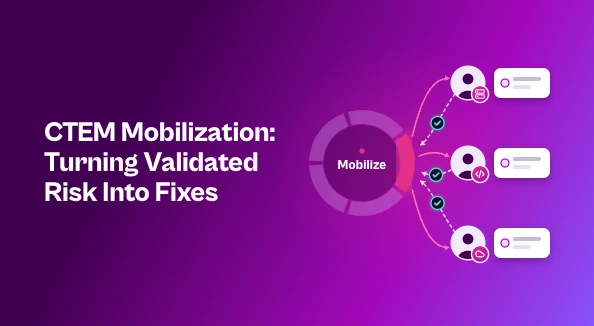
This is where many assessments stall. The analysis is done, but the findings never reach the people who can fix them, so the risk stays in place.
Step 6: Reassess Continuously
A threat and vulnerability assessment is a snapshot, and environments change faster than snapshots stay accurate. New CVEs are published daily, new assets appear, and a vulnerability with no known exploit can be weaponized within days.
Set a regular cadence for reassessment, and trigger additional reviews when something significant changes. Examples include a major infrastructure change, a new critical vulnerability in software you run, or new exploitation activity against your industry. Many teams are moving toward continuous vulnerability management, where priorities update automatically as new data arrives.
Common Mistakes to Avoid
- Treating it as an annual checkbox. A once-a-year assessment documents risk that has already changed.
- Ranking by severity alone. CVSS measures how bad a vulnerability could be in theory, not how likely it is to be exploited in your environment.
- Ignoring business context. The same vulnerability can be urgent on one asset and irrelevant on another.
- Stopping at the report. An assessment only reduces risk if its findings get fixed.
How Seemplicity Helps
Seemplicity is an agentic exposure action platform that turns assessment results into fixes. It doesn’t replace your scanners. Instead, it works with the tools you already use:
- Consolidation. It aggregates, normalizes, and deduplicates findings from across your scanning tools into one view.
- Context. It enriches each finding with threat intelligence, including KEV status, EPSS, and exploitability, along with business context, so ratings reflect real-world risk.
- Validation. Its AI Analysts check whether findings are actually exploitable in your environment.
- Remediation. It routes prioritized fixes to the right owners and tracks them through to closure.
From Assessment to Reduced Risk
A good threat and vulnerability assessment narrows thousands of findings down to the risks that matter. Scope carefully, ground your threats in what attackers are actually doing, rate risk on exploitability and impact rather than severity alone, and make sure every priority has an owner and a deadline. Then keep it running, so your view of risk stays as current as your environment.

Stay updated on Seemplicity blog
Subscribe today to stay informed and get regular updates from Seemplicity.