
/How do I choose the right application security solution?
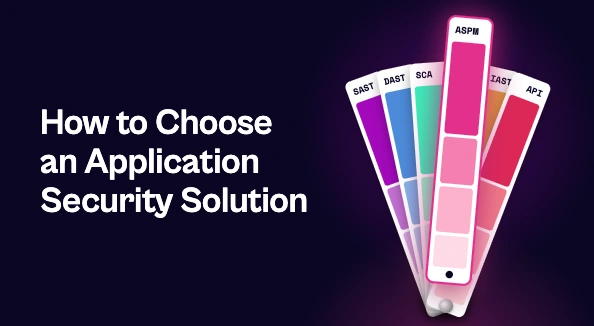
Most teams need a combination of application security tools rather than a single one. Common categories are SAST, DAST, IAST/RASP, SCA, API and container security, and ASPM, and each covers a different stage of development. When you evaluate options, look for coverage that matches your stack, integration with developer workflows, accurate findings, risk-based prioritization, and actionable remediation guidance. Test tools on your own applications, involve developers early, and make sure findings have a clear path to remediation, because detection alone doesn’t reduce risk.
Picking an application security solution is more complicated than it used to be. The market is crowded, categories overlap, and most vendors claim to cover everything from code to runtime. Most organizations end up with several tools, each covering a different part of the software development lifecycle.
The real goal is to build the right combination for your stack, your team, and how you ship software, not to find one tool. This guide covers the main types of application security solutions, the capabilities that matter most, and how to evaluate your options.
Types of Application Security Solutions
Each category finds a different kind of risk at a different stage of development. Most mature programs use several.
Static application security testing (SAST) analyzes source code without running it. Because it works early in development, developers can catch issues like injection flaws or insecure coding patterns before code is merged.
Dynamic application security testing (DAST) tests a running application from the outside, the way an attacker would. It finds runtime issues such as authentication weaknesses and misconfigurations that static analysis can’t see.
Interactive application security testing (IAST) and runtime application self-protection (RASP) both work from inside the running application. IAST uses instrumentation during testing to pinpoint vulnerable code paths, and RASP detects and blocks attacks in production.
Software composition analysis (SCA) identifies vulnerable or outdated open-source components and third-party dependencies, and flags license risk. Most modern applications are built largely on open source, so this coverage is essential.
API, container, and infrastructure-as-code (IaC) security extend coverage to the components modern applications depend on, including exposed APIs, container images, and cloud configuration templates.
Application security posture management (ASPM) sits above the testing tools. It aggregates and correlates findings across all of them to give a unified view of application risk.
Key Capabilities to Look For
Whatever categories you invest in, these capabilities separate useful tools from noisy ones:
- Coverage that matches your environment. Support for your languages, frameworks, and deployment model matters more than a long feature list.
- Developer workflow integration. Look for native integration with CI/CD pipelines, IDEs, pull requests, and ticketing systems. Security that lives outside the developer workflow tends to get ignored, which is why it’s a core DevSecOps principle.
- Accuracy. A high false-positive rate erodes developer trust quickly. Ask vendors how they validate findings.
- Risk-based prioritization. Severity scores alone don’t reflect real risk. The best tools factor in exploitability, reachability, and business context.
- Actionable remediation guidance. Findings should tell developers exactly what to fix and how.
- Reporting and metrics. You need to track progress over time and show leadership whether risk is going down.
How to Evaluate an Application Security Solution
A structured evaluation helps you avoid buying based on demos alone.
Start with your gaps. Map what your current application security program covers and where blind spots exist. This keeps the evaluation focused on what you actually need.
Run a proof of concept on real applications. Demo repos are designed to make tools look good. Testing against your own codebase shows you real accuracy, noise levels, and scan times.
Involve developers early. They’re the ones who will act on findings, so their experience with the tool will make or break adoption.
Check how it fits with your existing tools. A new tool that creates another silo of findings adds work. Look for solutions that integrate cleanly with the rest of your security stack.
Look at total cost, not just license price. Factor in setup, tuning, and the time your team will spend triaging results. A cheaper tool that generates more noise often costs more in practice.
Common Mistakes to Avoid
Prioritizing breadth over workflow. Detecting more issues doesn’t help if there’s no efficient way to get them fixed.
Stacking point tools with no way to unify findings. Several scanners often report the same issue in different ways. Without deduplication and correlation, teams waste time triaging the same risk repeatedly.
Treating scanning as the finish line. Findings only reduce risk once they’re remediated. Many teams have strong detection but no clear process for routing, tracking, and closing issues.
Where Seemplicity Fits
Seemplicity doesn’t replace your application security solutions. It works on top of them to make sure what they find actually gets fixed.
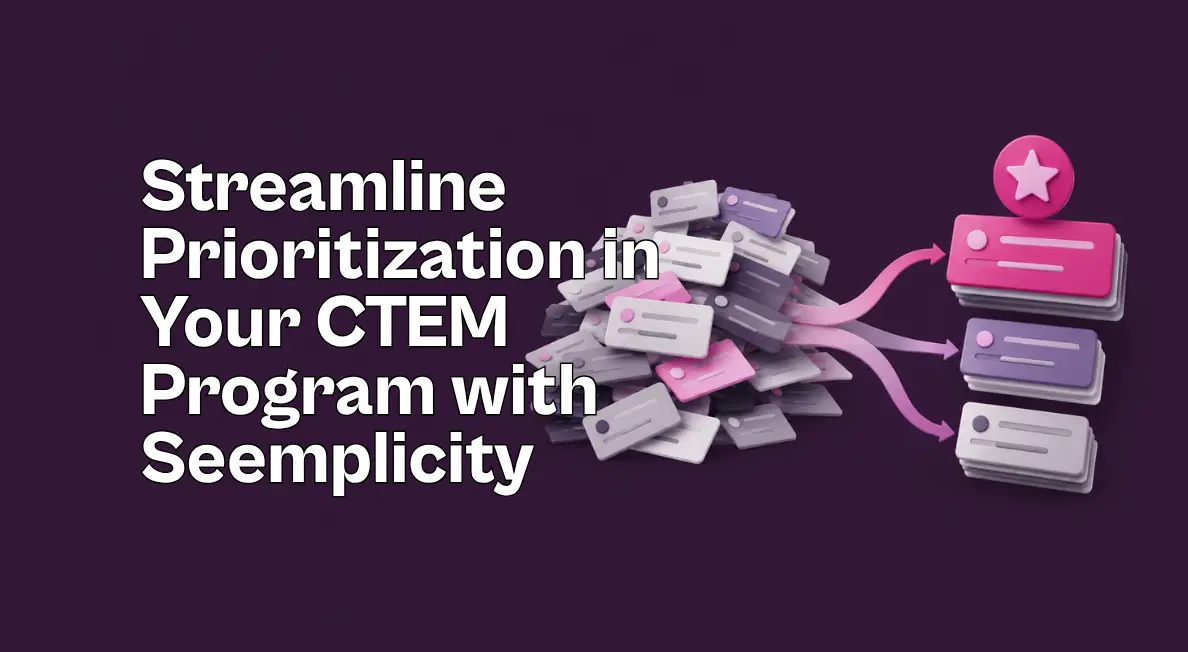
Seemplicity aggregates and deduplicates findings from your AppSec tools alongside the rest of your security stack, so teams work from a single, consolidated view. It applies vulnerability prioritization based on real risk, automatically identifies the right owner for each fix, and routes it into the tools developers already use. Remediation is tracked through to closure, giving security teams full visibility into progress without manual follow-up.
The result is exposure management that scales with your AppSec tooling, rather than a growing backlog of findings nobody owns.
Choosing a Solution That Leads to Fixes
The right application security solution is rarely a single product. It’s a combination of tools that fits your environment, integrates with developer workflows, and surfaces the risks that matter most. Just as important, it needs a clear path from finding to fix.
See how Seemplicity helps teams turn AppSec findings into faster risk reduction: https://seemplicity.ai/demo/

Stay updated on Seemplicity blog
Subscribe today to stay informed and get regular updates from Seemplicity.