
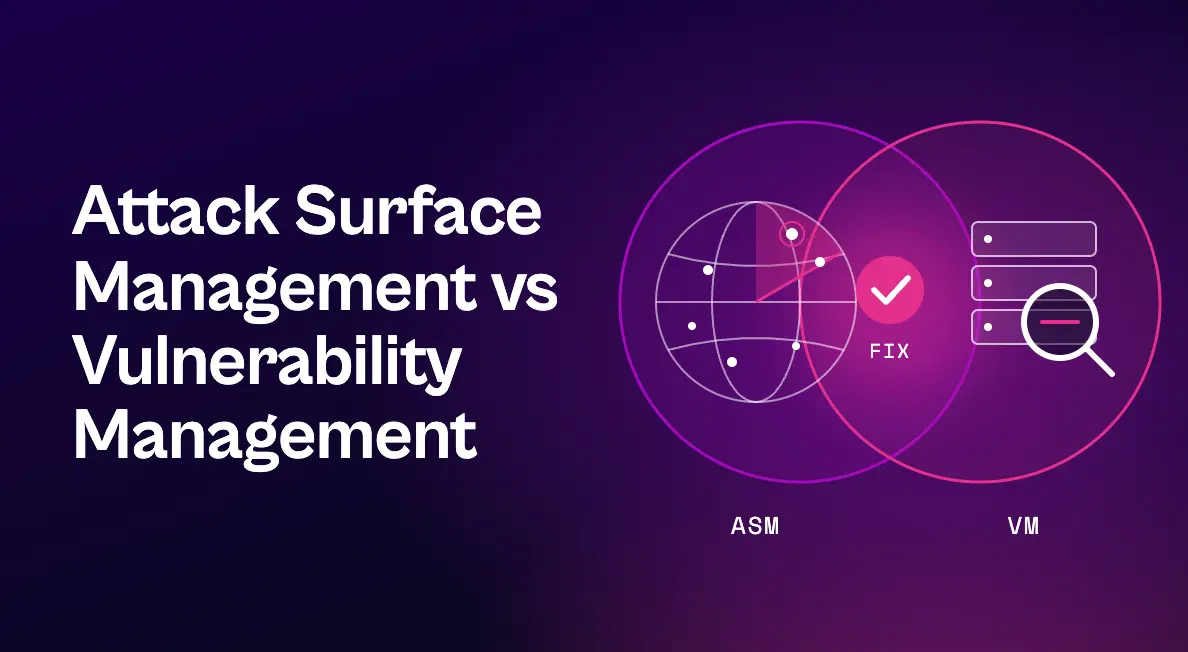
/what is the difference between attack surface management and vulnerability management?
Attack surface management (ASM) continuously discovers every asset and entry point an attacker could target, including unknown and unmanaged ones. Vulnerability management (VM) finds, prioritizes, and remediates known weaknesses on the assets you know about. ASM answers “what do we have exposed?” while VM answers “what’s wrong with it?” You need both, but neither closes exposures on its own. The real gains come from validating what’s exploitable and routing fixes to the right owners fast.
The attack surface management vs vulnerability management debate comes up in almost every security program review, and for good reason. The two disciplines overlap, vendors use the terms loosely, and budgets rarely stretch to cover everything.
The short version: attack surface management tells you what you have exposed, and vulnerability management tells you what’s wrong with it. Both matter. But there’s a third piece that most comparisons skip, and it’s the one that determines whether your risk actually goes down: getting the findings from both fixed.
This guide to attack surface management vs vulnerability management explains each discipline, compares them side by side, shows how they work together, and covers how to close the gap between finding exposures and resolving them.
What Is Attack Surface Management?
Attack surface management (ASM) is the continuous process of discovering, inventorying, and monitoring every asset and entry point an attacker could target. Its defining assumption is that you have assets you don’t know about, so it starts with discovery rather than a predefined list.
ASM generally comes in two forms:
- External attack surface management (EASM) looks at your organization from the outside in, the way an attacker would, to find internet-facing domains, IP addresses, cloud services, and forgotten applications.
- Cyber asset attack surface management (CAASM) looks from the inside out, aggregating data from existing tools such as endpoint agents, cloud accounts, and the CMDB to build a complete, reconciled asset inventory and reveal coverage gaps.
Typical ASM findings include shadow IT, exposed admin interfaces, open ports, expired certificates, misconfigured cloud storage, and assets missing security controls.
What Is Vulnerability Management?
Vulnerability management (VM) is the ongoing process of identifying, prioritizing, remediating, and verifying known security weaknesses on the assets you know about. It relies heavily on scanners that check systems, applications, and configurations against databases of known vulnerabilities.
A mature VM program follows a repeating cycle: scan, prioritize by risk, assign and remediate, rescan to verify, and report. Typical findings include missing patches, vulnerable software versions, insecure configurations, and vulnerable open source dependencies.
Attack Surface Management vs Vulnerability Management: Key Differences
Here’s how the two disciplines compare across the dimensions that matter most:
| Attack Surface Management | Vulnerability Management | |
|---|---|---|
| Core Question | What do we have, and what’s exposed? | What’s wrong with the assets we know about? |
| Starting Point | Discovery, assuming unknown assets exist | A known inventory or defined scan scope |
| Perspective | Often outside-in, like an attacker | Usually inside-out, with credentialed access |
| Typical Findings | Shadow IT, exposed services, misconfigurations, coverage gaps | CVEs, missing patches, vulnerable software and dependencies |
| Depth | Broad view of many assets | Deep inspection of each asset |
| Primary Output | An accurate, current asset inventory and exposure map | A prioritized list of vulnerabilities to fix |
| Common Pitfall | Discovered assets with no clear owner | Blind spots on assets that were never scanned |
One way to think about it: ASM defines the map, and VM inspects each location on it. Without ASM, your vulnerability scans miss assets nobody knew existed. Without VM, you know where your assets are but not how vulnerable they are.
How ASM and Vulnerability Management Work Together
The two disciplines are strongest as a feedback loop. Consider a common scenario:
- ASM discovers a forgotten development server running in a cloud account nobody was monitoring.
- The asset is added to the inventory and brought into scan scope.
- VM scans it and finds a critical, internet-reachable vulnerability.
- The finding is prioritized based on exposure, exploitability, and the data on the server.
- Someone has to fix it, which means first figuring out who owns a server that nobody knew existed.
That last step is where many programs stall.
The Gap Neither One Closes
Whichever way you frame attack surface management vs vulnerability management, both are, at their core, finding disciplines. They create visibility. Risk only drops when exposures are actually resolved, and that requires several things neither discipline delivers by itself.
Ownership for assets nobody claimed
By definition, many ASM discoveries are assets that fell outside normal management. They often lack reliable owner tags, which means findings on them bounce between teams or sit untouched.
Proof that a finding is exploitable
CVSS scores and “exploit available” flags mean less than they used to, now that AI has made exploits cheaper and faster to build. Teams need evidence that a specific exposure is exploitable on a specific asset before pulling engineers off other work.
Awareness of existing defenses
An exposed vulnerability may already be blocked by endpoint protection policy, or it may not. Without checking, teams either waste effort on contained risks or miss uncontained ones.
Fast, safe response options
Some fixes need change windows and testing. Teams need interim ways to reduce exposure immediately, rather than waiting weeks for a patch cycle.
Where Exposure Management and CTEM Fit
Exposure management is the umbrella that brings these pieces together. Gartner’s continuous threat exposure management (CTEM) framework describes five stages: scoping, discovery, prioritization, validation, and mobilization.
ASM contributes most to scoping and discovery. VM contributes to discovery and prioritization. Validation and mobilization, confirming what’s truly dangerous and getting it fixed, are where programs need the most help, and where the difference between knowing about risk and reducing it is decided.
How Seemplicity Turns ASM and VM Findings Into Fixes
Seemplicity is the only technology that fuses exposure management with autonomous response in one system. It brings in findings from the scanners and security tools you already run, such as Tenable, Qualys, Rapid7, and Wiz, deduplicates them, and groups them by fix so ten findings closed by one patch become one remediation item. Then every finding moves through four questions.
What’s going on?
Findings are enriched with EDR coverage, threat intelligence, and KEV data. Find the Fixer builds ownership structures by cleaning and enriching scanner tags, which helps even when assets arrive without reliable owner information. Seema, Seemplicity’s AI assistant, answers plain-language questions about findings, queues, and SLAs.
Is it real?
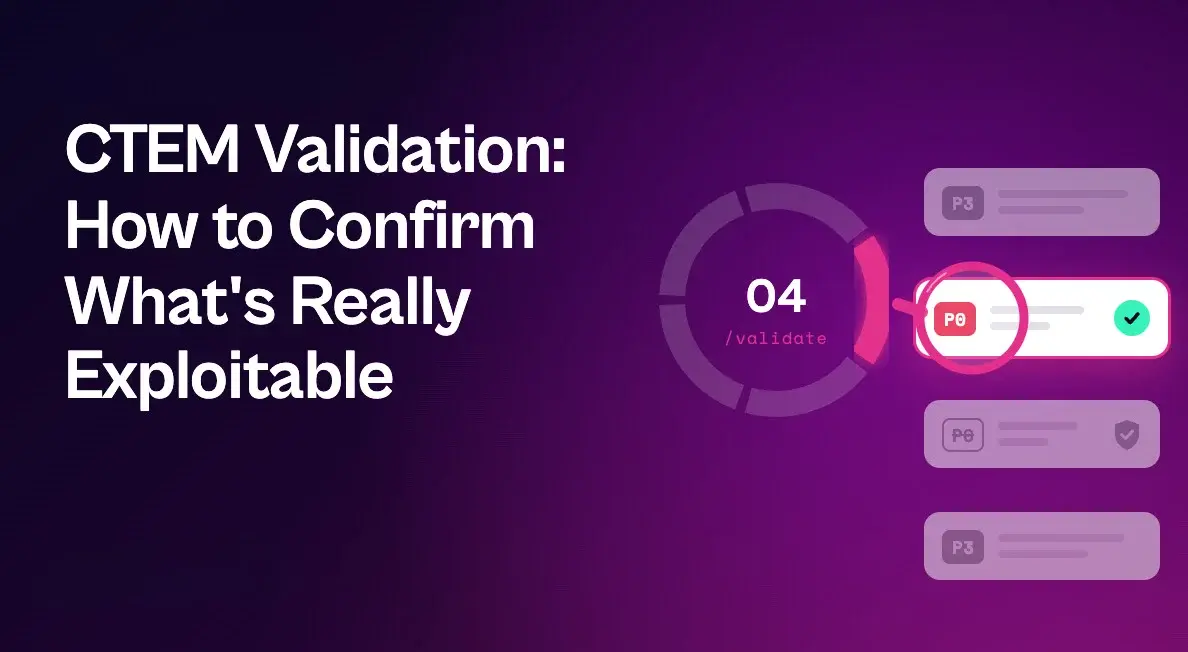
AI Analysts check exploitability on the asset itself, including live configuration, network reachability, code and dependency reachability, and exploit prerequisites. A “P0” whose prerequisites aren’t met can be reprioritized to a P3.
Is it already blocked?
EDR Compensating Controls Awareness reads live policy from CrowdStrike or Microsoft Defender and shows the full chain from CVE to whether the attack technique is already stopped.
How do we close it?
Response Options lay out Fix, Mitigate, or Neutralize choices, with one recommended, reasoning attached, and a safety rating for each. Remediation then routes to the owning team’s queue, with bi-directional Jira and ServiceNow sync keeping status and SLAs current.
See Seemplicity in Action
Whatever side of the attack surface management vs vulnerability management question your program leans toward, the outcome that counts is exposures closed before attackers can use them. Request a demo to see Seemplicity in action for yourself.

Frequently asked questions
Scope and starting point. Attack surface management begins with discovery and assumes unknown assets exist, mapping everything an attacker could target. Vulnerability management inspects known assets in depth to find and fix specific weaknesses.
Some practitioners describe vulnerability management as a subset of attack surface management, since vulnerabilities are one type of exposure on the broader attack surface. In practice, most organizations run them as complementary programs, often under an exposure management or CTEM umbrella.
EASM discovers internet-facing assets from an attacker’s outside-in perspective. CAASM builds an internal asset inventory by aggregating data from the tools you already use, revealing gaps such as devices missing security agents.
Yes, for most organizations. ASM makes sure nothing is missing from scope, and VM makes sure what’s in scope is inspected thoroughly. To reduce risk, pair both with a process for validating and remediating what they find.
Stay updated on Seemplicity blog
Subscribe today to stay informed and get regular updates from Seemplicity.