/Can Rapid7 support a full CTEM program?
Rapid7 Exposure Command covers much of the early CTEM cycle well, with strong attack surface discovery and prioritization based on threat intelligence, asset criticality and business impact. Where teams usually need more is mobilization: handling findings from non-Rapid7 tools, assigning the right owner, cutting ticket volume through root-cause grouping, and tracking fixes to closure. Seemplicity fills that gap, working alongside Rapid7 to turn prioritized exposures from your whole stack into fixes that actually get done.
Rapid7 has been a fixture in vulnerability management for years, and plenty of security teams still run InsightVM at the core of their program. As continuous threat exposure management has moved from analyst framework to a program boards ask about, Rapid7 has repositioned around it with Exposure Command.
For teams already invested in Rapid7, the question is practical: can it carry a full CTEM program, or will parts of the cycle need support? Rapid7 covers a lot of ground early in the cycle. Programs tend to stall later, when prioritized exposures have to become finished fixes.
Why Teams Look at Rapid7 for CTEM
Rapid7 positions Exposure Command, its exposure assessment platform offering, as a way for teams to operationalize CTEM by turning technical findings into business-relevant risk and supporting cross-functional response. For organizations already using Rapid7 for scanning, SIEM or MDR, building on what’s already deployed is an obvious starting point. barchart
It also helps that CTEM is a framework, not a single product. An exposure assessment platform like Exposure Command can support several stages, but the program is only as strong as how each stage connects to the next.
What Rapid7 Covers Across the CTEM Stages
Scoping and discovery. Rapid7 describes Exposure Command as offering broad attack surface coverage across on-premises and cloud-native environments. Combined with its scanning heritage, this gives teams a solid foundation for discovery and asset inventory. barchart
Prioritization. Rapid7 says Exposure Command factors threat intelligence, asset criticality and business impact into its risk prioritization, and can ingest exposure data from existing security tools. That’s a meaningful step up from CVSS-only prioritization. rapid7
Validation. Rapid7 has offensive security roots, but how much validation you get depends on which parts of its portfolio you use and how they’re wired into your workflow.
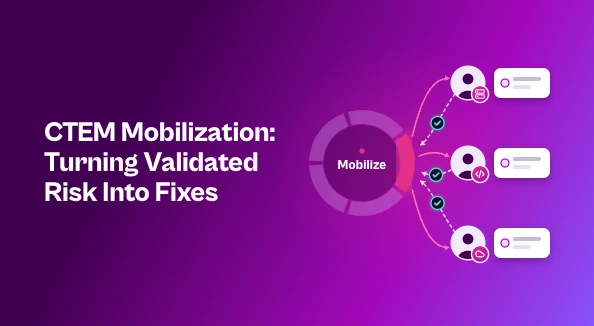
Mobilization. Exposure Command includes remediation guidance and ticketing integrations. This is where most teams find the biggest gap between what’s prioritized and what actually gets fixed.
Where Gaps Tend to Show Up
Rapid7 works well when Rapid7 is the center of gravity. Most environments aren’t that tidy.
- Multi-vendor stacks. Few teams run one scanner. Findings from Tenable, Wiz, Snyk, bug bounty programs and cloud-native tools need to be normalized and prioritized with the same rigor as native Rapid7 data.
- Ownership. Knowing an exposure matters is different from knowing who should fix it, especially when asset tags are stale or missing.
- Ticket volume. One outdated base image can show up as hundreds of individual findings, and engineering teams stop paying attention when every instance becomes its own ticket.
- AppSec coverage. Code and open-source dependency findings often need different handling from infrastructure vulnerabilities.
- Process maturity. Rapid7’s own guidance notes that Exposure Command’s value depends on how mature an organization’s CTEM processes are. The platform doesn’t fix a broken handoff between security and engineering on its own. rapid7
How Seemplicity Fits In
Seemplicity is an agentic Exposure Action Platform built around what happens after prioritization. It pulls in Rapid7 findings alongside every other tool in your stack, so nothing gets treated as second-class.
From there, AI Analysts confirm exploitability with evidence across hosts, code and dependencies. AI agents then find the right owner, group related findings into root-cause fixes, write environment-specific fix guidance, and track each fix through Jira or ServiceNow until it’s verified closed. The result is fewer, clearer tasks for engineers and vulnerability remediation that actually moves.
Teams use Seemplicity alongside Rapid7 to close the mobilization gap, or as the unified layer when they want one place to run exposure management across a multi-vendor environment.
Questions to Ask Before Building CTEM on Rapid7
- How are findings from non-Rapid7 tools normalized, deduplicated and prioritized?
- How is ownership assigned when asset data is incomplete or wrong?
- How many tickets would our current backlog become after grouping findings by root cause?
- Can exploitability be confirmed in our code and dependencies, not just on hosts?
- How is a fix tracked from detection to verified closure?
Turning Rapid7 Findings Into Finished Fixes
Rapid7 gives teams a strong foundation for visibility and prioritization, and for many organizations it’s a sensible place to anchor a CTEM program. But CTEM only reduces risk when exposures get fixed, so mobilization is where your evaluation should focus.
See how Seemplicity turns prioritized exposures from Rapid7 and the rest of your stack into fixes your teams actually finish.

Stay updated on Seemplicity blog
Subscribe today to stay informed and get regular updates from Seemplicity.