/what does a vulnerability management system do?
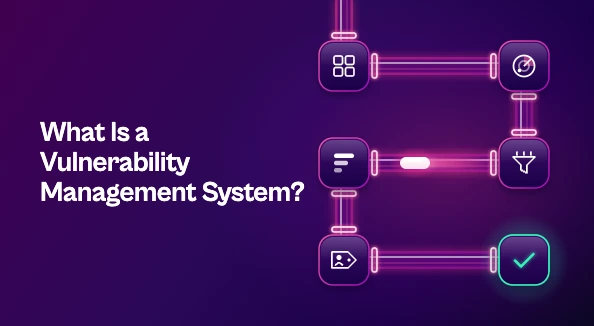
A vulnerability management system takes a vulnerability from discovery to verified fix. It’s built from six core components: asset inventory, vulnerability detection, aggregation and normalization, risk-based prioritization, ownership and remediation workflow, and verification and reporting. Most systems break down in the handoffs between those components, not within them. When evaluating one, look for broad integrations, accurate deduplication, context-driven prioritization and native workflow integration, so findings actually turn into fixes.
Most security teams aren’t short on vulnerability data. Scanners across infrastructure, cloud and code produce thousands of findings every week. What’s often missing is the system that turns those findings into fixes.
That’s the job of a vulnerability management system. This guide covers what one is, the core components it’s built from, how those components work together and what to look for when evaluating one.
What Is a Vulnerability Management System?
A vulnerability management system is the tooling layer that carries a vulnerability from discovery to verified fix. It covers finding assets, detecting weaknesses, deciding what matters, getting the work to the right people and confirming the risk is gone.
Three terms often get used interchangeably here, but they mean different things. A scanner detects vulnerabilities in a specific environment. A vulnerability management program is the policy, people and processes that define how your organization handles risk. The system is what runs that program day to day, connecting scanners, data and workflows so the program actually happens.
The distinction matters because few organizations have a single source of findings. Most run several tools, each with its own format, severity scale and dashboard. Without a system tying them together, every finding turns into manual work.
Core Components of a Vulnerability Management System
Every effective vulnerability management system is built from the same six components. Each one feeds the next.
Asset Inventory and Discovery
You can’t protect what you can’t see. An accurate asset inventory covers servers, endpoints, cloud resources, containers, applications and code repositories. Just as important, it records who owns each asset and how critical it is to the business. That ownership and criticality data shapes every stage that follows.
Vulnerability Detection
Detection is where findings come from. That includes network and host scanners, cloud posture tools, application security testing (SAST, DAST, SCA) and container image scanning. Regular vulnerability scans across all of these provide coverage, since no single tool sees every environment.
Aggregation and Normalization
Findings arrive from different tools in different formats, with different severity ratings. The same issue is often reported by several tools at once. Aggregation pulls everything into one place, and data normalization maps it to a common structure and removes duplicates, so one issue becomes one record.
Risk-Based Prioritization
A critical CVSS score doesn’t always mean critical risk. Effective vulnerability prioritization layers in exploitability signals, such as EPSS and the CISA Known Exploited Vulnerabilities Catalog, alongside asset criticality, exposure and compensating controls. The output is a short list of what to fix first.
Ownership and Remediation Workflow
A finding no one owns is a finding no one fixes. This component maps each finding to the responsible team, groups findings that share a single fix and delivers the work into tools teams already use, such as Jira or ServiceNow. It’s where vulnerability remediation either moves forward or stalls.
Verification and Reporting
The final component closes the loop. A rescan or validation check confirms the fix worked, and SLA tracking shows whether it happened on time. Clear vulnerability management metrics, like mean time to remediate and SLA compliance, show whether risk is actually going down. Audit trails support compliance reporting.
How the Components Work Together
Consider one finding moving through the system. A cloud scanner and an agent-based scanner both flag the same outdated library on a production server. The system matches the server to the asset inventory, sees it’s internet-facing and business-critical, and merges the two findings into one record.
It then checks exploitability. The CVE is on the KEV list, so it moves to the top of the queue. The fix is routed to the platform team that owns the server as a single ticket, grouped with every other instance the same upgrade resolves. Once it’s patched, the next scan confirms closure and the SLA clock stops.
Each component is straightforward on its own. Problems happen in the handoffs between them:
- Weak aggregation leaves duplicates, so teams fix the same issue twice or dismiss real ones as noise.
- Prioritization without context buries exploitable issues under a pile of high severity scores.
- Missing ownership data sends tickets bouncing between teams while the risk stays open.
- No verification means fixes get marked done without anyone confirming they worked.
Many teams patch these gaps with spreadsheets and manual triage, which holds up until finding volume outgrows headcount. A connected system removes the handoffs instead of adding people to cover them.
What to Look for When Evaluating a Vulnerability Management System
When comparing options, focus on how well each one connects the components, not just how many features it lists.
- Integration coverage: It should connect to the scanners and testing tools you already run across infrastructure, cloud and applications.
- Deduplication quality: It should correctly recognize the same issue reported by different tools, or across many assets, and merge it.
- Contextual prioritization: It should weigh exploitability, asset criticality and business context, not just severity scores.
- Native workflow integration: Tickets should land in your teams’ existing tools, with status syncing both ways.
- Automation: Routing, grouping by fix and SLA tracking should run without manual triage.
- Reporting for every audience: Executives, operational teams and auditors each need a different view of the same data.
Where Seemplicity Fits
Seemplicity brings the core components of a vulnerability management system into one platform. It aggregates and deduplicates findings from across your security tools, prioritizes them using exploitability and business context, and groups them by fix so one action can close many findings at once.
From there, Seemplicity identifies the right owners and pushes remediation into the workflows they already use, closing the handoff gaps where most systems break down. Every fix is tracked through to verified closure, with SLA and audit visibility built in.
From Findings to Fixes: Making the System Work
A vulnerability management system is judged by what it gets fixed, not by what it finds. Strong individual components matter, but the real gains come from how cleanly they hand off to one another. Connect asset context, prioritization and ownership, and findings turn into measurable risk reduction rather than a growing backlog.

Stay updated on Seemplicity blog
Subscribe today to stay informed and get regular updates from Seemplicity.