

/What is an attack surface and how do you reduce it?
An attack surface is every point where an attacker could get into your environment or pull data out, including internet-facing assets, cloud resources, code, identities, and third-party integrations. Common examples include forgotten subdomains, misconfigured cloud storage, unpatched vulnerabilities, exposed APIs, and stale accounts. To reduce it, keep a continuous asset inventory, remove what you don’t need, enforce least privilege, and prioritize fixes by real risk rather than volume.
Most explanations of an attack surface stay abstract. This one is practical: what an attack surface actually looks like inside a modern organization, why it keeps expanding, and what it takes to make it smaller.
What Is an Attack Surface?
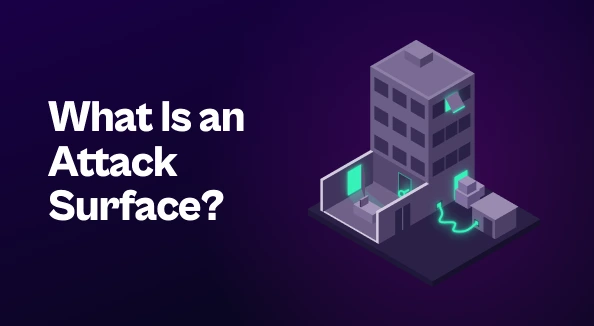
An attack surface is the total set of points where an attacker could gain access to your environment or extract data from it. Every internet-facing asset, application, identity, and third-party connection adds to it. (For a broader overview of how attack surfaces are defined, see our earlier post.)
It’s often confused with an attack vector. The vector is the method an attacker uses, like phishing or exploiting an unpatched CVE. The attack surface is everything those methods could be aimed at.
The Three Types of Attack Surface
- Digital: internet-facing assets, web applications, APIs, cloud resources, and code repositories.
- Physical: laptops, servers, mobile devices, USB ports, and on-prem hardware.
- Human: employees and contractors who can be phished, socially engineered, or whose credentials can be misused.
In practice, these overlap. A phished password (human) can unlock a cloud console (digital) that controls production infrastructure.
Attack Surface Examples You Probably Have Right Now
Forgotten assets. An old marketing subdomain, a staging environment nobody shut down, a test server from a project that ended two years ago. If it isn’t in your cybersecurity asset inventory, nobody is patching it.
Cloud misconfigurations. Publicly readable storage buckets, security groups open to the internet, and IAM roles with wildcard permissions. These are among the most common causes of cloud breaches.
Unpatched vulnerabilities. Outdated software on hosts and containers, plus vulnerable open-source libraries pulled into your code as dependencies.
Exposed APIs and secrets. Undocumented or deprecated API endpoints, and API keys or credentials hardcoded in repositories.
Third-party and SaaS integrations. OAuth apps with broad access scopes, and vendors with standing access to your network or data.
Stale accounts and excess privileges. Accounts belonging to former employees, unused service accounts, and admin rights that were granted temporarily and never revoked.
Why Attack Surfaces Keep Growing
Cloud resources can be spun up in minutes. Engineering teams ship code daily. Every new SaaS tool brings new integrations and identities, and remote work spreads endpoints across home networks.
Security tooling grows alongside all of this, so detection usually isn’t the gap. The gap is volume: teams end up with tens of thousands of findings across multiple scanners, and far more than they can realistically fix.
How to Reduce Your Attack Surface
- Keep a continuous inventory. You can’t protect assets you don’t know exist. Discovery should be ongoing, not a quarterly exercise.
- Remove what you don’t need. Decommission unused assets, close unnecessary ports and services, and delete stale accounts.
- Enforce least privilege and secure configurations. Limit access to what each user and service actually needs, and baseline cloud configurations against known standards.
- Prioritize by real risk. Not every finding matters equally. Effective vulnerability prioritization weighs exploitability, reachability, and asset criticality, not just CVSS scores.
- Monitor continuously. Your attack surface changes every day. Continuous attack surface management keeps your picture of it current.
Where Seemplicity Fits
Most security teams already have visibility into their attack surface. They run scanners across cloud, code, hosts, and external assets. The harder problem is what happens after something is found.
Seemplicity consolidates findings from across your security tools, deduplicates them, and prioritizes them by real risk. AI Analysts triage vulnerabilities autonomously, and each fix is routed to the team that owns the affected asset. That’s the core idea behind exposure management: exposures get closed, not just counted.
Mapping Your Attack Surface Is Only Half the Job
Knowing what an attack surface is, and what yours includes, is the starting point. The organizations that stay ahead are the ones that keep shrinking it: removing what they don’t need, fixing what matters most, and repeating that as their environment changes.

Stay updated on Seemplicity blog
Subscribe today to stay informed and get regular updates from Seemplicity.