

/What is ASPM security?
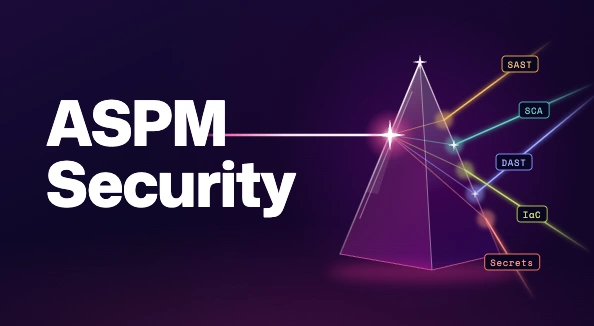
ASPM (application security posture management) security is a layer that sits above your AppSec scanners rather than replacing them. It pulls in findings from SAST, SCA, DAST, IaC, and other tools, then deduplicates and correlates them from code to runtime. It adds context such as exploitability and asset criticality, and routes each prioritized issue to the team that owns the fix. The result is less noise, faster remediation, and a clear view of application risk.
Ask an AppSec lead how many open findings their team has, and the honest answer is often “depends which tool you check.” The SAST console says one number, the SCA dashboard another, and the container scanner a third. Each tool sees its own slice of the application, but none of them can tell you which issues are exploitable in production or which team owns the fix.
ASPM security is built to close that gap. Rather than adding yet another scanner, it brings existing findings together, adds context, and turns raw output into prioritized work that developers can actually act on.
What Is ASPM Security?
Application security posture management (ASPM) is the practice of continuously monitoring, assessing, and improving the security of your applications across the full software development lifecycle, from code commit to production runtime.
The key distinction is that ASPM doesn’t scan. It sits above your scanners as a correlation and governance layer, pulling in their findings and giving you a single, consistent view of application risk.
ASPM grew out of application security orchestration and correlation (ASOC), which focused mostly on aggregating test results. ASPM extends that idea with continuous posture assessment, runtime context, and ownership, so it reflects the current state of your applications instead of a point-in-time snapshot.
How ASPM Works
Most ASPM platforms follow the same basic flow:
- Ingest. Findings come in from SAST, DAST, SCA, IaC, container, secrets, and API security tools, along with pen test and bug bounty results.
- Normalize and deduplicate. The same vulnerability flagged by three tools becomes one finding, not three tickets.
- Correlate. Findings are linked across the SDLC, so a vulnerable dependency in a repo can be traced to the container image and the running service it ends up in.
- Add context. Asset criticality, internet exposure, exploitability, reachability, and data sensitivity determine what is actually risky.
- Prioritize and route. Findings are ranked by real risk and sent to the owning team in the tools they already use, such as Jira, GitHub, or Slack.
Steps two through five are where most of the value lives. Aggregation on its own just moves the noise into a single dashboard.
Core Capabilities to Look For
When evaluating ASPM tools, these are the capabilities that separate a useful platform from a reporting layer:
- Unified application inventory: A current map of applications, repositories, services, and the teams that own them.
- Risk-based prioritization: Vulnerability prioritization driven by business context and exploitability, not severity scores alone.
- Code-to-runtime traceability: The ability to connect a finding in production back to the code and the team responsible for it.
- Software supply chain visibility: SBOM management and tracking of open source dependencies.
- Policy enforcement: Guardrails such as blocking builds that introduce critical issues, plus compliance reporting.
- Remediation workflows: Ticketing integrations, SLA tracking, and fix guidance developers can use without extra research.
ASPM vs. CSPM vs. Vulnerability Management
These terms overlap, but each covers different ground.
ASPM vs. CSPM: Cloud security posture management (CSPM) focuses on misconfigurations in cloud infrastructure, such as exposed storage buckets or overly permissive IAM roles. ASPM focuses on the applications running on that infrastructure, along with the code and dependencies inside them.
ASPM vs. traditional vulnerability management: Vulnerability management typically tracks individual CVEs on hosts and assets. ASPM looks at application risk as a whole, across code, dependencies, configuration, and runtime.
In practice, these approaches complement each other rather than compete. Mature security programs feed all of them into one broader view of exposure.
Key Benefits of ASPM
- Less noise: Deduplication and context cut down the volume of findings teams actually need to review.
- Faster remediation: Clear ownership and direct routing shorten mean time to remediate, because findings stop sitting in a triage queue.
- Better security and dev alignment: Developers receive fewer, more relevant issues inside their own workflows, which builds trust in what security sends them.
- Measurable posture: A consistent view over time makes it possible to show progress to leadership and auditors.
Best Practices for Getting Started
A few ASPM best practices make the difference between a successful rollout and an expensive dashboard:
- Map your current tooling first. Know which scanners cover which applications, and where the gaps are.
- Define ownership before automating routing. Automation that sends findings to the wrong team only creates noise faster.
- Prioritize with business context. Severity should be one input into the decision, not the whole decision.
- Meet developers where they work. Push findings into existing tools and workflows instead of asking engineers to log in to another console.
- Start narrow. Roll out to a handful of high-value applications, prove the value, then expand across your application security program.
Where Seemplicity Fits
Seemplicity applies the core ideas behind ASPM (aggregation, context, prioritization, and routing) across your entire environment. Application findings sit alongside infrastructure, cloud, and attack surface findings, so AppSec risk is assessed in the context of your overall exposure rather than in its own silo.
Seemplicity integrates with the AppSec tools you already use, deduplicates and enriches their findings, maps each one to the right owner, and tracks remediation through to closure. Its AI Analysts, including the Code Analyst and SCA Analyst, automate triage of code and dependency findings, so your team spends less time sorting through results and more time fixing what matters.
For organizations building a continuous threat exposure management (CTEM) program, this makes application security one connected part of the broader effort instead of a separate stream of tickets.
From Findings to Fixes
ASPM security exists because more scanning hasn’t made applications safer on its own. What actually helps is turning scattered scanner output into a short, prioritized list of fixes, each with a clear owner. Get the context, ownership, and workflows right, and ASPM becomes the place where application risk actually goes down.
See how Seemplicity helps security and development teams turn AppSec findings into fixes. Book a demo today.

Stay updated on Seemplicity blog
Subscribe today to stay informed and get regular updates from Seemplicity.