

/What is attack surface risk management?
Attack surface risk management is the practice of continuously discovering every asset an attacker could reach, scoring each exposure by real business risk, and driving the riskiest ones to remediation. It builds on attack surface management (ASM), which focuses on discovery and visibility, by adding prioritization and fix workflows. It is a core part of a Continuous Threat Exposure Management (CTEM) program.
Attack surface risk management means continuously finding every asset an attacker could reach, scoring each exposure by real business risk, and getting the riskiest ones fixed. Plain attack surface management (ASM) tells you what’s exposed. Attack surface risk management tells you what matters and makes sure someone fixes it.
Most security teams have no shortage of visibility. They have more assets, findings, and dashboards than ever. Where they fall short is turning that visibility into less risk, and that’s the gap attack surface risk management is meant to close.
What Is Attack Surface Risk Management?
Your attack surface is every point an attacker could use to get in: internet-facing apps, cloud workloads, APIs, SaaS tools, identities, forgotten subdomains, and the shadow IT nobody told security about.
Attack surface risk management (sometimes shortened to ASRM) treats that surface as a risk problem, not just an inventory problem. It answers three questions:
- What do we have? A complete, continuously updated inventory of assets, including ones you didn’t know about.
- What’s actually risky? Exposures ranked by exploitability, business impact, and how reachable they are.
- Who fixes it, and is it fixed? Clear ownership, tracked remediation, and proof the risk went down.
Older programs usually stop after the first question. Attack surface risk management is built to finish the third.
ASM vs. Attack Surface Risk Management (and Where CTEM Fits)
These terms overlap, so here’s the plain version:
- Vulnerability management finds known vulnerabilities on assets you already know about.
- Attack surface management (ASM) finds the assets themselves, including unknown and unmanaged ones, and shows what’s exposed.
- Attack surface risk management adds prioritization and remediation on top of ASM, so discovery turns into lower risk.
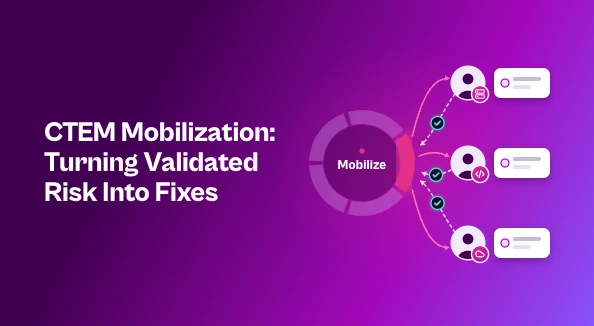
- Continuous Threat Exposure Management (CTEM) is the larger framework, defined by Gartner, that ties all of these together across five stages: scoping, discovery, prioritization, validation, and mobilization.
In CTEM terms, ASM mostly covers discovery. Attack surface risk management carries that discovery through prioritization and mobilization, which is where most programs stall.
Why Attack Surface Risk Management Matters Now
A few things have changed:
- The surface keeps growing. Cloud, SaaS, APIs, and now AI services and agents create new exposure faster than anyone can track by hand.
- Findings outnumber fixers. Every scanner adds more findings. Remediation capacity doesn’t grow to match.
- Attackers move faster. The time between a vulnerability going public and being exploited keeps shrinking, so a long backlog of “we’ll get to it” is a real liability.
- Boards want outcomes. “We found 40,000 issues” doesn’t answer whether the company is safer. Risk reduction does.
How Attack Surface Risk Management Works
A working program usually runs this loop continuously:
- Discover. Map external and internal assets across cloud, on-prem, SaaS, and code. Pull in data from ASM, CSPM, vulnerability scanners, and AppSec tools.
- Assess. Attach context to each exposure: exploitability, internet reachability, asset criticality, and business owner.
- Prioritize. Rank by real risk, not CVSS alone. A medium-severity issue on an exposed payment system can matter more than a critical on an isolated test box.
- Remediate. Route each exposure to the team that owns it, with clear fix guidance, in the ticketing tools they already use.
- Validate. Confirm the fix landed and the exposure is gone, then measure how the overall risk trend is moving.
Step 4 is where most programs break down. Discovery and scoring tools are mature. Getting the right fix to the right owner at scale usually still runs on spreadsheets and Slack threads.
Attack Surface Risk Management Best Practices
- Consolidate before you prioritize. Dedupe findings across tools first, or you’ll be ranking the same issue five times.
- Make ownership automatic. Map assets to teams using tags, code repos, and cloud metadata so tickets don’t sit unassigned.
- Prioritize on business context. Weight exposures by what the asset does and who can reach it.
- Set and track remediation SLAs. If you don’t measure time to fix, you can’t improve it.
- Report on risk reduced, not findings found. That’s the metric leadership cares about.
Where Seemplicity Fits
Seemplicity covers the remediation side of attack surface risk management. It isn’t a discovery or validation tool. Instead, it pulls in findings from the ASM, cloud, vulnerability, and AppSec tools you already run, dedupes and prioritizes them, and uses AI agents like Find the Fixer to work out ownership. From there it routes tickets with environment-specific fix guidance and tracks remediation through to closure. In short, it’s the part of the program that turns findings into fixes.
Ready to turn attack surface findings into fixes? See how Seemplicity helps your teams close the loop.

Frequently asked questions
The continuous practice of discovering exposed assets, ranking their exposures by business risk, and driving the riskiest ones to remediation.
ASM focuses on discovery and visibility. Attack surface risk management adds prioritization, ownership, and remediation tracking so visibility turns into lower risk.
Yes. It maps to CTEM’s discovery, prioritization, and mobilization stages and works alongside validation methods like pen testing and breach simulation.
Mean time to remediate, SLA compliance, exposure counts by severity and business unit, and the risk trend over time.
Stay updated on Seemplicity blog
Subscribe today to stay informed and get regular updates from Seemplicity.