
/Who is responsible for threat exposure management?
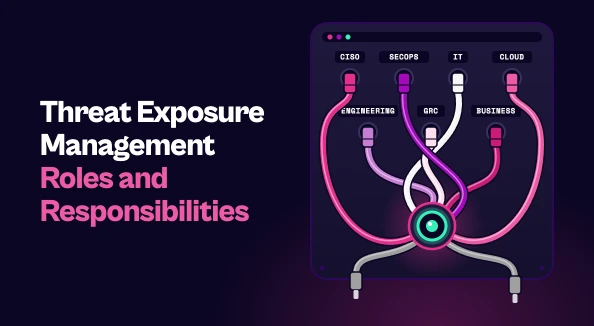
Threat exposure management is shared across several teams. The CISO owns the program and sets its scope. A dedicated exposure management team runs the day-to-day cycle and coordinates the work. SecOps and offensive testers add attacker context and validate which exposures are truly exploitable. IT, cloud, and engineering teams fix the issues. Business owners define which assets are critical and make risk decisions. GRC sets remediation timelines and manages exceptions. A simple RACI, automated ownership mapping, and shared SLAs keep these roles connected, so exposures get fixed instead of sitting in queues.
Most threat exposure management programs don’t stall because of missing tools. They stall because nobody is clear on who does what.
Security finds the exposures. IT and engineering own the systems that need fixing. Business owners know which assets matter most. GRC sets the rules. When those responsibilities aren’t defined, exposures get discovered, logged, and then left open while each team assumes someone else has it.
This post breaks down the core roles in a threat exposure management program, what each one is accountable for, and how to get them working together.
Why Threat Exposure Management Needs Defined Roles
Threat exposure management is the ongoing practice of finding, prioritizing, validating, and fixing the exposures attackers could use to get in. That includes vulnerabilities, misconfigurations, identity weaknesses, and exposed assets. Most programs follow the continuous threat exposure management (CTEM) cycle of scoping, discovery, prioritization, validation, and mobilization.
That cycle crosses team boundaries at almost every step. The people who find exposures are rarely the people who can fix them. The people who can fix them don’t always know which ones matter. Without defined roles, the program ends up producing reports instead of reducing risk.
Clear roles fix that. Everyone knows what they’re accountable for, handoffs are predictable, and exposures don’t sit in a queue waiting for an owner.
The CISO and Security Leadership
Security leadership owns the program as a whole. That means:
- Setting scope. Deciding which business services, environments, or data the program focuses on first. Good scoping ties exposure work to business priorities rather than trying to cover everything at once.
- Securing buy-in. TEM depends on teams outside security doing remediation work. Leadership needs to make that an agreed expectation, not a favor.
- Reporting outcomes. Translating exposure reduction into terms executives and the board understand: which critical services are exposed, and whether that’s getting better.
The Exposure Management Team
This is the team that runs the program day to day. In many organizations it grows out of the vulnerability management function. Its responsibilities include:
- Consolidating findings from scanners, cloud tools, AppSec tools, and pen tests into one view
- Driving prioritization based on exploitability, reachability, and business impact rather than raw severity
- Setting and tracking remediation SLAs
- Coordinating between security and the teams that do the fixing
The key word is coordinating. This team usually doesn’t fix exposures itself. Its job is to make sure the right exposures reach the right people with enough context to act.
Security Operations and Offensive Testing
SecOps, threat intelligence, and red teams bring the attacker’s perspective. They contribute in two main ways:
- Feeding prioritization. Threat intel on active exploitation, attacker techniques, and targeted industries helps separate real risk from theoretical risk.
- Owning validation. Pen testing, red teaming, and breach and attack simulation confirm whether a high-priority exposure is actually exploitable in your environment. Validation keeps fixers focused on issues that matter, not on false alarms.
IT, Cloud, and Engineering Teams
These are the fixers. They own remediation for the infrastructure, cloud resources, and code they run, which makes them responsible for:
- Applying patches, configuration changes, and code fixes
- Implementing mitigations when a full fix isn’t immediately possible
- Confirming fixes are deployed so exposures can be verified as closed
Fixers don’t need more findings. They need fewer, clearer ones: what to change, where, and why it matters now. They also need the work delivered in the tools they already use, not in a separate security portal they never open.
Business and Asset Owners
Business owners supply the context security can’t get from scanners. They’re responsible for:
- Defining which systems, applications, and data are business-critical
- Keeping ownership information current as teams and systems change
- Making risk decisions when an exposure can’t be fixed, whether that means accepting it, funding a fix, or escalating
An accurate asset inventory with clear ownership is what makes this role workable.
GRC and Compliance
GRC keeps the program aligned with policy and regulatory requirements. This includes:
- Setting remediation timelines in your vulnerability management policy
- Managing the exception and risk acceptance process
- Making sure remediation is documented well enough to stand up to an audit
How to Make the Roles Work Together
Defining roles is the first step. Making them work together day to day takes a few practical habits:
- Build a simple RACI. Map each stage of the cycle to who is responsible, accountable, consulted, and informed. Keep it to one page.
- Automate ownership mapping. Assign exposures to owners using asset metadata, tags, or business unit rather than manual detective work.
- Agree on shared SLAs. Remediation timelines should be negotiated with the fixers, not handed down to them.
- Define the exception path. Teams need a clear way to flag that something can’t be fixed, and someone with the authority to decide what happens next.
- Work from one view. When security, fixers, and leadership look at different lists, every conversation starts with reconciling data instead of fixing anything.
Where Seemplicity Fits
Seemplicity is an Agentic Exposure Action Platform built for the point where most of these handoffs break down: getting exposures from “found” to “fixed.”
It doesn’t replace your scanners or validation tools. It pulls in findings from across them, deduplicates and adds context, maps each exposure to the right owner, and routes the work into tools like Jira and ServiceNow. Security, fixers, and leadership all see the same progress, so accountability is visible rather than chased.
Clear Ownership, Faster Fixes
Threat exposure management only works when everyone involved knows their part:
- Leadership sets scope and drives buy-in.
- The exposure management team coordinates the work.
- SecOps adds attacker context and validation.
- The fixers remediate.
- Business owners supply context and make risk calls.
- GRC keeps the program accountable.
Get those roles defined and connected, and exposures stop sitting in limbo and start getting closed.

Stay updated on Seemplicity blog
Subscribe today to stay informed and get regular updates from Seemplicity.