
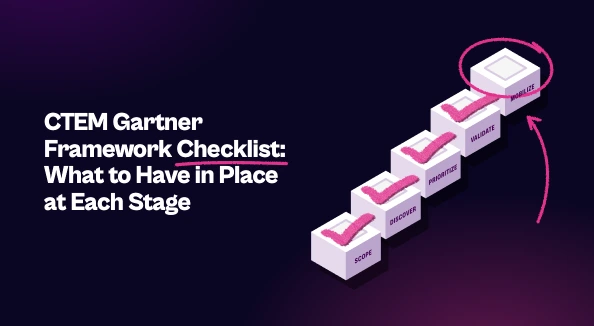
/What do you need at each stage of the Gartner CTEM framework?
Gartner’s CTEM framework runs in five stages, and each one needs specific things in place to work. Scoping requires defined business-critical assets and agreement from stakeholders on what the cycle covers. Discovery needs a complete asset inventory, with all findings aggregated in one place, not just CVEs. Prioritization should weigh exploitability, business impact and compensating controls alongside severity. Validation confirms that high-priority exposures are actually exploitable and that your controls hold up. Mobilization depends on clear owners, defined SLAs and remediation tracked to closure. It’s also where most programs stall, so it’s the stage to focus on first.
Gartner introduced continuous threat exposure management in 2022 as a way to move security teams beyond endless scan-and-patch cycles. The framework defines five stages, but it doesn’t spell out what “done” looks like at each one. That gap is where many programs stall.
This checklist turns Gartner’s CTEM guidance into concrete items you can check off at each stage of the cycle.
A Quick Recap of Gartner’s CTEM Framework
Gartner is clear that CTEM is a program, not a product. No single tool delivers it. It runs as a repeating five-stage cycle:
- Scoping: Define which parts of the business the cycle will cover.
- Discovery: Identify the assets and exposures within that scope.
- Prioritization: Decide which exposures matter most to the business.
- Validation: Confirm whether exposures can actually be exploited.
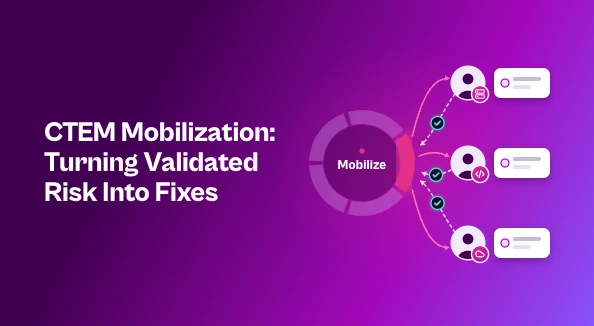
- Mobilization: Get the right teams to act on the findings.
Scoping Checklist
Gartner recommends scoping around business priorities rather than whatever your scanners already cover.
- Business-critical assets, processes, and services are defined
- Scope extends beyond traditional infrastructure to cover SaaS, cloud, identities, third parties, and the external attack surface
- Business and security stakeholders have agreed on scope for this cycle
- Scope is reviewed at the start of each new cycle, not set once and forgotten
Discovery Checklist
Discovery should surface every type of exposure in scope, not just CVEs.
- An up-to-date asset inventory exists for everything in scope
- Exposures beyond software vulnerabilities are captured, including misconfigurations, excessive permissions, and exposed credentials
- Findings from all scanners and security tools are aggregated in one place
- Duplicate findings are consolidated so the same issue isn’t counted multiple times
Prioritization Checklist
Gartner explicitly warns against prioritizing on severity scores alone. Effective prioritization weighs several factors together.
- Severity is one input, not the only one
- Exploitability and threat intelligence are factored in, such as CISA KEV and EPSS
- Asset criticality and potential business impact are weighted
- Compensating controls are accounted for
- Prioritization reflects the organization’s agreed risk appetite
Validation Checklist
Validation answers a simple question: would an attack actually succeed?
- High-priority exposures are tested to confirm they’re exploitable in your environment
- Attack paths to critical assets are mapped
- Existing security controls are tested to see whether they would detect or block an attack
- Response processes are checked to confirm they would work under real conditions
Mobilization Checklist
According to Gartner, mobilization is about getting findings acted on across teams. Automation alone won’t do it. This is the stage where most CTEM programs break down.
- Every prioritized exposure has a clear owner
- Remediation tasks are routed into the tools those owners already use, such as Jira or ServiceNow
- Remediation SLAs are defined and agreed upon with fixing teams
- Exception and risk-acceptance workflows are documented
- Remediation progress is tracked to closure and reported to stakeholders
Common Gaps to Watch For
A few gaps show up again and again:
- Scoping only what’s already scanned. If scope mirrors existing tool coverage, the program misses the exposures that matter most.
- Relying on CVSS alone. Severity without context leads teams to fix the wrong things first.
- Running mobilization on spreadsheets. Manual handoffs over email and spreadsheets slow remediation down and make progress impossible to track.
How Seemplicity Supports Your CTEM Program
Seemplicity helps teams turn Gartner’s CTEM framework into day-to-day execution:
- Discovery: Aggregates, normalizes, and deduplicates findings from your existing security tools into a single view.
- Prioritization: Ranks exposures using exploitability, threat intelligence, and business context.
- Mobilization: Automates ownership assignment, ticketing, and tracking, bringing remediation operations into the workflows your teams already use.
Using the Checklist Every Cycle
CTEM is continuous, so this checklist shouldn’t be a one-time exercise. Run through it at the start of each cycle to spot gaps early, before they stall the program. Pay closest attention to mobilization, because that’s where exposures actually get fixed.

Stay updated on Seemplicity blog
Subscribe today to stay informed and get regular updates from Seemplicity.