/What should I look for in a CTEM platform?
The right CTEM platform is one that supports your program across every stage and works with the tools you already use. When evaluating options, start with where your current cycle stalls, then ask vendors how they handle data aggregation and deduplication, risk-based prioritization beyond CVSS, validation of what’s actually exploitable, routing fixes to the right owners, and tracking remediation to closure. The platform that closes your program’s specific gaps is the right fit.
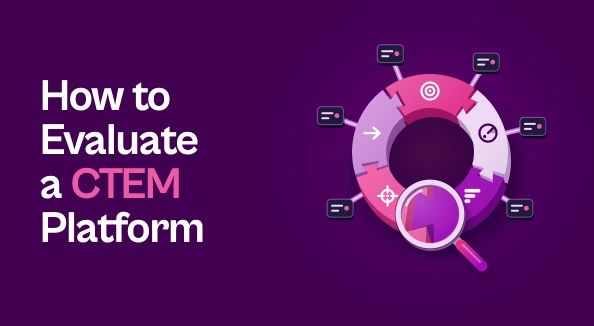
Continuous threat exposure management is a program: a repeating cycle of scoping, discovery, prioritization, validation, and mobilization that runs across your whole security stack.
A CTEM platform supports that program. It connects the tools you already have, carries context from one stage to the next, and makes sure findings turn into fixes. That changes how you should evaluate one. Instead of comparing feature lists, the useful question is: will this platform help our program run better than it does today?
Below are the questions worth asking in any CTEM platform evaluation, organized by stage.
Start With Your Program, Not the Platform
Before you talk to vendors, get clear on what your program needs. Define your scope: which environments, business units, and critical assets matter most, and what outcomes you’re working toward. If you haven’t formalized this yet, scoping is the place to start.
Then look at where your current cycle stalls. For most teams, it’s not finding issues. It’s deciding which ones matter and getting them in front of the people who can fix them. Those gaps should become your evaluation criteria. A vendor’s demo will show you what their product does well. Your criteria should show you whether it fixes what’s actually broken.
Questions on Discovery and Data
Discovery in a CTEM program depends on the scanners and security tools you already run. The platform’s job is to bring that data together, not replace where it comes from.
- Does it ingest findings from the tools we already use? Check integration coverage across cloud, code, infrastructure, and external attack surface before anything else.
- How does it dedupe and normalize data across sources? The same issue often shows up in multiple tools with different names and severity scores. Without strong normalization, you end up with inflated counts and conflicting priorities.
- Does it maintain shared asset context? Ownership, business criticality, and exposure details should follow a finding through every stage.
Questions on Prioritization
Prioritization is where most programs either gain momentum or drown in backlog. A platform should help you focus on the small share of exposures that represent real risk.
- What drives the risk score beyond CVSS? Look for exploitability data, threat intelligence, and business context, not just severity ratings.
- Can we customize prioritization logic? Your environment and risk tolerance aren’t the same as everyone else’s.
- Is the reasoning transparent? If your team can’t see why something ranked high, they won’t trust it, and neither will the engineers asked to fix it.
Questions on Validation
Validation confirms whether a prioritized exposure is actually reachable or exploitable in your environment.
- How does the platform confirm what’s exploitable? It may handle validation natively or pull in results from testing tools you already use.
- Do validation results feed back into prioritization? An exposure proven unreachable should drop down the list automatically, not sit there until someone manually updates it.
Questions on Mobilization
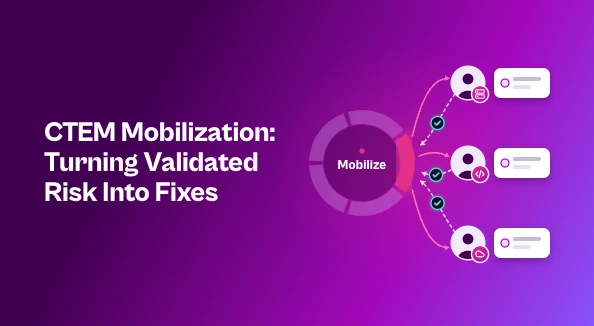
Mobilization is getting the right fix to the right person and making sure it happens. It’s often the weakest stage in a CTEM program, so give it real weight in your evaluation.
- Can it route fixes to the right owners automatically? Manually figuring out who owns each asset doesn’t scale.
- Does it integrate with ticketing and developer workflows? Fixes should land where teams already work, whether that’s Jira, ServiceNow, or something else.
- Does it track remediation to closure? Look for SLA tracking, exception handling, and verification that a fix actually resolved the issue.
Questions on Reporting and Measurement
A CTEM program needs to show progress over time, both to the team running it and to leadership.
- Can we measure exposure reduction, not just finding counts? Closing tickets isn’t the same as reducing risk.
- Is reporting useful for different audiences? Practitioners need operational detail; leadership needs a clear view of trends and risk posture.
How Seemplicity Fits In
Seemplicity is built on the idea that CTEM is a program, not a product. Rather than replacing the scanners and security tools teams already rely on, Seemplicity connects them into one workflow.
It aggregates, deduplicates, and adds context to findings from across your stack, then validates which exposures are actually exploitable in your environment, so prioritization reflects real risk rather than severity scores alone. AI Analysts handle triage autonomously, so security teams spend less time sorting through noise.
Where Seemplicity stands out most is mobilization. It routes fixes to the right owners, integrates with the workflows they already use, and gives fixing teams several response options for addressing each exposure, from a full fix to mitigations when patching isn’t immediately possible. Every exposure is then tracked through to closure, so the program doesn’t stall between knowing what’s wrong and getting it fixed.
Choosing a CTEM Platform That Fits Your Program
The best CTEM platform for your team is the one that closes the specific gaps in your program. Go into vendor conversations with your own questions, grounded in where your cycle breaks today, and you’ll get a much clearer picture of what each platform will actually change.

Stay updated on Seemplicity blog
Subscribe today to stay informed and get regular updates from Seemplicity.