/TL;DR
Modern exposure management has evolved beyond vulnerability scanning and alert volume into a discipline focused on measurable risk reduction. As the exposure management market matures, security leaders are adopting cyber exposure management platforms that unify signals across vulnerability, cloud, application, and attack surface tools to prioritize what truly matters. This blog explores how exposure management cybersecurity is shifting toward outcomes-driven decision-making, faster remediation, and clearer business alignment, helping organizations move from fragmented findings to effective exposure and risk management.
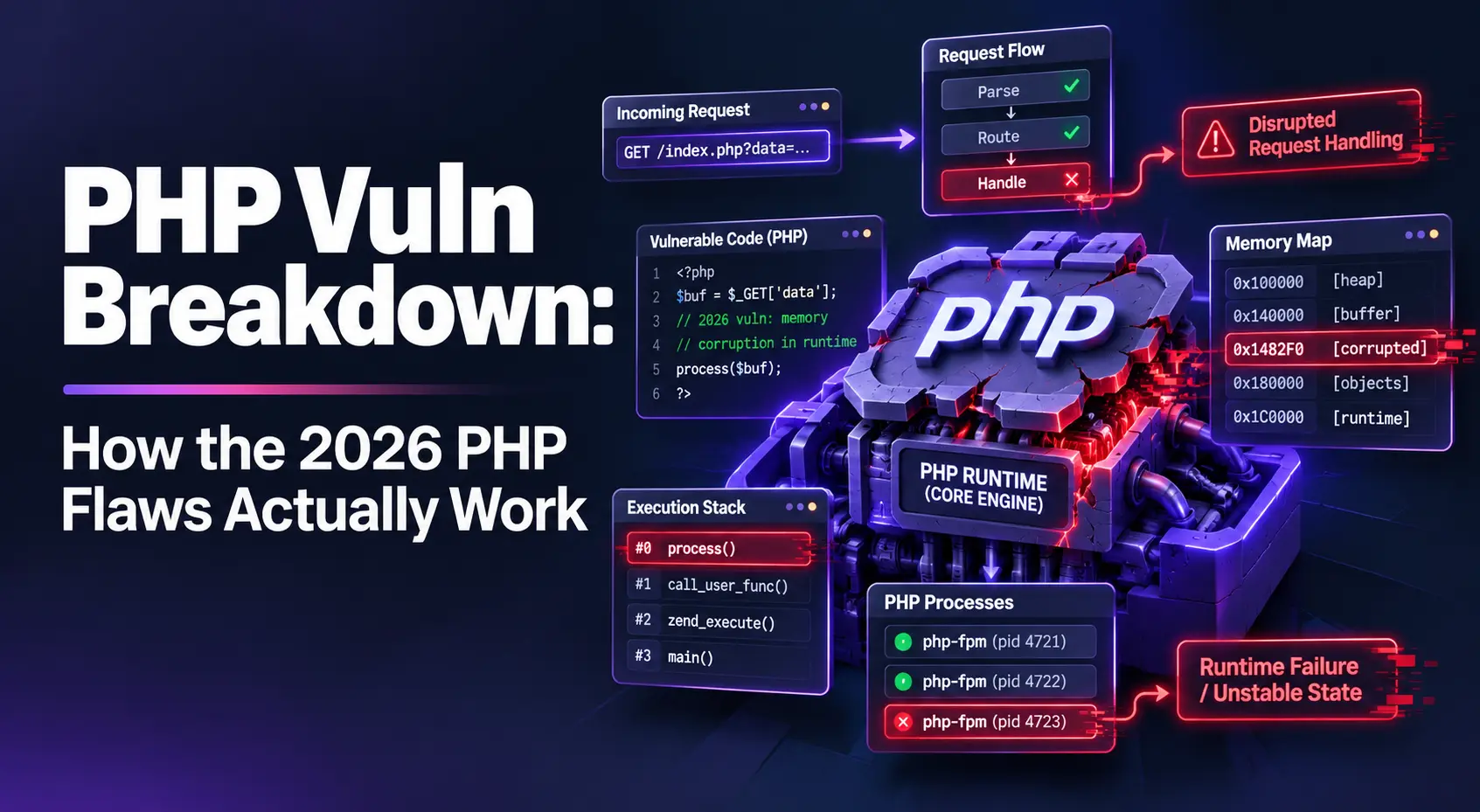
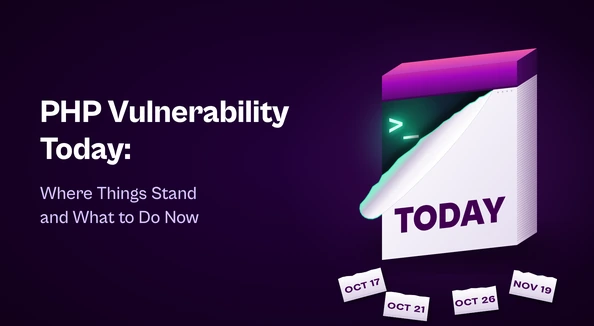
The PHP vulnerability picture has changed fast over the past five weeks. There are two waves to track. The first is PHP2Shell, which is patched but actively exploited. The second is a set of seven critical flaws PHP fixed on November 19, which have no confirmed exploitation yet.
| Status today | |
|---|---|
| PHP2Shell (CVE-2026-109618, CVE-2026-109619) | Patched October 21. Actively exploited and listed in CISA’s KEV catalog |
| November 19 critical flaws (7 CVEs) | Patched November 19. No confirmed exploitation reported so far |
| Versions to run | PHP 8.5.13, 8.4.28, 8.3.37, 8.2.36 or 8.6.0 |
| Unpatched servers | Censys data shows more than half of the servers originally exposed to PHP2Shell are still unpatched |
If you only do one thing today, get every PHP install onto one of the versions above and restart it.
What’s Being Exploited Right Now
PHP2Shell is the live threat. Both flaws allow unauthenticated remote code execution, and the vulnerable code goes back to PHP 5.4, so a decade of PHP releases is affected.
Exploitation started before most teams had a chance to patch. Amazon saw the first attempt on October 17, four days before disclosure, and proof-of-concept exploits leaked hours before the fix shipped. CISA added both CVEs to its Known Exploited Vulnerabilities catalog on October 26.
Since then, attackers have gone after higher-value targets:
- Network appliances. Unit 42 reports PHP2Shell being exploited against internet-exposed PAN-OS management interfaces.
- Full server takeover. Researchers at Dream found attackers chaining PHP2Shell with a Linux kernel privilege-escalation flaw (CVE-2026-46300, “Fragnesia”) to get root on perimeter firewalls.
- Government networks. PHP2Shell has been used against government-affiliated targets in the US and Europe, with a suspected China-linked group behind the US breach.
The window for patching quietly has closed. Any internet-facing PHP2Shell-vulnerable server should be treated as potentially compromised until you’ve checked it.
What’s New This Week
On November 19, PHP shipped security releases for every supported branch. These fixed seven critical CVEs, all rated 9.2, plus a high-severity local privilege escalation bug and several medium-severity issues.
The headline flaw is phpAfterShell (CVE-2026-126714). It affects PHP’s default file-based session handler. If a session write is interrupted partway through, PHP can read back a corrupted session file and deserialize attacker-controlled objects, which can lead to code execution. The researchers found it while reviewing the PHP2Shell fix.
Other critical fixes include request smuggling in PHP-FPM (CVE-2026-129289), a session upload-progress flaw (CVE-2026-115560) and several use-after-free bugs in sessions and the date extension.
There are two pieces of context to keep in mind:
- No confirmed exploitation yet. Neither PHP nor the researchers behind phpAfterShell have reported attacks in the wild as of this update.
- Narrower conditions. PHP says most of the critical attack paths need non-default or uncommon setups. That lowers the odds for any one server, but across a large estate, someone is likely running the uncommon setup.
What to Do Today
- Check versions. Run php -v on every server and compare the result with the fixed releases: 8.5.13, 8.4.28, 8.3.37, 8.2.36 or 8.6.0. Anything older needs updating, including servers you patched for PHP2Shell in October.
- Patch and restart. Install the update, then restart PHP-FPM or Apache so the workers load the new code. A patch that hasn’t been restarted doesn’t protect you.
- Mitigate what you can’t patch yet. Setting session.upload_progress.enabled = 0 closes several of the session-based attack paths. Updated WAF rules can help at the edge too, but they don’t replace the upgrade.
- Start with what’s exposed. Put internet-facing web servers, admin panels and appliances at the top of the list. Vulnerability prioritization here is simple: anything reachable from the internet and running a PHP2Shell-vulnerable version goes first.
- Hunt for compromise. On exposed servers that were unpatched after October 17, look for unknown PHP files (webshells), repeated worker crashes and unexpected processes or outbound connections spawned by PHP.
- Don’t forget hidden PHP. Containers, vendor appliances and bundled software often carry their own PHP runtime. An accurate asset inventory is how you find them.
Staying Ahead of the Next PHP Advisory
The November release came straight out of researchers digging into the PHP2Shell fix, and that work hasn’t stopped. Expect more PHP advisories in the coming weeks, so treat this as an ongoing situation rather than a one-off patch.
To stay current:
- Watch PHP’s GitHub security advisories and changelog for new releases.
- Check CISA’s KEV catalog for any of the November CVEs being added, which would confirm active exploitation.
- Follow security bulletins from vendors whose appliances or software run PHP.
Pair that with exploit monitoring so that when the status of a flaw changes from “patched” to “exploited,” the PHP vulnerability today doesn’t become tomorrow’s incident.

Stay updated on Seemplicity blog
Subscribe today to stay informed and get regular updates from Seemplicity.