Axonius CTEM (Continuous Threat Exposure Management): Where It Fits and Where Teams Need More

/can Axonius support a full CTEM (continuous threat exposure management) program?
Axonius is a strong foundation for CTEM, especially for scoping, discovery and prioritization, thanks to its broad asset coverage and its security, asset and business context. Its Exposures product also includes remediation ownership, ticketing and SLA tracking. Before you build on it, test how well it confirms exploitability in code and dependencies, handles AppSec findings, and drives fixes to verified closure. Seemplicity covers that remediation side, turning findings from across your stack into root-cause fixes your teams actually finish.
Axonius built its reputation in CAASM, giving security and IT teams a single, reliable asset inventory pulled from the tools they already run. As continuous threat exposure management has become the way more organizations structure their security programs, Axonius has extended that foundation into exposure management.
For teams already using Axonius, the question is practical: can it carry a full CTEM program, or will parts of the cycle need support? Axonius is strong early in the cycle, where visibility and context matter most. The harder part, as with most CTEM programs, comes when prioritized exposures need to become finished fixes.
Why Teams Look at Axonius for CTEM
Axonius positions its Exposures product as the way organizations can operationalize a continuous threat exposure management (CTEM) program. The appeal is the data foundation underneath it: Axonius says it maps the attack surface across more than 1,200 tools and 40+ asset types. helpnetsecurityaxonius
That matters because every CTEM stage depends on knowing what you have. Programs built on incomplete or conflicting asset data tend to prioritize the wrong things and route fixes to the wrong people.
It’s also worth remembering that CTEM is a framework, not a single product. A platform can support several stages, but results depend on how well each stage hands off to the next.
What Axonius Covers Across the CTEM Stages
Scoping and discovery. This is where Axonius is strongest. Its adapters and correlation logic build a unified view of devices, identities, cloud resources and SaaS apps, and surface coverage gaps, such as a managed laptop accessing internal applications without endpoint protection. That gives teams a solid base for scoping and discovery. axonius
Prioritization. Axonius combines security context with asset and business context for each exposure, and recent releases added asset criticality management and an asset-aware threat intelligence feed. That’s a meaningful step up from severity-only prioritization. axoniusaxonius
Validation. Axonius validates asset state, such as whether a required control is actually deployed. How much exploit confirmation you get beyond that is worth testing in your own environment before you rely on it for validation. axonius
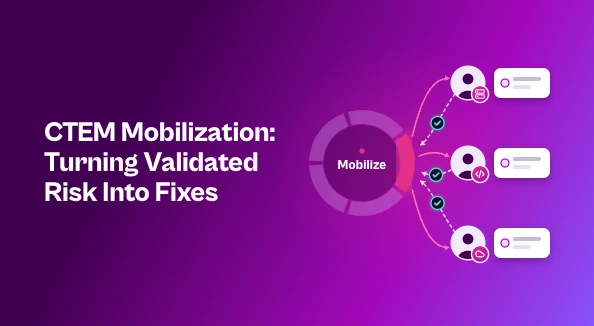
Mobilization. Axonius has invested heavily here. Exposures includes remediation ownership defined per risk, AI-recommended actions, and ticket grouping by one or more asset fields, and Axonius says it can route ready-to-work tickets to Jira or ServiceNow and track remediation against SLAs. Remediation Ownership +2
What to Pressure-Test in Your Evaluation
Axonius approaches CTEM from asset intelligence. The company describes itself as the asset intelligence platform for unified security operations and exposure management, so it starts from what you have and builds exposure context around that. This works well when asset data is the main problem. If your bottleneck is turning findings into finished fixes, test these areas closely: axonius
- Exploitability. Can it show, with evidence, whether a finding is actually reachable in your code and dependencies, not just present on an asset?
- AppSec findings. How are SAST and SCA results prioritized and routed alongside infrastructure exposures?
- Fix guidance. Do engineers get environment-specific instructions, or a finding and a link to an advisory?
- Grouping logic. Are tickets grouped by asset attributes or by the underlying fix? The two can produce very different ticket counts.
- Closure. How is a fix verified as closed, and how does that status stay in sync with your ticketing system?
How Seemplicity Fits In
Seemplicity approaches CTEM from the other end. It’s an agentic Exposure Action Platform built around the fix, not the asset. It pulls in findings from scanners, cloud and AppSec tools, and AI Analysts confirm exploitability with evidence across hosts, code and dependencies.
From there, AI agents identify the right owner, group related findings into root-cause fixes, write environment-specific fix guidance, and track each fix through Jira or ServiceNow until it’s verified closed. For teams whose CTEM program stalls at remediation rather than visibility, that’s the difference that matters.
Questions to Ask Before Building CTEM on Axonius
- How will asset-level exposures become owned, grouped fixes?
- How is exploitability confirmed beyond asset state, especially in code and dependencies?
- Where do AppSec findings live in the workflow?
- How many tickets would our current backlog become after grouping by root cause?
- How is a fix tracked from detection to verified closure?
Turning Axonius Visibility Into Fixed Exposures
Axonius gives CTEM programs something many lack: a trustworthy view of every asset and the context around it. That makes it a strong foundation for scoping, discovery and prioritization. But CTEM only reduces risk when exposures get fixed, so mobilization is where your evaluation should focus.
See how Seemplicity turns findings from across your stack into fixes your teams actually finish.
Stay updated on Seemplicity blog
Subscribe today to stay informed and get regular updates from Seemplicity.