/When do I need a CTEM security platform?
You need a CTEM security platform when your current tools find more exposures than your team can fix. Common signs include a growing backlog, duplicate findings across scanners, prioritization based on CVSS alone, no way to confirm what’s exploitable, remediation that stalls on ownership, and reporting that can’t show whether risk is going down. A CTEM security platform connects the tools you already run, carries context across all five stages of the program, and moves each exposure from discovery through to a verified fix.
Most security teams have plenty of scanners. Between vulnerability scanners, cloud security tools, and application security testing, findings arrive faster than any team can work through them. The harder problem is turning those findings into fixes.
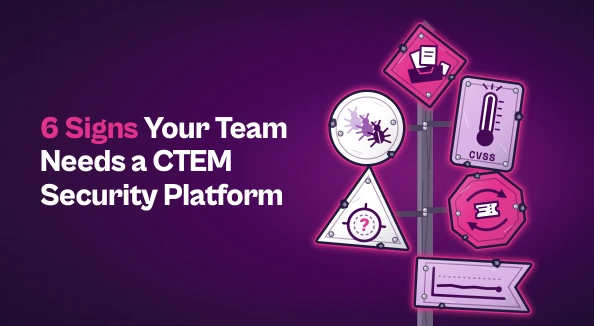
A CTEM security platform is built to close that gap. Below are six signs your current setup has reached its limit, and what changes once a platform is in place.
What a CTEM Security Platform Does
Continuous threat exposure management (CTEM) is a framework: a repeating cycle of scoping, discovery, prioritization, validation, and mobilization. A CTEM security platform is the technology that supports that cycle from end to end.
It doesn’t replace the tools you already run. It sits across them and pulls their findings into one place. It also carries context from one stage to the next: the asset, its owner, its business importance, and its real-world risk. Most security stacks are missing that connection between stages.
6 Signs You Need a CTEM Security Platform
1. Findings Are Outpacing Fixes
Every new tool adds visibility, and more visibility means more findings. If your backlog keeps growing quarter after quarter even as your team works harder, detection isn’t the problem. What’s missing is a system that moves findings toward resolution.
2. The Same Issue Keeps Showing Up
One vulnerable library can appear in your SCA tool, your container scanner, and your cloud security tool, each with a different name and severity score. Without deduplication and normalization, counts get inflated and priorities conflict. Teams end up reconciling reports when they should be fixing exposures.
3. Prioritization Still Runs on CVSS
CVSS measures technical severity, not risk to your organization. Your ranking also needs to account for exploitability signals like known exploited vulnerabilities, threat intelligence, and asset criticality. Without them, a critical CVE on an isolated test server will keep outranking a medium-severity issue on an internet-facing system that handles customer data.
4. You Can’t Confirm What’s Actually Exploitable
A high score doesn’t mean an attacker can reach the exposure. Compensating controls, network segmentation, or unused code paths often neutralize findings that look critical on paper. If you can’t confirm exploitability, remediation effort goes to exposures that pose little real threat, while the ones that matter wait in the queue.
5. Remediation Stalls on Ownership
Security finds the problem, but another team usually has to fix it. When ownership isn’t clear, tickets bounce between teams, sit unassigned, or land with someone who can’t act on them. Many CTEM programs lose momentum here: the exposure is known and prioritized, yet it’s still open weeks later.
6. You Can’t Show That Risk Is Going Down
Leadership wants to know whether the organization is safer than it was last quarter. That’s hard to answer if reporting is limited to finding counts and closed tickets. Closing tickets isn’t the same as reducing exposure, and a rising finding count may simply reflect better coverage.
What Changes With a CTEM Security Platform in Place
A platform adds fewer new capabilities than you might expect. Its main job is connecting the ones you already have, so context doesn’t get lost as exposures move from stage to stage.
- One view across the stack. Findings from every tool are consolidated, deduplicated, and enriched in a single place. This replaces spreadsheets and manual handoffs between point tools.
- A shorter, evidence-backed priority list. Exposures are ranked by real-world risk, and validation results move proven exposures up and unreachable ones down.
- Fixes that reach the right people. Exposures are routed to their owners in the tools those teams already use, like Jira or ServiceNow, with SLAs tracked through to closure.
- Reporting built on risk reduction. Security leaders can show exposure trends over time, not just activity.
How Seemplicity Fits In
Seemplicity’s Agentic Exposure Action Platform works across the security tools teams already rely on. It aggregates, deduplicates, and adds context to findings from across the stack, then prioritizes them using threat intelligence and business context. AI Analysts investigate findings in your actual environment to confirm what’s exploitable, with an evidence trail behind every verdict.
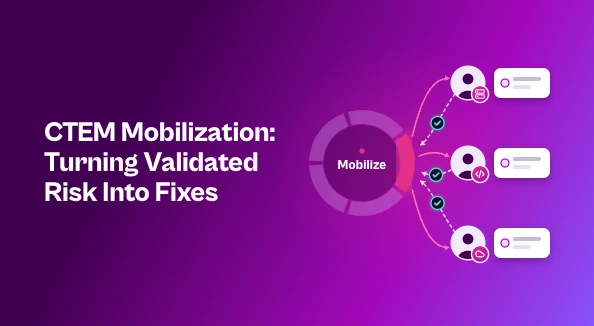
Seemplicity stands out most in mobilization. It routes fixes to the right owners and integrates with the workflows they already use. It also gives fixing teams response options, from full fixes to mitigations when patching isn’t immediately possible. Every exposure is tracked through to closure, so progress is measured in reduced risk, not just closed tickets.
Recognizing When It’s Time to Make the Move
If two or more of these signs sound familiar, more detection probably won’t help. The gap is in connecting what you already have, so findings move from discovery to resolution without stalling. A CTEM security platform is built for exactly that. When you’re ready to compare options, our guide to CTEM platform evaluation covers the questions worth asking.

Stay updated on Seemplicity blog
Subscribe today to stay informed and get regular updates from Seemplicity.