
/How is CTEM security different from traditional security assessments?
CTEM security replaces periodic snapshots, such as annual pentests, quarterly audits and scheduled scans, with a continuous cycle of scoping, discovery, prioritization, validation and mobilization. Traditional assessments produce a findings report that starts going out of date as soon as it’s delivered. CTEM keeps exposure data current, ranks findings by real-world risk, and builds remediation into the process so that issues get fixed rather than just reported. Pentests and audits still matter, but they become inputs to a continuous program rather than the main measure of security posture.
Most security programs still measure exposure on a calendar. An annual pentest, a quarterly audit and a monthly scan each produce a report that shows how things stood on the day the work was done. CTEM security replaces that model with a continuous cycle. This post covers what changes when you make the switch, where traditional assessments still belong, and how to start.
What Is CTEM Security?
CTEM security is the practice of finding, prioritizing, validating and fixing exposures on an ongoing basis rather than at fixed intervals. It’s based on Gartner’s continuous threat exposure management framework, which organizes the work into five repeating stages: scoping, discovery, prioritization, validation and mobilization. You can read more about each in our breakdown of the phases of CTEM.
CTEM is a framework, and tools support each of its stages. Its main difference from most security assessment is cadence: the cycle keeps running, and each pass reflects whatever changed in the environment since the last one.
How Point-in-Time Security Assessments Work
Traditional assessments run on a schedule. A penetration test happens once or twice a year. A compliance audit checks controls against a standard at a set date. Vulnerability scans run weekly or monthly and produce a list of findings.
Each of these is valuable. Pentests find attack chains that automated tools miss, and audits are often a regulatory requirement. The shared limitation is that each one produces a snapshot, and the snapshot starts going out of date as soon as it’s delivered.
Where the Snapshot Model Falls Short
Modern environments change faster than assessment schedules can follow. Point-in-time assessments struggle in four main ways:
- Drift between assessments. Engineers spin up new cloud assets, change configurations and ship code every day. A quarterly test can’t see anything that appeared after it ran.
- Findings without context. Assessments typically return large batches of findings ranked by severity score. They don’t tell you which ones affect business-critical systems or which ones are reachable.
- Reports that stop at discovery. A traditional assessment ends with a list of problems. Assigning owners, tracking fixes and confirming closure all happen outside the process, which is where much of the work stalls.
- Shrinking exploit windows. Attackers now turn disclosed vulnerabilities into working exploits faster than before. A testing cycle measured in months leaves long periods where new risk goes unexamined.
CTEM Security vs. Traditional Assessments: Key Differences
| Point-in-Time Assessments | CTEM Security | |
|---|---|---|
| Cadence | Scheduled (annual, quarterly, monthly) | Continuous, repeating cycle |
| Scope | Fixed per engagement | Aligned to business priorities and adjusted over time |
| Output | A findings report | Prioritized, validated exposures with owners |
| Remediation | Handled outside the assessment | Built into the cycle through mobilization |
| Success measure | Issues found | Exposure reduced and time to fix |
The biggest change is in the last two rows. A traditional assessment is finished once the report is delivered. A CTEM program is only working if exposures actually get fixed.
How Pentests and Audits Fit Into a CTEM Program
Moving to CTEM security doesn’t mean giving up penetration testing or audits. Their role changes. Instead of being the main measure of security posture, they become inputs to a continuous process.
Pentest findings go into the same queue as scanner, cloud and application security data. Each one is assessed against business context and then routed for remediation. Pentests also continue to complement automated testing during CTEM validation, where they find chained attacks that per-finding analysis can miss.
Audits benefit as well. When exposure data is current and remediation is tracked, audit evidence is already available and doesn’t have to be reconstructed after the fact.
Making the Shift to Continuous Exposure Management
The move from snapshots to a continuous model works best in stages:
- Start with a narrow scope. Choose one business-critical area, such as customer-facing applications or a key cloud environment. Our guide to CTEM scoping covers how to define it.
- Consolidate your findings. Bring data from existing scanners, pentests and cloud tools into one view so duplicate findings and conflicting scores don’t distort priorities.
- Prioritize by real risk. Use exploitability, reachability and business impact rather than severity scores alone. Our post on vulnerability prioritization goes into more detail.
- Define ownership before you scale. Every exposure needs a clear owner and an agreed timeline, or continuous discovery just produces a larger backlog.
- Measure outcomes. Track mean time to remediate and exposure reduction rather than the number of findings. See our guide to CTEM metrics for where to begin.
How Seemplicity Supports CTEM Security
Seemplicity helps security teams run CTEM as one connected program rather than as separate steps spread across different tools.
- One view of exposure. Seemplicity brings in findings from scanners, pentests, and cloud and AppSec tools, then normalizes and deduplicates them into one prioritized list.
- Validation on every eligible finding. AI Analysts check exploit prerequisites, reachability and compensating controls automatically, so teams can see which exposures are actually exploitable.
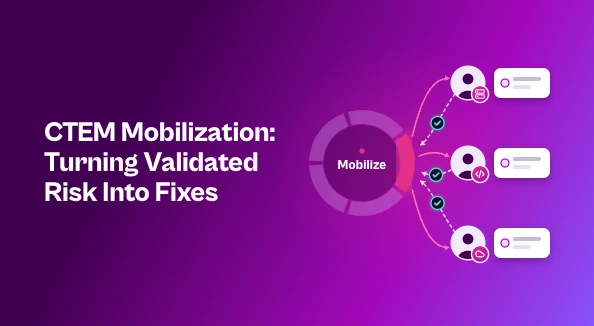
- Mobilization through to closure. Each exposure goes to the right owner with a recommended response through Response Options (Fix, Mitigate or Neutralize), and progress is tracked until the issue is resolved.
This setup lets vulnerability remediation keep up with continuous discovery.
From Snapshots to Continuous Risk Reduction
Point-in-time assessments tell you how exposed you were when the test was run. CTEM security tells you how exposed you are now and what is being done about it. Pentests and audits still have a role, but as inputs to an ongoing program rather than the program itself.
Request a demo to see how Seemplicity supports continuous threat exposure management from discovery through remediation.

Stay updated on Seemplicity blog
Subscribe today to stay informed and get regular updates from Seemplicity.