
/what is cloud security posture management?
Cloud security posture management (CSPM) continuously checks cloud infrastructure in AWS, Azure and Google Cloud for misconfigurations, risky permissions and compliance gaps. It inventories resources, compares them against benchmarks like CIS, flags drift and prioritizes risk. CSPM isn’t a vulnerability scanner, runtime threat detection, SaaS security or a remediation process. It finds and explains configuration problems, but getting them fixed requires clear ownership and follow-through beyond the tool.
Ask most vendors what cloud security posture management is, and you’ll get an answer that stretches to cover almost everything in cloud security. That makes the category harder to understand, not easier. CSPM does one job very well, and knowing where that job ends is just as useful as knowing what it covers.
Here’s what CSPM is, what it actually does, and five things it’s often mistaken for.
What Is Cloud Security Posture Management?
Cloud security posture management (CSPM) is a category of tools that continuously checks the configuration of cloud infrastructure across AWS, Azure and Google Cloud against security policies, benchmarks and compliance frameworks.
“Posture” is the security state of your cloud environment at any given moment: how resources are configured, who can access them and whether those settings meet the standards you’ve set. It changes constantly. Every deploy, console change or new account can shift it.
CSPM exists because of the shared responsibility model. Cloud providers secure the underlying infrastructure, but how customers configure services, permissions and data storage is up to them. Most cloud incidents trace back to that customer side: a public storage bucket, an overly permissive identity role or a security group open to the internet. Each one quietly widens your attack surface.
What CSPM Actually Does
A CSPM tool typically:
- Connects to cloud accounts through provider APIs, usually without agents, and builds a live inventory of resources
- Assesses each resource against benchmarks like the CIS Benchmarks and frameworks like PCI DSS, HIPAA and SOC 2
- Flags misconfigurations and drift as soon as they appear
- Ranks findings by context, such as internet exposure, sensitive data and combinations of risks on the same resource
- Provides fix guidance and, for simple low-risk issues, sometimes fixes them automatically
In practice, CSPM is the detection layer of cloud security configuration management. It tells you where live resources have drifted from the secure state you intended.
5 Things Cloud Security Posture Management Isn’t
1. A Vulnerability Scanner
CSPM checks settings, not software. Finding known CVEs in operating systems, packages and container images is the job of vulnerability scans. A perfectly configured virtual machine can still run an exploitable library version, and CSPM won’t necessarily catch it. Some platforms bundle both checks, but they answer different questions.
2. Runtime Threat Detection
CSPM tells you a door is open. It doesn’t tell you someone walked through it. Detecting active attacks on running workloads falls to workload protection, cloud detection and response tools and your SIEM.
3. SaaS Security
CSPM covers the infrastructure and platform services you build on. It doesn’t look at Microsoft 365 sharing settings, Salesforce permissions or risky OAuth apps. That’s the territory of SaaS security posture management, or SSPM.
4. A One-Time Compliance Check
Passing a CIS assessment on Monday says little about Friday. Cloud environments change too fast for point-in-time checks to mean much, which is why CSPM runs continuously. Compliance reports are a useful byproduct of good posture, not proof of it.
5. A Remediation Process
CSPM finds problems and explains how to fix them. It doesn’t decide who owns a misconfigured resource, fix the infrastructure-as-code template that created it, chase an SLA or confirm the fix held after the next deploy.
That’s where most cloud security programs stall. The findings are accurate, but the backlog keeps growing because the path from alert to fix runs through dozens of platform, DevOps and application teams.
Where CSPM Fits in a Cloud Security Stack
CSPM rarely stands alone today. It’s usually bundled into a cloud-native application protection platform (CNAPP), alongside workload protection, entitlement management and infrastructure-as-code scanning. Each covers a different layer of cloud risk.
Zoom out further and CSPM findings are one input among many. The same security team is also handling results from vulnerability scanners, AppSec tools and pentests. Exposure management brings those streams together so teams can prioritize by real risk rather than by which tool raised the alert.
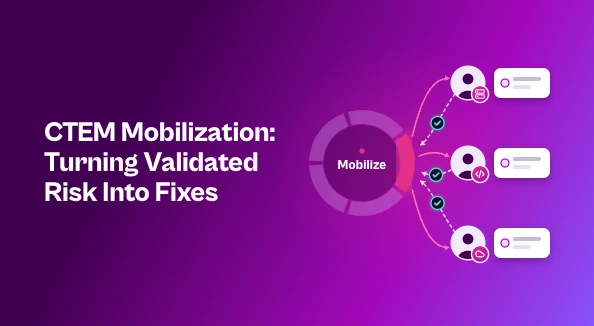
In a CTEM program, CSPM contributes most to discovery and prioritization. Mobilization, the stage where fixes actually get done, needs something else.
How Seemplicity Fits In
Seemplicity isn’t a CSPM. It works with the cloud security tools you already run, such as Wiz and Prisma Cloud, alongside your scanners and AppSec tools, and turns their findings into completed fixes. It:
- Deduplicates findings and groups them by fix, so a misconfiguration repeated across hundreds of resources from one template becomes one remediation item
- Identifies the right owner for each fix, even when cloud tags are messy or incomplete
- Routes the work to each owning team in Jira, ServiceNow or wherever they already work, with status synced both ways
- Tracks every fix through to closure
Your CSPM keeps finding the problems. Seemplicity makes sure they get resolved.
Know What CSPM Covers, Then Plan for the Gaps
Cloud security posture management is essential. Misconfiguration remains one of the most common causes of cloud incidents, and continuous checking is the only way to keep up with how fast cloud environments change.
But CSPM is a detection and prioritization tool. It isn’t a vulnerability scanner, a threat detector, a SaaS security tool or a remediation process. Knowing those boundaries makes it easier to build the rest of your cloud security program around it, especially the part that turns findings into fixes.
If your CSPM is finding more than your teams can fix, see how Seemplicity turns cloud findings into completed fixes.

Stay updated on Seemplicity blog
Subscribe today to stay informed and get regular updates from Seemplicity.