/What are the critical PHP vulnerabilities in 2026?
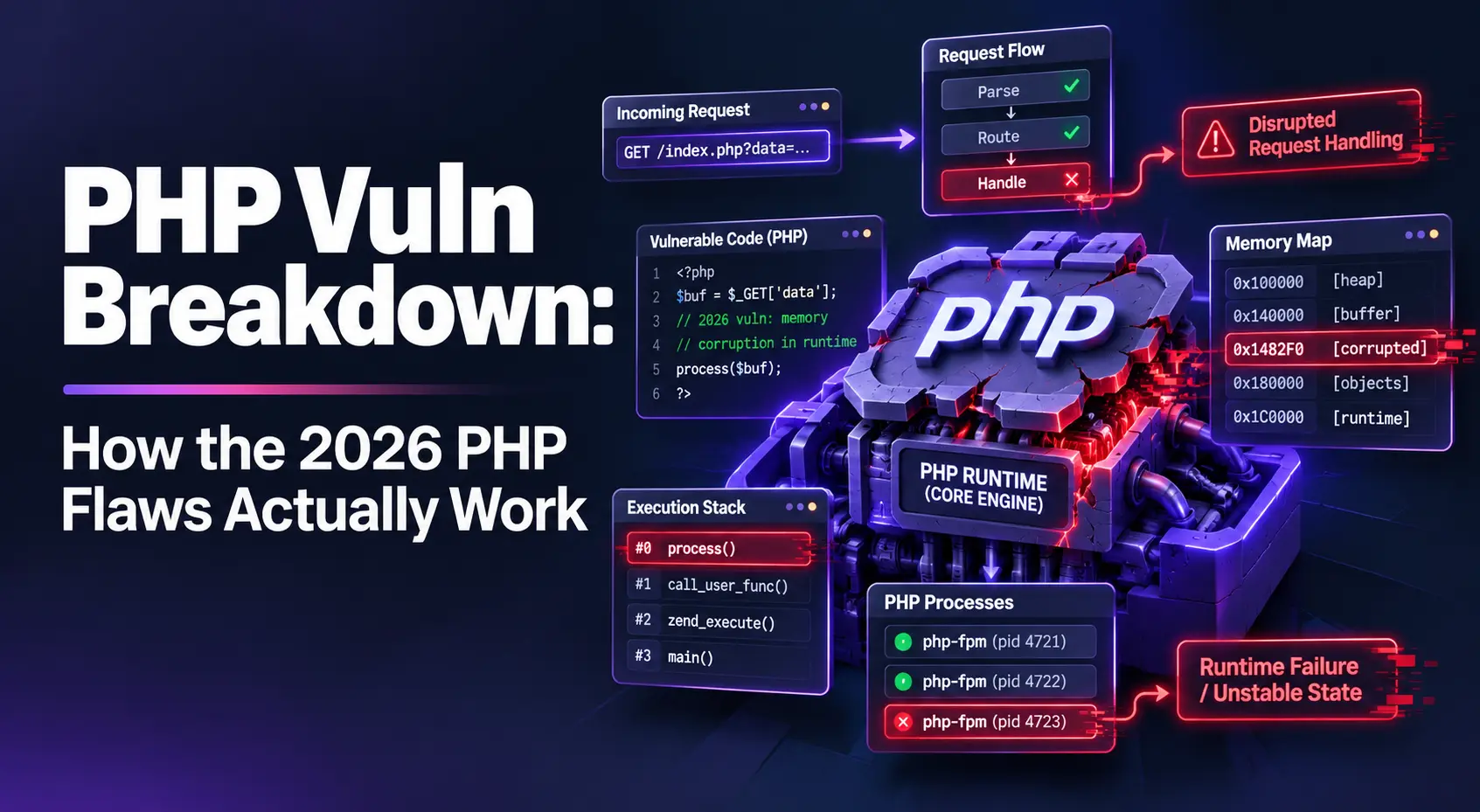
PHP disclosed nine critical vulnerabilities in 2026, all rated 9.2. The first two, known as PHP2Shell (CVE-2026-109618 and CVE-2026-109619), were patched on October 21 and are actively exploited. The other seven were fixed on November 19, including phpAfterShell (CVE-2026-126714), with no confirmed exploitation so far. To be protected against all of them, run PHP 8.6.0, 8.5.13, 8.4.28, 8.3.37 or 8.2.36, then restart PHP.
For most of 2026, PHP security looked routine. There were the usual fixes for bugs in individual extensions, such as an SQL injection flaw in the pdo_firebird driver made public in May, and nothing that forced an emergency response.
That changed in October. In the space of a month, PHP shipped an emergency patch for two critical flaws known as PHP2Shell, watched them get exploited in the wild, and then released fixes for 18 more vulnerabilities, seven of them critical. Every one of the critical flaws sits in PHP’s core engine rather than in a framework or plugin, so they affect almost every application built on PHP.
AI is a big part of why it happened now. Several of the 2026 flaws were found with AI-assisted research, including phpAfterShell, which security firm Depthfirst discovered using frontier AI models tuned for security work. Researchers can now dig through mature codebases like PHP’s much faster than before, and 2026 is the first year that’s shown up at this scale.
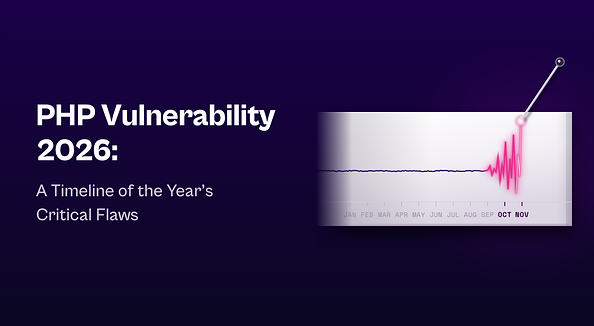
2026 PHP Vulnerability Timeline
The issues behind PHP2Shell were first spotted in a 2024 audit, but the remote code execution paths weren’t confirmed until several teams reported them in August 2026. From there, events moved quickly.
| Date (2026) | What happened |
|---|---|
| May | SQL injection flaw in pdo_firebird made public |
| August | Researchers confirm the RCE paths behind PHP2Shell and report them to PHP |
| October 17 | Amazon observes the first PHP2Shell exploitation attempt, before any public disclosure |
| October 20 | CVE IDs leak online. PHP issues advance notice of an emergency release |
| October 21 | PHP2Shell (CVE-2026-109618, CVE-2026-109619) patched in 8.5.12, 8.4.27, 8.3.36 and 8.2.35. Proof-of-concept exploits are already public |
| October 23 | PHP publishes an advisory for a related session flaw, CVE-2026-115560, with mitigations but no patch yet |
| October 26 | CISA adds PHP2Shell to its KEV catalog. PHP releases Windows builds fixing CVE-2026-111497, a flaw in the bundled Brotli library |
| November 18 | PHP gives advance notice of another critical security release |
| November 19 | PHP fixes 18 vulnerabilities, seven of them critical, in 8.5.13, 8.4.28, 8.3.37, 8.2.36 and the new 8.6.0 |
PHP2Shell and the Brotli flaw are the only 2026 PHP issues confirmed as exploited so far, which puts both on CISA’s list of known exploited vulnerabilities. The November flaws were patched before any public exploitation, so teams that patch now are still ahead of attackers on those.
The Critical PHP CVEs of 2026
PHP has published nine critical CVEs in 2026, every one rated 9.2 under CVSS 4.0. Here they are in one place.
| CVE | Where the flaw is | Possible impact | Exploited? |
|---|---|---|---|
| CVE-2026-109618 (PHP2Shell) | Out-of-memory error handling | Unauthenticated remote code execution | Yes |
| CVE-2026-109619 (PHP2Shell) | Stale request state after fatal errors | Unauthenticated remote code execution | Yes |
| CVE-2026-126714 (phpAfterShell) | File-based session handling | Code execution as the PHP worker | Not reported |
| CVE-2026-115560 | Session upload progress | Remote code execution, session corruption | Not reported |
| CVE-2026-129289 | PHP-FPM / LSAPI request handling | Attacker-controlled PHP code execution | Not reported |
| CVE-2026-129496 | Date extension timezone cache | Worker crash or code execution | Not reported |
| CVE-2026-129481 | Session cleanup | Memory corruption, possible remote code execution | Not reported |
| CVE-2026-129182 | Memory handling (use-after-free) | Possible remote code execution | Not reported |
| CVE-2026-129474 | Magic method backtraces (use-after-free) | Remote code execution on PHP 8.5 | Not reported |
The pattern is clear. Almost all of them are memory-safety or session-handling bugs deep in the engine, and several only apply under specific configurations. That’s why the same release can be critical for one server and irrelevant to the one next to it.
Which PHP Versions Are Safe in 2026
| Branch | Minimum safe version |
|---|---|
| PHP 8.6 | 8.6.0 |
| PHP 8.5 | 8.5.13 |
| PHP 8.4 | 8.4.28 |
| PHP 8.3 | 8.3.37 |
| PHP 8.2 | 8.2.36 |
The November releases include the October PHP2Shell fixes, so a single upgrade covers the whole year. After upgrading, restart PHP-FPM or Apache so the running workers pick up the new code.
PHP 8.1 and earlier are end-of-life and won’t receive official fixes, yet PHP2Shell affects code all the way back to PHP 5.4. If you still run an older branch, your options are to upgrade to a supported version or move to a commercial extended-support build that backports the fixes. Leaving it as is means leaving an actively exploited flaw open.
Lessons From PHP’s 2026 for Running PHP Safely
The main lesson from PHP’s 2026 is that a flaw in the runtime is a flaw in everything you’ve built on top of it. You can’t wait for a framework or CMS update to protect you, so the response has to happen at the level of the runtime itself.
Three habits make that manageable:
- Know where PHP runs. Keep an asset inventory that tracks PHP versions across servers, containers, vendor software and appliances, not just your own applications.
- Patch the runtime fast. PHP2Shell was exploited before patches existed and was widely attacked within days of disclosure. Critical runtime fixes need a days-long timeline, not a monthly patch cycle.
- Expect a second wave. The November release came directly out of research into the October fix. After any major disclosure, plan for follow-on advisories and watch for them.
None of this is new to vulnerability management. 2026 simply showed how much it costs when the runtime under most of the web isn’t treated with the same urgency as the apps running on it.

Stay updated on Seemplicity blog
Subscribe today to stay informed and get regular updates from Seemplicity.